For centuries as United States has taken shape, it's spread westward and beyond toward new frontiers
That spread occured because Americans used an inventive mechanized form of transportation so that large numbers of people and a huge amount of raw materials and finished goods could reach every corner of a growing dynamic nation
In this lecture, I want to examine four key artifacts that tell the story of an America on the move - the Conestoga Wagon, the John Faulton steam locomotive, the Ford Model T, and Charles Lindberg's airplane, the Spirit of St Louis
They take us from the Colonial Era of horse-drawn transport to the Modern Era of inter-continental air traffic
The first of these, the Conestaga Wagon, is not what many people think it is
Now if you've seen a lot of weterns with scences of covered wagons moving across the great prairies, this wagon probably appears quite familiar
Actually the Conestoga Wagon is the forerunner of those 19th Century prairie schooners which was smaller, lighter and usually drawn by oxen
Conestoga wagons originated in the mid-1700's - maybe even a little earlier - near Lancaster, Pennsylvania at the Conestoga River
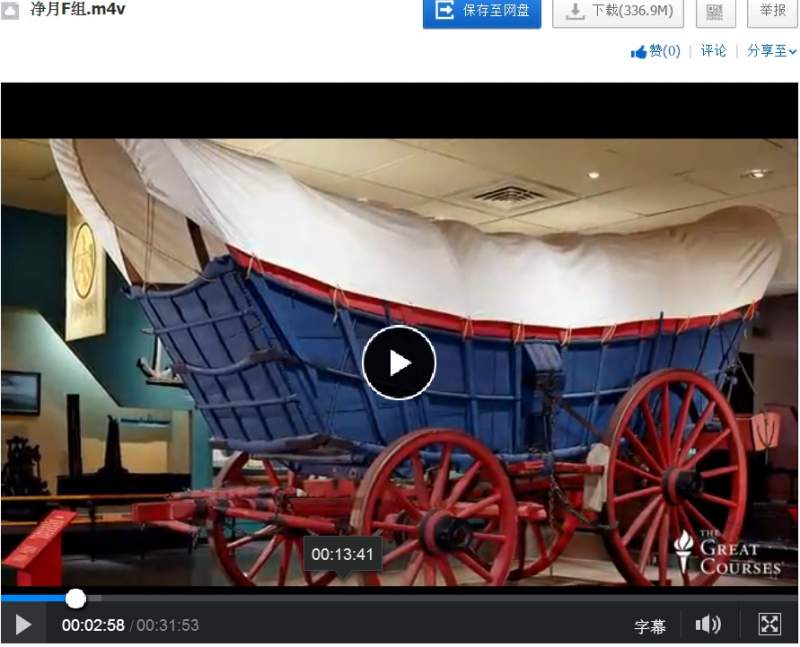
This one from the National Museum of History is probably built and used in the 1840's and -50's, a little after the heyday of the Conestogans
It is unusually large, 18 feet long and almost 8 feet wide, indicating its intended use - hauling large heavy consignments of freight
The three-member suspension was made of wood while the wheels were typically iron-rimmed for greater durability
Wagons needed to be sturdy
They had to cross streams and shallow rivers, navigate steep mountain passes and deal with rutted roads and deep mud
Notice how the body of the wagon is shaped
It's curved
This is so as the wagon traversed hills and mountains, cargo would shift toward the center rather than slide toward the sides and destablize the wagon
Wagons combined utility with Pennsylvanian German folk art, like you see here with a blue body, red running gear and decorative iron
----------
Conestogan Wagon.jpg
For centuries as United States has taken shape, it's spread westward and beyond toward new frontiers
That spread occurred because Americans used an inventive mechanized form of transportation so that large numbers of people and a huge amount of raw materials and finished goods could reach every corner of a growing dynamic nation
In this lecture, I want to examine four key artifacts that tell the story of an America on the move - the Conestoga Wagon, the JOHN BULL steam locomotive, the Ford Model T, and Charles Lindbergh's airplane, the Spirit of St Louis
They take us from the Colonial Era of horse-drawn transport to the Modern Era of inter-continental air traffic
The first of these, the Conestaga Wagon, is not what many people think it is
Now if you've seen a lot of westerns with scenes of covered wagons moving across the great prairies, this wagon probably appears quite familiar
Actually the Conestoga Wagon is the forerunner of those 19th Century prairie schooners which was smaller, lighter and usually drawn by oxen
Conestoga wagons originated in the mid-1700's - maybe even a little earlier - near Lancaster, Pennsylvania at the Conestoga River
This one from the National Museum of History is probably built and used in the 1840's and -50's, a little after the heyday of the Conestogan's ( 's = 复数, 代表各种不同的 Conestogan 式马车 )
It is unusually large, 18 feet long and almost 8 feet wide, indicating its intended use - hauling large heavy consignments of freight
The three-member suspension was made of wood while the wheels were typically iron-rimmed for greater durability
Wagons needed to be sturdy
They had to cross streams and shallow rivers, navigate steep mountain passes and deal with rutted roads and deep mud
Notice how the body of the wagon is shaped
It's curved
This is so as the wagon traversed hills and mountains, cargo would shift toward the center rather than slide toward the sides and destabilize the wagon
Wagons combined utility with Pennsylvanian German folk art, like you see here with a blue body, red running gear and decorative iron
Six horses pulled the wagon
Passengers rarely rode it
The wagoneer or driver typically rode the horse nearest the wagon on the left side, or sat on the lazy port which extended from the wagon, or they walked alongside of it
Finally a tough stretched canvas provided protection from the weather
In good weather, the wagon would travel 10-15 miles a day
So, if these weren't the wagons taking pioneers to the west, where exactly were they going ?
Well, in a sense, they were going west, just not in the way you probably visualize it
Recall from earlier lectures that the American colonies and the young United States were rich in resources
Conestoga wagons transported supplies and finished goods from eastern towns like Baltimore to settlers in the interior, and returned with flour, whiskey, tobacco, furs, coal, iron, and other products that can be processed in coastal cities or sold abroad
An interesting historical note, the slang term "stogie" for a cheap cigar comes from the Conestoga wagon
But these wagons weren't just used for shipping goods, they were a major part of colonial migration
An ancient pathway that the Indians called "Jonotore" and the colonists eventually called "The Great Wagon Road" stretched from Philadelphia through Virginia's Shenandoah Valley and on to Augusta, Georgia
Between 1700 and 1775 some hundred thousand German and Scots-Irish immigrant settlers made their journey southwestward along the road house (?) using this road, seeking land on the colonial frontier
In North Carolina, for example, the population rose from approximately 35,000 to almost 210,000 people
Today interesting "Highway 81" runs along a good part of the route, and the settlements ruled(?) like strands of beads along the roadway
Settlers' routes also took them farther inland
Up til the year 1700 European colonists mostly settled along the coast
But by the 1750's and the start of the French-Indian War - around the time the Conestonga Wagon was invented - the colonists had pushed into the Appalachian foothills, but not much farther
After that war, treaties with defeated Indians along the colonists to push through the mountains and began to settle on the other side
Then, as we saw in the first lecture, the War of 1812 put the Northwest Territory - what we now call the Midwest - firmly in American hands
This lured settlers into the Ohio River Valley, and the Conestoga wagon helped them get there
Good roads became essential
Upgrade byways linked Philadelphia to Pittsburgh, and Baltimore to Wheeling
The first federally funded road, known as the "National Road", was constructed between 1811 and 1838
It stretched from Cumberland, Maryland, to Wheeling, and then through Ohio and Indiana to Vandalia, Illinois
Much of it still exist today as "US Route 40"
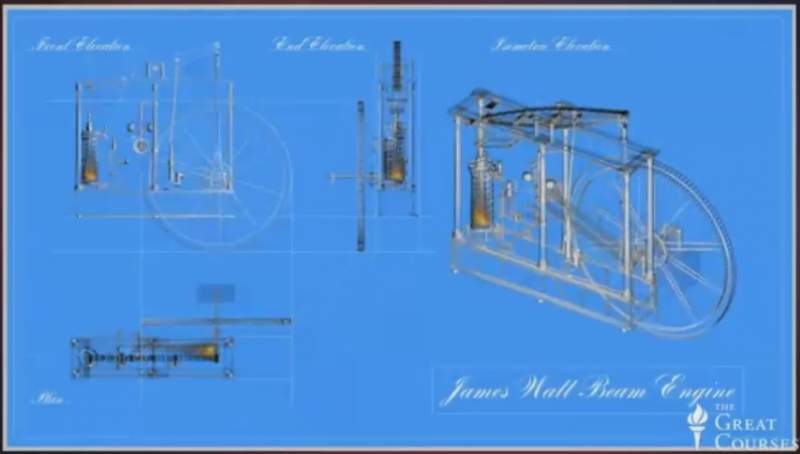
What eventually put the wagons out of business was the steam engine developed by James Watt and his contemporaries in mid-18th-century England
A coal- or wood-burning fire would create the steam within an enclosed chamber, creating pressure
That pressure was then channeled to push pistons back and forth to power pumps, wheels, gears, blowers and other mechanical devices to move and turn things
The earliest steam engines ran extremely low pressure, and were terribly wasteful of fuel
It took years of experimentation to develop more compact engines with higher working pressures that had enough power to move things like boats, locomotives
In America, the potential of steam-powered transportation was dramatically demonstrated in 1807 when Robert Fulton sailed his steamboat Clermont up the Hudson River from New York City, traveling at a steady 5 miles per hour upriver
The huge 142-foot ship amazed all who saw her defy the river's current
Before long steamboats applying(?) the Mississippi, the Ohio, the Hudson, Mohawk and Erie Cannel and the Great Lakes, bringing lumber, furs, coal, minerals and foodstuffs from the interior to the coastal cities and returning to the hinterlands with manufactured goods
And just as towns had grown up along the Great Wagon Road, they now grew along the west water mains (?) (我想他指的是水流干道, 不是水管)
Steamboats relied on existing rivers of course and also on expen sive canal-building at the hands of both governments and private entrepreneurs
Another innovation the railroad had an advantage over canal-building
Track could be laid anywhere and relatively cheaply
This artifact, the John Bull locomotive, which you can visit in the National Museum of American History, helped lead the growth of the railways and what turned out to be America's industrial revolution
Assembled in 1831, it is one of the first successful locomotives to run in the United States
It heralded a new form of transportation that within decades would stretch the continent
John Bull was built in England by Robert Stephenson, the forwardemost (?) engine's designer at the time (当时最早进的发动机设计师)
He was the son of George Stevenson who in 1825 had built the first successful steam-powered railroad, the Stockton and Darlington Railway in the north of England
The success of the English railroad excited an American engineer and entrepreneur named Robert Stevens
He decided to build a railway through his home state of New Jersey that could help connect the two biggest US cities at the time - New York and Philadelphia
Stevens saw this route as an important and lucrative one for the nation
He'd have to lay about 76 miles of track between Camden, which laid a short ferry ride across the Delaware River to Philadelphia, and South Amboy, which was another longer ferry ride across the mouth of the Hudson River to Manhattan

 返回小木虫查看更多


 京公网安备 11010802022153号

我滴妈呀,听写这个?难死人咧!
好
花了30分钟,抄录了3分钟视频 [图 1]
3分钟的视频, 至少须花 4 小时
如果你愿意出300币 (即 1分钟/1币), 我愿意服务到底, 把高难度的后一部分 [例如图 2], 仔细给你附注
1分钟/1币, 你应为下面的这部分付我至少30币, 否则我得通知版主处理
North America is a vast continent
For centuries as United States has taken shape, it's spread westward and beyond toward new frontiers
That spread occured because Americans used an inventive mechanized form of transportation so that large numbers of people and a huge amount of raw materials and finished goods could reach every corner of a growing dynamic nation
In this lecture, I want to examine four key artifacts that tell the story of an America on the move - the Conestoga Wagon, the John Faulton steam locomotive, the Ford Model T, and Charles Lindberg's airplane, the Spirit of St Louis
They take us from the Colonial Era of horse-drawn transport to the Modern Era of inter-continental air traffic
The first of these, the Conestaga Wagon, is not what many people think it is
Now if you've seen a lot of weterns with scences of covered wagons moving across the great prairies, this wagon probably appears quite familiar
Actually the Conestoga Wagon is the forerunner of those 19th Century prairie schooners which was smaller, lighter and usually drawn by oxen
Conestoga wagons originated in the mid-1700's - maybe even a little earlier - near Lancaster, Pennsylvania at the Conestoga River
This one from the National Museum of History is probably built and used in the 1840's and -50's, a little after the heyday of the Conestogans
It is unusually large, 18 feet long and almost 8 feet wide, indicating its intended use - hauling large heavy consignments of freight
The three-member suspension was made of wood while the wheels were typically iron-rimmed for greater durability
Wagons needed to be sturdy
They had to cross streams and shallow rivers, navigate steep mountain passes and deal with rutted roads and deep mud
Notice how the body of the wagon is shaped
It's curved
This is so as the wagon traversed hills and mountains, cargo would shift toward the center rather than slide toward the sides and destablize the wagon
Wagons combined utility with Pennsylvanian German folk art, like you see here with a blue body, red running gear and decorative iron
----------
Conestogan Wagon.jpg
steam engine.jpg
非常非常感谢您的回复,因我是新虫,金币不多,我把100个金币都给您,麻烦您帮我听写前十分钟的吧,非常非常感谢您的帮助。
North America is a vast continent
For centuries as United States has taken shape, it's spread westward and beyond toward new frontiers
That spread occurred because Americans used an inventive mechanized form of transportation so that large numbers of people and a huge amount of raw materials and finished goods could reach every corner of a growing dynamic nation
In this lecture, I want to examine four key artifacts that tell the story of an America on the move - the Conestoga Wagon, the JOHN BULL steam locomotive, the Ford Model T, and Charles Lindbergh's airplane, the Spirit of St Louis
They take us from the Colonial Era of horse-drawn transport to the Modern Era of inter-continental air traffic
The first of these, the Conestaga Wagon, is not what many people think it is
Now if you've seen a lot of westerns with scenes of covered wagons moving across the great prairies, this wagon probably appears quite familiar
Actually the Conestoga Wagon is the forerunner of those 19th Century prairie schooners which was smaller, lighter and usually drawn by oxen
Conestoga wagons originated in the mid-1700's - maybe even a little earlier - near Lancaster, Pennsylvania at the Conestoga River
This one from the National Museum of History is probably built and used in the 1840's and -50's, a little after the heyday of the Conestogan's ( 's = 复数, 代表各种不同的 Conestogan 式马车 )
It is unusually large, 18 feet long and almost 8 feet wide, indicating its intended use - hauling large heavy consignments of freight
The three-member suspension was made of wood while the wheels were typically iron-rimmed for greater durability
Wagons needed to be sturdy
They had to cross streams and shallow rivers, navigate steep mountain passes and deal with rutted roads and deep mud
Notice how the body of the wagon is shaped
It's curved
This is so as the wagon traversed hills and mountains, cargo would shift toward the center rather than slide toward the sides and destabilize the wagon
Wagons combined utility with Pennsylvanian German folk art, like you see here with a blue body, red running gear and decorative iron
Six horses pulled the wagon
Passengers rarely rode it
The wagoneer or driver typically rode the horse nearest the wagon on the left side, or sat on the lazy port which extended from the wagon, or they walked alongside of it
Finally a tough stretched canvas provided protection from the weather
In good weather, the wagon would travel 10-15 miles a day
So, if these weren't the wagons taking pioneers to the west, where exactly were they going ?
Well, in a sense, they were going west, just not in the way you probably visualize it
Recall from earlier lectures that the American colonies and the young United States were rich in resources
Conestoga wagons transported supplies and finished goods from eastern towns like Baltimore to settlers in the interior, and returned with flour, whiskey, tobacco, furs, coal, iron, and other products that can be processed in coastal cities or sold abroad
An interesting historical note, the slang term "stogie" for a cheap cigar comes from the Conestoga wagon
But these wagons weren't just used for shipping goods, they were a major part of colonial migration
An ancient pathway that the Indians called "Jonotore" and the colonists eventually called "The Great Wagon Road" stretched from Philadelphia through Virginia's Shenandoah Valley and on to Augusta, Georgia
Between 1700 and 1775 some hundred thousand German and Scots-Irish immigrant settlers made their journey southwestward along the road house (?) using this road, seeking land on the colonial frontier
In North Carolina, for example, the population rose from approximately 35,000 to almost 210,000 people
Today interesting "Highway 81" runs along a good part of the route, and the settlements ruled(?) like strands of beads along the roadway
Settlers' routes also took them farther inland
Up til the year 1700 European colonists mostly settled along the coast
But by the 1750's and the start of the French-Indian War - around the time the Conestonga Wagon was invented - the colonists had pushed into the Appalachian foothills, but not much farther
After that war, treaties with defeated Indians along the colonists to push through the mountains and began to settle on the other side
Then, as we saw in the first lecture, the War of 1812 put the Northwest Territory - what we now call the Midwest - firmly in American hands
This lured settlers into the Ohio River Valley, and the Conestoga wagon helped them get there
Good roads became essential
Upgrade byways linked Philadelphia to Pittsburgh, and Baltimore to Wheeling
The first federally funded road, known as the "National Road", was constructed between 1811 and 1838
It stretched from Cumberland, Maryland, to Wheeling, and then through Ohio and Indiana to Vandalia, Illinois
Much of it still exist today as "US Route 40"
What eventually put the wagons out of business was the steam engine developed by James Watt and his contemporaries in mid-18th-century England
A coal- or wood-burning fire would create the steam within an enclosed chamber, creating pressure
That pressure was then channeled to push pistons back and forth to power pumps, wheels, gears, blowers and other mechanical devices to move and turn things
The earliest steam engines ran extremely low pressure, and were terribly wasteful of fuel
It took years of experimentation to develop more compact engines with higher working pressures that had enough power to move things like boats, locomotives
In America, the potential of steam-powered transportation was dramatically demonstrated in 1807 when Robert Fulton sailed his steamboat Clermont up the Hudson River from New York City, traveling at a steady 5 miles per hour upriver
The huge 142-foot ship amazed all who saw her defy the river's current
Before long steamboats applying(?) the Mississippi, the Ohio, the Hudson, Mohawk and Erie Cannel and the Great Lakes, bringing lumber, furs, coal, minerals and foodstuffs from the interior to the coastal cities and returning to the hinterlands with manufactured goods
And just as towns had grown up along the Great Wagon Road, they now grew along the west water mains (?) (我想他指的是水流干道, 不是水管)
Steamboats relied on existing rivers of course and also on expen sive canal-building at the hands of both governments and private entrepreneurs
Another innovation the railroad had an advantage over canal-building
Track could be laid anywhere and relatively cheaply
This artifact, the John Bull locomotive, which you can visit in the National Museum of American History, helped lead the growth of the railways and what turned out to be America's industrial revolution
Assembled in 1831, it is one of the first successful locomotives to run in the United States
It heralded a new form of transportation that within decades would stretch the continent
John Bull was built in England by Robert Stephenson, the forwardemost (?) engine's designer at the time (当时最早进的发动机设计师)
He was the son of George Stevenson who in 1825 had built the first successful steam-powered railroad, the Stockton and Darlington Railway in the north of England
The success of the English railroad excited an American engineer and entrepreneur named Robert Stevens
He decided to build a railway through his home state of New Jersey that could help connect the two biggest US cities at the time - New York and Philadelphia
Stevens saw this route as an important and lucrative one for the nation
He'd have to lay about 76 miles of track between Camden, which laid a short ferry ride across the Delaware River to Philadelphia, and South Amboy, which was another longer ferry ride across the mouth of the Hudson River to Manhattan
(?) = 几处我真听不明白
JOHN BULL = 大写更正先前听错处
终点 = 10:06
-------------
终点.jpg
,
非常非常感谢您的帮助,