









| 查看: 854 | 回复: 3 | ||
lavender_12新虫 (正式写手)
|
[求助]
求助:回答审稿人的问题
|

|
审稿人的问题: Page 7 Line 25-27: The comparison of the crystallite size of the materials in this study with Degussa P25 makes little sense here. The 9.7 nm size was merely 仅仅estimated from XRD pattern. (If the Scherrer equation was used, it should be indicated in text. I actually do not think crystallite size calculated by Scherrer equation here is convincing enough, since it only provides a lower bound)There is no evidence that the 20-40 nm size of P25 was obtained with comparable approaches (I personally would assume that more direct evidence of the crystallite size of P25 would come from TEM). 我在文中是这么写的:According to the X-ray diffraction date, the lattice parameters of KLaTi2O6 were found to be a=b=c=0.3897 nm. The crystallite size was 9.7 nm, which was far less than that of Degussa P25 TiO2 with an average crystallite size of 20-40 nm (Han et al., 2007). 其实晶体粒径9.7是在做XRD的时候,仪器直接给出的crystal size值,仪器是这么算的: Williamson-Hall plot method (这种方法是日本株式会社Rigaku D/max 2500 X-ray diffraction analyzer 软件所采用的计算方法) ………………………………………….公式.( 1) Where L is the crystallite size, K is determained by the crystallite configuration, K=1. β is the spread attributable to lattice strain and crystallite size alone. is the wavelength of the X-ray radiation ( = 0.15418 nm) and θ is the Bragg diffraction angle. Plotting against based on these results makes it possible to obtain crystallite size L from the gradient of the approximation line and lattice strain e from the y-intercept. 那我在文中改正的时候是该把公式(1)写上还是该把scherrer equation 写上? 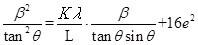 公式(1).jpg |
 回复此楼
回复此楼» 猜你喜欢
 寻求物理化学学报最新的投稿模板!
已经有4人回复
寻求物理化学学报最新的投稿模板!
已经有4人回复
-
东南大学杰青/海优团队招聘催化方向博士后
已经有866人回复
-
专业论文润色/翻译怎么收费?
已经有277人回复
-
投稿咨询
已经有7人回复
-
自科面上 散金币 祈福
已经有61人回复
-
铁钼催化剂成型
已经有2人回复
-
求问:LATP煅烧应该使用什么容器?
已经有0人回复
-
西安交通大学 赵旭课题组 招收研究助理--电催化方向
已经有1人回复
-
西安交通大学 赵旭课题组 2026年招收博士后-电催化方向
已经有0人回复
-
焙烧后的拉西环状铁钼催化剂侧面硬度高,应该如何降低?
已经有1人回复
-
欢迎来稿
已经有27人回复
» 本主题相关价值贴推荐,对您同样有帮助:
- 求助:不知道怎么回答审稿人的问题?
已经有5人回复
- 求助审稿人这个问题该如何回答?急,在线等!
已经有6人回复
- 审稿人反馈的意见求助
已经有12人回复
- 求助:审稿人的第一个问题就把我难得住了!
已经有7人回复
- 求助 一个审稿人的提问(关于xrd与形貌的问题)
已经有34人回复
- 求助!审稿人给出的意见比较尖锐
已经有9人回复
- 审稿意见如何回复,求助
已经有4人回复
- 不知道怎么回答审稿人的问题,求助大家,(关于分子筛MCM-41的)
已经有10人回复
- 高分求助:如何给编辑写email驳斥审稿人的审稿意见
已经有8人回复
- 求助几句回复审稿人的英文翻译
已经有1人回复
- 求助:如觉得审稿人提的意见不完全对,那该如何回复审稿人啊?
已经有8人回复
- 急急急!!!求助各位虫友,如何回答审稿人补充实验的问题
已经有28人回复
- 重金求助如何回答审稿人提出的改投它刊的建议
已经有14人回复
- 【求助】请求大家帮忙看一下审稿人的回复
已经有6人回复
- 【求助】DLS求助,审稿人问题,TEM aggregated,where as DLS does not
已经有16人回复
- 【求助】请帮忙回答审稿人提出的问题
已经有9人回复
- 求助回答审稿人的问题
已经有2人回复
- 审稿人意见求助,怎么回答呢
已经有11人回复
shuyuan8239
木虫 (正式写手)
- 应助: 71 (初中生)
- 金币: 277.7
- 散金: 52
- 红花: 15
- 帖子: 461
- 在线: 409小时
- 虫号: 641832
- 注册: 2008-10-31
- 性别: GG
- 专业: 催化化学
【答案】应助回帖
★
感谢参与,应助指数 +1
cxqtitan: 金币+1, 谢谢分享 2013-03-11 11:40:57
感谢参与,应助指数 +1
cxqtitan: 金币+1, 谢谢分享 2013-03-11 11:40:57
|
我觉得审稿人的意思是如果你用谢乐公式计算得到粒子大小的话应该把公式写上,并做简要说明。 但是审稿人建议你要做一下电镜,这样的话更有说服力!二者可以相互佐证! |

 lavender_12
2楼2013-03-11 11:34:42
lavender_12
新虫 (正式写手)
- 应助: 11 (小学生)
- 金币: 6.6
- 散金: 72
- 红花: 3
- 帖子: 407
- 在线: 267.6小时
- 虫号: 1054230
- 注册: 2010-07-08
- 性别: MM
- 专业: 环境污染化学
3楼2013-03-11 14:35:21
shuyuan8239
木虫 (正式写手)
- 应助: 71 (初中生)
- 金币: 277.7
- 散金: 52
- 红花: 15
- 帖子: 461
- 在线: 409小时
- 虫号: 641832
- 注册: 2008-10-31
- 性别: GG
- 专业: 催化化学
4楼2013-03-11 15:30:47