








| 查看: 1026 | 回复: 10 | |||||
| 当前只显示满足指定条件的回帖,点击这里查看本话题的所有回帖 | |||||
[求助]
求剪接图解释
|
|||||

求专业术语按几个箭头指向解释这个剪接图,2个外显子增强子和1个内含子增强子等怎么作用的。谢谢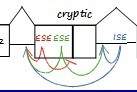 剪接.jpg |
 回复此楼
回复此楼» 猜你喜欢
 Wnt-C59:PORCN靶向化学探针,Wnt信号通路阻断机制与科研应用全解析
已经有0人回复
Wnt-C59:PORCN靶向化学探针,Wnt信号通路阻断机制与科研应用全解析
已经有0人回复
-
Fexaramine:肠道限制性FXR化学探针,结构特征与信号通路研究全解析
已经有0人回复
-
化学工程及工业化学论文润色/翻译怎么收费?
已经有115人回复
-
NVS-STG2:靶向STING跨膜域的分子胶类激动剂,结构特征与寡聚化机制研究全解析
已经有0人回复
-
DOTA-GPC3肽(CAS 3066439-94-6):双功能分子探针前体的结构特征与标记应用解析
已经有0人回复
-
科研用 TLR7/8 双激动剂怎么选?现货与质控要点
已经有0人回复
-
SEL120-34A HCl:CDK8/CDK19高选择性激酶抑制剂
已经有0人回复
-
氢氧化钾活化操作
已经有18人回复
-
散金
已经有68人回复
-
生物质超级电容器
已经有0人回复
» 本主题相关价值贴推荐,对您同样有帮助:
- 安装Fluent启动Gambit时提示一个对话框,有图有疑问迫求解释,谢谢!!!
已经有7人回复
- 求助电话学Bode 图解释
已经有13人回复
- 公派出国英语要求求解释???
已经有15人回复
- 求助Bode图解释
已经有14人回复
- μL/mL是什么意思,求详细解释,谢谢
已经有10人回复
- 求高手解释聚吡咯红外谱图
已经有9人回复
- 求循环伏安图解释
已经有6人回复
- 百思不得其解--求解释
已经有10人回复
- 求助ESI质谱图解释
已经有13人回复
- 求碳谱解释
已经有20人回复
- 【求助】裸玻碳电极在PBS扫描循环伏安图求解释
已经有20人回复
- 求翻译成中文
已经有2人回复
- 【求助】红外图谱异常,怎么解释?
已经有12人回复
- 求英文解释
已经有2人回复
- 【求助】求解释一张TEM图片的电子衍射花样。。。
已经有6人回复
- 【求助】大家看看这幅图怎么解释
已经有10人回复
凌波丽
专家顾问 (知名作家)
-

专家经验: +218 - MolEPI: 44
- 应助: 397 (硕士)
- 贵宾: 0.044
- 金币: 2119.9
- 散金: 10
- 红花: 209
- 帖子: 5633
- 在线: 571.6小时
- 虫号: 1766465
- 注册: 2012-04-19
- 性别: MM
- 专业: 生物大分子结构与功能
- 管辖: 生物科学综合
【答案】应助回帖
★ ★ ★ ★ ★ ★ ★
eiieen: 金币+2 2013-06-26 08:58:56
eiieen: 金币+3 2013-06-26 09:04:47
gyesang: 金币+2, 鼓励回帖应助! 2013-06-26 12:38:35
eiieen: 金币+2 2013-06-26 08:58:56
eiieen: 金币+3 2013-06-26 09:04:47
gyesang: 金币+2, 鼓励回帖应助! 2013-06-26 12:38:35
|
你就是这样提问的吗!?intronic splicing enhancer,exonic splicing enhancer的全称都不能明确写出吗!? 我现在知道intronic splicing enhancer,exonic splicing enhancer是分别在于一些intron和exon上的enhancer,有些特定的反式因子与其结合,按照一般的enhancer的作用机理(成环假说、扭曲假说、滑动假说和Oozing假说)影响可变剪接过程。 “Positive-acting splicing regulatory sequences generally can be classified by their location in either exons or introns. Exonic splicing enhancers are sequences, found in certain exons, that can stimulate spliceosome assembly at the upstream 3' splice site of the exon (Fu et al. 1991; Lavigueur et al. 1993; Sun et al. 1993; Watakabe et al. 1993; Caputi et al. 1994; Dirksen et al. 1994; Staknis and Reed 1994; Tanaka et al. 1994; Tian and Maniatis 1994; Ramchatesingh et al. 1995; Wang et al. 1995). Exonic enhancers are usually purine-rich sequences whose ac- ivity is mediated, at least in part, by a group of molecules known as SR (serine- and arginine-rich) proteins. These are a large family of proteins, found in both Drosophila and mammalian cells, each containing a serine- and arginine-rich domain and one or more RNA-binding domains of the ribonucleoprotein or RNP-type (Fu 1995; Manley and Tacke 1996; Valc~ircel and Green 1996). SR proteins have been implicated in many aspects of the splicing process. Most notably, they have been shown to bind to exonic enhancers and in one case to synergize with more specialized regulatory proteins bound to the enhancer (Lynch and Maniatis 1996). Although less understood than exonic splicing enhancers, there are also intronic sequences that activate splicing (Balvay et al. 1992; Black 1992; Huh and Hynes 1994; Del Gatto and Breathnach 1995; Lou et al. 1995; Sirand-Pugnet et al. 1995; Carlo et al. 1996; Ryan and Cooper 1996). Intronic splicing enhancers are often found in the introns downstream of regulated exons and are required for the splicing of these exons. They have been identified in an array of transcripts, including c-src, fibronectin, ~-tropomyosin, fibroblast growth factor re- ceptor, cardiac troponin T, and calcitonin/calcitonin gene-related peptide. These intronic enhancers contain diverse sequence elements that are often repeated and show a variety of tissue specific regulation. So far, SR proteins have not been found to bind to these sequences. Although the c-src intronic enhancer binds to a complex of proteins, including the heterogeneous nuclear ribonucleoprotein F (hnRNP F), other proteins that mediate splicing through these regulatory sequences are unknown (Min et al. 1995). ”------From :Hosung Min, Christoph W. Turck, Julia M. Nikolic, and Douglas L. Black ,A new regulatory protein, KSRP, mediates exon inclusion through an intronic splicing enhancer,GENES & DEVELOPMENT 1997,11:1023-1036. |

8楼2013-06-25 22:28:07
凌波丽
专家顾问 (知名作家)
-
专家经验: +218 - MolEPI: 44
- 应助: 397 (硕士)
- 贵宾: 0.044
- 金币: 2119.9
- 散金: 10
- 红花: 209
- 帖子: 5633
- 在线: 571.6小时
- 虫号: 1766465
- 注册: 2012-04-19
- 性别: MM
- 专业: 生物大分子结构与功能
- 管辖: 生物科学综合
【答案】应助回帖
★ ★ ★ ★ ★ ★ ★ ★
感谢参与,应助指数 +1
kx444555: 金币+3, 很热心 2013-06-25 22:01:17
eiieen: 金币+5 2013-06-26 09:05:36
感谢参与,应助指数 +1
kx444555: 金币+3, 很热心 2013-06-25 22:01:17
eiieen: 金币+5 2013-06-26 09:05:36
|
你的图太小,还没有上下文,我看不清楚。cryptic 应该是cryptic gene,隐蔽基因。这样我大致理解为:某个隐蔽基因的产生,通过可变剪接(alternative splicing),把不同的外显子和不同的内含子组合到一起,形成最终的外显子,这种外显子就是隐蔽基因(cryptic gene),其可能不止一种,在同一个基因位点上可能产生几种隐蔽基因(cryptic gene)。因为alternative splicing机制每次留下的外显子和去除的内含子(intron)不是固定的,而是根据需要选择一些DNA片段留下作为外显子,不是条件下的留下作为外显子(exon)的一些DNA片段在另外的条件下可能作为intron而被去除了。 箭头指向是其尾部链接的DNA片段连接的作为外显子(exon)留下的一些DNA片段,箭头的头尾连接的字母之间的其他字母是作为intron而被去除了的内含子(intron)。每个箭头表示一种alternative splicing的一种类型。 起始alternative splicing还有保留原来的部分的外显子(exon)和部分内含子(intron)的情况。但是你的图的箭头的头部落点没有对应到具体字母的应该是此类情况。 |
2楼2013-06-25 21:33:58
凌波丽
专家顾问 (知名作家)
-
专家经验: +218 - MolEPI: 44
- 应助: 397 (硕士)
- 贵宾: 0.044
- 金币: 2119.9
- 散金: 10
- 红花: 209
- 帖子: 5633
- 在线: 571.6小时
- 虫号: 1766465
- 注册: 2012-04-19
- 性别: MM
- 专业: 生物大分子结构与功能
- 管辖: 生物科学综合
3楼2013-06-25 21:36:11
4楼2013-06-25 21:37:19
