








| 查看: 1938 | 回复: 1 | ||
毛豆5168木虫 (小有名气)
|
[求助]
腐蚀电位和点蚀电位能相同吗?以前没听说过这个 已有1人参与
|

|
看到一篇文献中关于铝合金点蚀电位的说法,说点蚀电位和腐蚀电位一致,这个说法对吗?下面分别是对2个图的说明部分。求大神解答。 Fig. 4 shows typical potentiodynamic polarisation curves for the samples of AA6061, obtained in solutions of concentration 3.5% NaCl at pH values of (a) 2, (b) 6, and (c) 12, respectively. A similar shape is observed in two polarisation curves which were obtained in the slightly neutral and acidic solution, with a little difference on their cathodic branch controlling the corrosion process, indeed the current density in the slightly neutral solution is the lowest. The onset of pitting is not visible in these two cases since the pitting potentials Epit coincided with the corrosion potentials Ecor and the anodic Tafel slopes of two curves are practically zero. From these results, it can be concluded that the main degradation mechanism in these solutions of pH values 2 and 6 is pitting corrosion and the pitting potential is independent of pH over this pH range. We can observe this on the micrographic photos shown in Figs. 11 and 12. Fig. 5 shows an example of positive hysteresis, with pitting potential located at the same position of that of corrosion potential, repassivation potential Erp less than the Ecor and large area of the hysteresis loop, suggesting the nucleation and growth of pitting during the reverse scan [41,42]. In general, the larger the area of the hysteresis loop, the greater the susceptibility of the material to pitting corrosion. 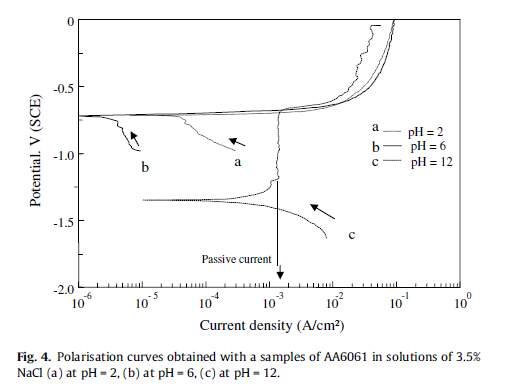 2.jpg |
 回复此楼
回复此楼» 猜你喜欢
 高盐废水电催化氧化,氯离子存在下活性氯副产物、阳极选型的工程困惑
已经有0人回复
高盐废水电催化氧化,氯离子存在下活性氯副产物、阳极选型的工程困惑
已经有0人回复
-
固相反应中颗粒形貌变化计算模拟学习求助
已经有0人回复
-
分析化学论文润色/翻译怎么收费?
已经有296人回复
-
电催化氧化技术处理高盐难降解废水具备独特优势
已经有0人回复
-
电化学水处理四种主流阳极材料性能与工况适配性对比探讨
已经有0人回复
-
深圳理工大学-深圳大学联合培养项目2027年接收推荐免试研究生
已经有2人回复
-
铁离子电池求助
已经有0人回复
-
想问为什么自制半电池循环只有50圈?
已经有0人回复
-
硕士研究生全国统考 英语二真题合集
已经有0人回复
» 本主题相关价值贴推荐,对您同样有帮助:
- 电化学腐蚀监测,电化学噪声测试基础问题
已经有8人回复
- 点蚀电位和腐蚀电流密度有什么关系?
已经有10人回复
- 同一种不锈钢材料多次测得的点蚀电位相差为啥这么大??
已经有28人回复
- 镀层腐蚀电位是不是越高,镀层腐蚀倾向性越低啊?
已经有6人回复
- 只用一台恒电位仪可以测金属的腐蚀率或者缓蚀率吗?怎么测?
已经有6人回复
- 不同浓度NaCl溶液的电位是否不同
已经有4人回复
- 通过电化学什么曲线可以得到 点蚀和钝化 的实验结果
已经有4人回复
- 重金求CHI660D电化学工作站测试击穿电位和保护电位的方法!!!!急急急
已经有14人回复
- 开路电位-时间曲线确定的自腐蚀电位和塔菲尔曲线获得的自腐蚀电位有什么区别和联系
已经有4人回复
- 求高手帮忙分析一下铝合金的动电位极化曲线
已经有17人回复
- 跪求 自腐蚀电位和自腐蚀电流与抗蚀性的关系
已经有25人回复
- 腐蚀电位与开路电位的关系、开路电位的稳定性
已经有19人回复
- zata电位测试问题
已经有15人回复
- 电化学-腐蚀电位与电流密度关系求助
已经有8人回复
- 开路电位是自腐蚀电位吗?
已经有16人回复
- [求助]极化曲线负的自腐蚀电位和正的自腐蚀电位有什么区别
已经有11人回复
- 局部腐蚀和点蚀程度如何测量
已经有17人回复
- 【求助】急!求助电化学工作站测点蚀电位,极化曲线
已经有9人回复
- 【求助】鄙人请教一个很基础的问题:开路电位和腐蚀电位,极化电位
已经有14人回复
goshen
铁杆木虫 (职业作家)
- 应助: 88 (初中生)
- 金币: 14727.5
- 散金: 51
- 红花: 25
- 沙发: 1
- 帖子: 3353
- 在线: 1642.4小时
- 虫号: 119729
- 注册: 2005-11-28
- 性别: GG
- 专业: 金属材料的制备科学与跨学


2楼2015-06-04 11:23:42