









| 查看: 5256 | 回复: 12 | |||||||||
戴世杰木虫 (著名写手)
|
[交流]
用高斯09计算手册中乙醛在乙醇溶液中的荧光光谱的问题
|
||||||||

|
参照手册,把乙醛在乙醇溶液中的荧光光谱计算了一下,但有很多不清楚的地方,希望大家指点。 第一步:基态的结构优化和频率(平衡溶剂化)。这是对基态包含PCM平衡溶剂化的标准Opt Freq计算。 第二步:包含线性响应溶剂化的垂直激发。这是垂直激发的TD-DFT计算,因此在基态平衡结构计算,使用默认溶剂,线性响应,非平衡溶剂化。我们进行单点TD-DFT计算,这对非平衡溶剂化是默认的。 该任务的结果将用于识别感兴趣的态及其顺序。 这些结果给出激发态溶剂化的合理描述,但不如特定态溶剂化计算的结果好。在本例中,我们看到n→π*态是第一激发态。下一步,我们将使用特定态方法,对垂直激发步骤产生更好的描述。 我的问题:1.什么是线性响应溶剂化的垂直激发?2.什么是平衡和非平衡溶剂化 第三步:垂直激发的特定态溶剂化。这需要两个任务步骤:首先做基态计算,为了存储基态的非平衡溶剂化信息,需要在PCM输入部分指定NonEq=write。接下来做实际的特定态的计算,需要用NonEq=read读取非平衡溶剂化的必要信息。 我的问题:什么是特定态溶剂化? 第四步:放松激发态结构。接下来,我们用平衡的线性响应溶剂化进行TD-DFT几何优化,以找到激发态势能面上的最小能量点。由于这是TD-DFT优化,程序默认为平衡溶剂化。作为这类体系的典型情况,基态具有平面对称性,而在激发态对称性被破坏,因此在优化的开始对基态结构作了略微的扰动以打破对称性。 第五步:激发态结构的振动频率。现在我们通过运行频率计算来确认第四步找到的结构是能量极小点。 第六步:溶液中特定态的发射(第一部分)。这一步在激发态平衡构型计算特定态的平衡溶剂化,并通过输入中的PCM选项NonEq=write,把溶剂化数据的输出写到文件,用于下一步计算。 第七步:到最终基态的发射(第二部分)。最后,我们用非平衡溶剂化和来自激发态的静态溶剂化,在激发态结构计算基态能量。 因此我总结了一下,溶液中荧光光谱的计算步骤:首先做基态结构的平衡溶剂化;然后做基态的垂直激发,这一步是非平衡溶剂化的,用于识别感兴趣的态及其顺序;并接着做特定态溶剂化计算以更好地描述,首先要存储基态的非平衡溶剂化信息,因为这个信息用来做特定态溶剂化计算;紧接着做激发态的平衡溶剂化;最后做发射就行了。之所以比气相中复杂,主要是由于基态的垂直激发和激发态的发射都受到溶剂化作用。 附件是我计算的输入,输出和点文件 ,有什么不对的地方请大家指正。 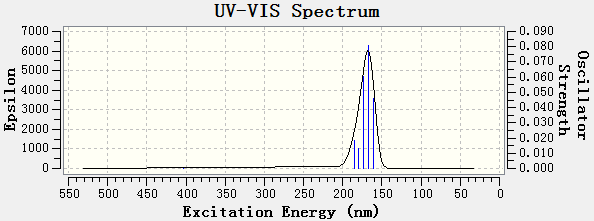 |
 回复此楼
回复此楼» 本帖附件资源列表
-
欢迎监督和反馈:小木虫仅提供交流平台,不对该内容负责。
本内容由用户自主发布,如果其内容涉及到知识产权问题,其责任在于用户本人,如对版权有异议,请联系邮箱:xiaomuchong@tal.com - 附件 1 : td.zip
2014-08-17 17:32:39, 13.57 M
» 收录本帖的淘帖专辑推荐
 下载 下载 | Gaussian模拟光谱 | 经验 | 高斯相关 |
| 荧光计算 | 量子化学基础问题 |
» 猜你喜欢
 半透性容器进行高湿或者低湿研究
已经有0人回复
半透性容器进行高湿或者低湿研究
已经有0人回复
-
分子动力学模拟合作需求
已经有4人回复
-
物理化学论文润色/翻译怎么收费?
已经有276人回复
-
求ENDNOTE破解软件安装包
已经有7人回复
-
河海大学 (211.双一流高校)钙钛矿光电实验室丁勇团队欢迎有志青年!
已经有3人回复
-
黑龙江省原子能研究院化学课题组招收2026级化学专业或化学相关专业硕士生
已经有0人回复
-
26博士申请
已经有0人回复
-
湖北文理学院材料与化工专硕还有调剂名额,欢迎大家推荐考生!
已经有1人回复
-
求助:三乙酰丙酮铁(Fe(acac)₃)标准红外(IR)与XRD谱图/数据
已经有1人回复
-
【接测试】TPD-TPR、TPO、脉冲吸附、原位红外,电化学原位红外,站内联系
已经有0人回复
» 本主题相关价值贴推荐,对您同样有帮助:
- 高斯重复乙醛的原子光谱程序出错
已经有5人回复
- 如何计算荧光光谱
已经有11人回复
- 【求助】G09荧光光谱例子 运行出错
已经有25人回复
hairan
木虫 (著名写手)
瞌睡木虫
- QC强帖: 3
- 应助: 61 (初中生)
- 贵宾: 1.06
- 金币: 4974.3
- 散金: 8072
- 红花: 44
- 帖子: 2901
- 在线: 733.4小时
- 虫号: 432069
- 注册: 2007-08-12
- 性别: GG
- 专业: 理论和计算化学
★ ★ ★ ★ ★ ★ ★ ★ ★ ★ ★ ★ ★ ★
小木虫: 金币+0.5, 给个红包,谢谢回帖
gmy1990: 金币+5 2014-08-18 02:26:33
戴世杰: 金币+8 2014-08-21 12:40:20
小木虫: 金币+0.5, 给个红包,谢谢回帖
gmy1990: 金币+5 2014-08-18 02:26:33
戴世杰: 金币+8 2014-08-21 12:40:20
|
我以前回复过两次类似的问题,但找不到相关的帖子了。 下面的英文是我问Gaussian官方技术支持关于荧光计算的问题,也是基于说明书的算例的问题。 楼主耐心点看看下面的英文。 应该能解决你大部分的问题。 *************************************************************************** 1. A common TD job will give the enough information of verticle excitation and emission in gas phase, but a statespecific job need to be run for that in solvation. I want to the function of the statespecific job. (这一句是我问的问题) The "StateSpecific" approach in this context applies to the excited state, and yes it involves solving self-consistently the "fast" component of the solvent polarization for the target state and non-equilibrium solvation for the "slow" component of the solvent polarization (i.e. the "slow" component of the solvent polarization comes from the origin state). The total polarization is always partitioned into two components, "slow" and "fast". The "slow" part can be regarded as the reorganization of the solvent molecules as a response to a change in the electronic density of the solute. The "fast" part can be regarded as the response of the electrons in the solvent to a change in the electronic density of the solute. For a change in the electronic density of the solute such as a vertical electronic transition, the "slow" component of the polarization is much slower than the timescale of the electronic transition, so the solvent does not have time to respond in this way to the vertical electronic transition. The "fast" component of the polarization, on the other hand, is closer in timescale to the vertical electronic transition on the solute. In an equilibrium solvation calculation, both components are in equilibrium with the solute's density. By default, all ground state calculations assume equilibrium solvation, as well as geometry optimizations of excited states (and also any calculation that involves the computation of the relaxed density of the excited state). Again, in equilibrium solvation processes, both the "slow" and "fast" component of the solvent polarization are in equilibrium with the excited state density. In the case of a TD energy calculation (no excited state density or geometry optimization) for the computation of a vertical electronic excitation, the default is to do a non-equilibrium process. For this case then, the "fast" component of the polarization "responds" to the change in the solute density from ground to excited state, but the "slow" component did not have time to "respond" so it still comes from the one that was in equilibrium with the solute's ground state density. This is the case of both "Step 2" and "Step 3" in the example shown in the manual. In "Step 2", an energy calculation using TD is performed, thus it defaults to non-equilibrium solvation. The solvation effects on the excited states energies are computed by means of a linear response approach. The absorption energies via the linear response approach only are those reported directly in the output of this "Step 2" job. In "Step 3", a step further is taken and a correction of the linear response excitation energy is performed by solving the "fast" component of the solvent polarization self-consistently with the selected excited state density (the "State-Specific" approach). This is generally an improvement over the excitation energies obtained by linear response alone. Note that since this "State-Specific" approach involves the calculation of the excited state density, the program would default to doing an equilibrium solvation calculation on the excited state. However, the goal of "Step 3" is to compute the vertical excitation energy, so as mentioned above, we would like to use the "slow" component of the solvent polarization from the ground state calculation (in "Step 3", the first part does an equilibrium calculation on the ground state saving the solvent reaction field to the checkpoint file) and solving self-consistently the "fast" component with the excited state density (the second part of "Step 3" reads the reaction field from the checkpoint file, the one from the ground state calculation, keeps the "slow" component as is, and solves the "fast" component self-consistently with the excited state density). The absorption energy via the "State-Specific" approach is the energy difference between the excited state energy after all PCM corrections from the non-equilibrium calculation in "Step 3" and the ground state energy resulting from the equilibrium process (either first part of "Step 3" or final, optimized geometry, energy from "Step 1", the two ground state energies should be the same). In a TD geometry optimization of an excited state, since one is looking for the equilibrium geometry, the default is to do equilibrium solvation, so the two components, "slow" and "fast", of the polarization are in equilibrium with the solute's excited state density. All "Step 4", "Step 5" and "Step 6" use equilibrium solvation for the selected excited state. The emission energy (vertical energy of the excited to ground state transition) by means of a linear response approach can be found in the output of "Step 4". For the final (optimized) geometry in "Step 4", the "excitation energy" shown in this output would be equal to the emission energy since it is the result of an equilibrium calculation on the selected excited state. "Step 6" and "Step 7" are analogous to the two parts of "Step 3" but this time for the opposite transition (excited to ground states). Thus, "Step 6" is analogous to the first part of "Step 3", it is an equilibrium calculation on the origin state (now the excited state) in which both "slow" and "fast" components of solvent polarization are solved self-consistently with the excited state density (this calculation can be regarded as a correction of the excited state energy beyond the linear response approach, which was done in "Step 4"  . Now, this "Step 6" saves the solvent reaction field to the checkpoint file. "Step 7" reads this information from the file (just like the second part of "Step 3" and performs a non-equilibrium calculation of the ground state energy, using the "slow" component of the solvent polarization from the excited state calculation ("Step 6" and only doing the "fast" component of the solvent polarization self-consistent with the ground state density. The emission energy via the "State-Specific" approach would be the energy difference between the excited state energy after all PCM corrections from "Step 6" and the ground state energy resulting from the non-equilibrium process in "Step 7". . Now, this "Step 6" saves the solvent reaction field to the checkpoint file. "Step 7" reads this information from the file (just like the second part of "Step 3" and performs a non-equilibrium calculation of the ground state energy, using the "slow" component of the solvent polarization from the excited state calculation ("Step 6" and only doing the "fast" component of the solvent polarization self-consistent with the ground state density. The emission energy via the "State-Specific" approach would be the energy difference between the excited state energy after all PCM corrections from "Step 6" and the ground state energy resulting from the non-equilibrium process in "Step 7".These are a few relevant references that deal with different aspects of PCM, equilibrium vs. non-equilibrium solvation, solvation effects in electronic transition calculations: - A review that covers many of the aspects of continuum solvation models (including a section in non-equilibrium): J. Tomasi, B. Mennucci and R. Cammi, "Quantum Mechanical Continuum Solvation Models," Chem. Rev., 105 (2005) 2999-3093. - A couple of early references dealing with solvation in electronic transitions: M. Cossi and V. Barone, “Solvent effect on vertical electronic transitions by the polarizable continuum model,” J. Chem. Phys., 112 (2000) 2427-35. M. Cossi and V. Barone, “Time-dependent density functional theory for molecules in liquid solutions,” J. Chem. Phys., 115 (2001) 4708-17. - A couple of references related to the State-Specific (or external iteration) treatment of solvation in electronic transitions: R. Improta, V. Barone, G. Scalmani, and M. J. Frisch, “A state-specific polarizable continuum model time dependent density functional method for excited state calculations in solution,” J. Chem. Phys., 125 (2006) 054103. R. Improta, G. Scalmani, M. J. Frisch, and V. Barone, “Toward effective and reliable fluorescence energies in solution by a new State Specific Polarizable Continuum Model Time Dependent Density Functional Theory Approach,” J. Chem. Phys., 127 (2007) 074504. 2. For seven example steps in the guide of scrf keywords, each step need read the data from chk file from the second step on. But the guide of those steps does not specify which step's chk should be used in current step. For example, the third step read the chk of first step or second step? Each step use the chk of former step? (这一段也是我问的问题) - Step 2: requires a copy of the checkpoint file from Step 1. - Step 3: will work with either a copy of checkpoint file from Step 1 or from Step 2. - Step 4: requires a copy of the checkpoint file from Step 2. - Step 5: requires a copy of the checkpoint file from Step 4. - Step 6: requires a copy of the checkpoint file from Step 4. - Step 7: requires a copy of the checkpoint file from Step 6. Please, note that there was a problem with G09 rev. A.02 because the "StateSpecific" option was connected incorrectly, but this has been fixed in our latest release, G09 rev. B.01. So, if you are using G09 rev. A.02, you would need to use "ExternalIteration" or "SelfConsistent" instead of the "StateSpecific" (shown in the example in the manual). If you are using G09 rev. B.01, then you can use "ExternalIteration", "SelfConsistent" or "StateSpecific", as the three are synonyms. If you follow the whole example given in the manual with G09 rev. A.02 but using "ExternalIteration", you should obtain the following results on each one of the 7 proposed jobs in the example: 1) Energy of ground state optimized geometry in solution: SCF Done: E(RB3LYP) = -153.851761719 A.U. after 1 cycles 2) Vertical excitation (absorption) to first excited state from Linear Response calculation in solution (using ground state optimized geometry from job 1): Excited State 1: Singlet-A" 4.3767 eV 283.28 nm f=0.0000 =0.000 3) Vertical excitation (absorption) to first excited state from a non-equilibrium state-specific calculation (using "ExternalIteration" in solution (using ground state optimized geometry from job 1):SC-PCM: The total energy including the PCM contribution is -153.687679830 a.u. Taking the difference of this energy minus the ground state energy (job 1), the excitation energy is 277.69 nm. 4) Geometry optimization of first excited state in solution (Final energy): Excited State 1: Singlet-A 3.2076 eV 386.53 nm f=0.0014 =0.000 5) Frequency calculation to confirm that the geometry optimized in job 4 is a stationary point, and a minimum in the potential energy surface of the excited state. 6) Energy of first excited state from a equilibrium state-specific calculation (using "ExternalIteration" in solution (using optimized geometry from job 4):SC-PCM: The total energy including the PCM contribution is -153.707151097 a.u. 7) Energy of ground state from a non-equilibrium calculation in solution (using first excited state optimized geometry from job 4 and its reaction field from job 6): SCF Done: E(RB3LYP) = -153.822029934 A.U. after 10 cycles The difference between these last two energies gives the vertical emission energy, which, in this case, is 396.62 nm. |

» 本帖已获得的红花(最新10朵)
 小范范1989
2楼2014-08-17 22:15:20
小范范1989
木虫 (著名写手)
- 应助: 123 (高中生)
- 金币: 3821.3
- 散金: 968
- 红花: 243
- 帖子: 1979
- 在线: 452.8小时
- 虫号: 2013403
- 注册: 2012-09-19
- 性别: GG
- 专业: 原子和分子物理
3楼2014-09-22 17:08:47
20131802107
木虫 (小有名气)
- 应助: 0 (幼儿园)
- 金币: 4209.3
- 红花: 9
- 帖子: 160
- 在线: 47.5小时
- 虫号: 3026151
- 注册: 2014-03-07
- 性别: GG
- 专业: 电力系统
4楼2014-09-22 23:33:01
小范范1989
木虫 (著名写手)
- 应助: 123 (高中生)
- 金币: 3821.3
- 散金: 968
- 红花: 243
- 帖子: 1979
- 在线: 452.8小时
- 虫号: 2013403
- 注册: 2012-09-19
- 性别: GG
- 专业: 原子和分子物理
5楼2014-09-30 21:48:59
6楼2015-06-21 23:22:02
brover
捐助贵宾 (正式写手)
学术刺客
- 应助: 4 (幼儿园)
- 金币: 7725.5
- 散金: 1499
- 红花: 5
- 帖子: 695
- 在线: 228.7小时
- 虫号: 332450
- 注册: 2007-03-26
- 性别: GG
- 专业: 理论和计算化学
7楼2015-06-21 23:41:39
8楼2015-06-22 01:40:52
★
小木虫: 金币+0.5, 给个红包,谢谢回帖
小木虫: 金币+0.5, 给个红包,谢谢回帖
|
第四步优化激发态结构的时候没有加SCRF=externaliteration,若加上,结果应该不一样?是不是无论快过程还是慢过程,若加上SCRF=externaliteration则自动依据溶质电子状态调整溶剂电子状态,若不加SCRF=externaliteration,则无论快过程还是慢过程,都不会依据溶质电子状态调整溶剂电子状态。比如step4就没加,实际step4是个慢过程。step1也没加,实际也是慢过程。在step1和step4过程中,都不会依据溶质电子状态调整溶剂电子状态?step1和step4过程中溶剂是否都进行了reorganization of the solvent molecules as a response to a change in the electronic density of the solute?是不是都没有,或者只有step4有(因step1电子结构未变)? step1为基态结构优化不做详细介绍。以下是step4的输入文件: %chk=C:\Users\DaiShijie\Desktop\04-ac.chk # b3lyp/6-31+g(d,p) td=(read,nstates=6,root=1) scrf=(solvent=ethanol) geom=modify guess=read opt=rcfc Title Card Required 0 1 4 1 2 3 10.0 5 1 2 7 -50.0 |
9楼2015-06-22 01:50:58
★
小木虫: 金币+0.5, 给个红包,谢谢回帖
小木虫: 金币+0.5, 给个红包,谢谢回帖
|
楼主戴世杰提出了三个问题: 1.什么是线性响应溶剂化的垂直激发?2.什么是平衡和非平衡溶剂化?3.我的问题:什么是特定态溶剂化? 我没做过荧光,理论底子也不好,也很想学习荧光。读了楼上帖子,试着回答这三个问题,希望同时提高自己 1.线性响应linear response approach的意思是,把溶剂对溶质的影响作为一个微扰项放到哈密顿算符中去,然后重新计算溶质的性质;一般程序都是做线性响应计算的,但PCM方法不是。垂直激发就是基态和激发态结构全同。但问题1还是不能回答。 2.非平衡溶剂化意思是尽管溶质电子结构发生了改变,但溶剂不能翻转扭转以适应新的溶质状态,相当于几何冻结,但此时溶剂的electron density可以改变而不冻结;一般跃迁前后都是这种情况;其实此时溶质也是几何冻结的。平衡溶剂化意思是溶剂既可以改变electron density又可以同时调整几构型,其实此时溶质也是可以调整几何结构和改变electron density的。一般(基态激发态)结构优化都是平衡溶剂化。 3.针对溶质,不同的(激发)态有不同的electron density,溶剂会依据溶质的electron density调整溶剂的electron density。所以不同的溶质态应对应不同的溶剂electron density。不能采用同一种溶剂electron density应付所有的溶质态。这里的溶质态指的是溶质的激发态,需要用ROOT=N指定。当指定溶质的激发态后,若采用关键词scrf=externaliteration, 则程序会依据指定溶质态调整溶剂electron density,但此时由于是NonEq过程,所以溶质几何冻结依然保持为基态时候的结合状况。 |
10楼2015-06-22 20:03:18