









| 查看: 718 | 回复: 2 | |||
| 本帖产生 1 个 翻译EPI ,点击这里进行查看 | |||
YauYau木虫 (正式写手)
YY
|
[求助]
修改英文
|
||

|
?????????????????????, EUO??????????О顰SHANG PIN?????????????11146?NEUO???????????????t????(????????: The Divine Farmer??s Herb-Root Classic) ????????????????????????????????v???(?@???й??????????????????V??(????V????в???~??))??????,?Щ??W?о??????~????????c???o??????, ????V???????????????????????о??У?EUO?~??????????ж??????????????????????????????????????????????????????????c??????,?????????P?ЙC?????е????????ж????????????K??????N???????翹???????????????????????????????????????????????????????????????????????????????????YEUO??N?v?, ???W???????????????????????EUO????????????C????????w????????????c?? Since the pre-Christian era in China, the EUO was listed as ??SHANG PIN?? by ancient Chinese pharmacopoeia. It has been recorded over 11,146 indigenous plant taxa as medicinal use. (The Divine Farmer??s Herb-Root Classic from Shennong Bencao Jing) . The bark as Chinese medicinal herbs, with the oldest tonic material for two thousands of years. (By indicating Chinese codex, Shen Nong Ben Cao Jing and Ben Cao Gan Mu (Materia Medica, a dictionary of Chinese herbs)). After that, some scientific research suggest that the part of leaves extract contains chemical components are similar to bark, thus, it was widely used as herbs instead with bark . In clinical studies, they both leaves and bark of EUO has various active components, including iridoid, lignan, phenol, phenylpropanoid, flavonoids, phenolic acid, terpenes, and other from organism, saccharide and glycosides. All of the compounds possess various pharmacological activity, which used in treatment of many diseases, such as anti-osteoporotic, anti-oxidant, anti-obesity, anti-mutagenicity, anti-microbial, anti-diabetic, immunosuppressive activities, and regulation of nervous system. In this review article discussed aims to summarize up-to-date information for histroy, chemistry and pharmacology in EUO species. Especially the pharmacology activity from EUO extracts due the potential mechanisms will provide some new focus and specific content. |
 回复此楼
回复此楼» 猜你喜欢
 上海工程技术大学 激光智能制造课题组 2027级博士研究生招生
已经有7人回复
上海工程技术大学 激光智能制造课题组 2027级博士研究生招生
已经有7人回复
-
售SCI文章,我:8O.5.5.1O.54,科目全,可十急
已经有3人回复
-
售SCI一区T0P文章,我:8O.55.1.O.54,科目全,可伽急
已经有3人回复
-
售SCI一区T0P文章,我:8O.55.1.O.5.4,科目齐全,可+急
已经有3人回复
-
售SCI一区T0P文章,我:8.O.55.1.O54,科目全,可伽急
已经有3人回复
-
售SCI文章,我:8O5.5.1.O.54,科目齐全,可+急
已经有3人回复
-
售SCI一区T0P文章,我:8.O.55.1.O.54,科目齐全,可+急
已经有3人回复
-
售SCI文章,我:8O5.5.1.O.54,科目齐全,可+急
已经有4人回复
-
售SCI一区T0P文章,我:8.O.55.1.O.5.4,科目全,可+急
已经有4人回复
-
售SCI一区T0P文章,我:8O.55.1.O.5.4,科目齐全,可+急
已经有4人回复
【答案】应助回帖
★ ★
真强必胜: 金币+2, good 2014-07-03 13:40:56
真强必胜: 金币+2, good 2014-07-03 13:40:56
Since the pre-Christian era of China, the EUO was listed as “SHANG PIN” in ancient Chinese pharmacopoeia.It has been recorded over 11,146 indigenous plant taxa as medicinal use. (The Divine Farmer’s Herb-Root Classic from Shennong Bencao Jing) .The bark was used as Chinese medicinal herbs and the oldest tonic material for two thousands of years.(It was recorded in Chinese codex, Shen Nong Ben Cao Jing and Ben Cao Gan Mu (Materia Medica, a dictionary of Chinese herbs)). After that, some scientific researches suggested that the extract of leaves contains similar chemical components to bark"s, thus, it was widely used as herbs instead of bark .In clinical experiments,both leaves and bark of EUO have various active components, including iridoid, lignan, phenol, phenylpropanoid, flavonoids, phenolic acid, terpenes, and other from organism, saccharide and glycosides.All of the compounds possess various pharmacological activity,which were used in treatment of many diseases,such as anti-osteoporotic, anti-oxidant, anti-obesity, anti-mutagenicity, anti-microbial, anti-diabetic, immunosuppressive activities, and regulation of nervous system,In this review article discussed,it aims to summarize up-to-date informations for histroy, chemistry and pharmacology of EUO species. Especially the potential mechanisms of the pharmacology activity from EUO extracts will provide some new focuses and specific contents. |


2楼2014-07-03 10:41:19
phu_grassman
荣誉版主 (知名作家)
快乐岛、布吉岛岛主

- 翻译EPI: 265
- 应助: 7 (幼儿园)
- 贵宾: 1.392
- 金币: 7538.7
- 散金: 11599
- 红花: 107
- 沙发: 11
- 帖子: 5611
- 在线: 1480.2小时
- 虫号: 1151372
- 注册: 2010-11-20
- 专业: 电化学
- 管辖: English Cafe
【答案】应助回帖
★ ★ ★ ★ ★ ★ ★ ★ ★ ★ ★ ★ ★ ★ ★ ★ ★ ★ ★ ★ ★ ★ ★ ★ ★
RXMCDM: 金币+5, 多谢应助! 2014-07-05 09:16:36
YauYau: 金币+20, 翻译EPI+1, ★★★★★最佳答案, Thanks! 2014-07-08 13:38:41
RXMCDM: 金币+5, 多谢应助! 2014-07-05 09:16:36
YauYau: 金币+20, 翻译EPI+1, ★★★★★最佳答案, Thanks! 2014-07-08 13:38:41
|
清样: Since the pre-Christian era in China, the EUO has been listed as “SHANG PIN” in the ancient Chinese pharmacopoeia. Over 11,146 indigenous plant taxa were recorded for medicinal use (The Divine Farmer’s Herb-Root Classic from Shennong Bencao Jing) . The bark has been used as an old tonic material for two thousand years in China as indicated in the Chinese codex. (Shennong Ben cao Jing and Ben Cao Gang Mu (Materia Medica, a dictionary of Chinese herbs)). Subsequently, some scientific research suggested that the extract of the leaves contains similar chemical components to bark. Therefore, it was widely used as bark substitute as herbs. In clinical studies, both the leaves and bark EUO have various active components, including iridoid, lignan, phenol, phenylpropanoid, flavonoids, phenolic acid, terpenes, and saccharide- and glycosides- related organic compounds. All of the compounds possess various pharmacological activity, which are used in the treatment of many diseases, such as anti-osteoporosis, anti-oxidation, anti-obesity, anti-mutagenicity, anti-microbe, anti-diabete, immunosuppressive activities, and regulation of nervous system. This review article aims to give an overview of the history of the EUO species, and summarize the up-to-date information related with their chemistry and pharmacology. Especially, the potential pharmacological mechanisms for the EUO extracts will shed new light on ...(此句不完整!) 修改样: 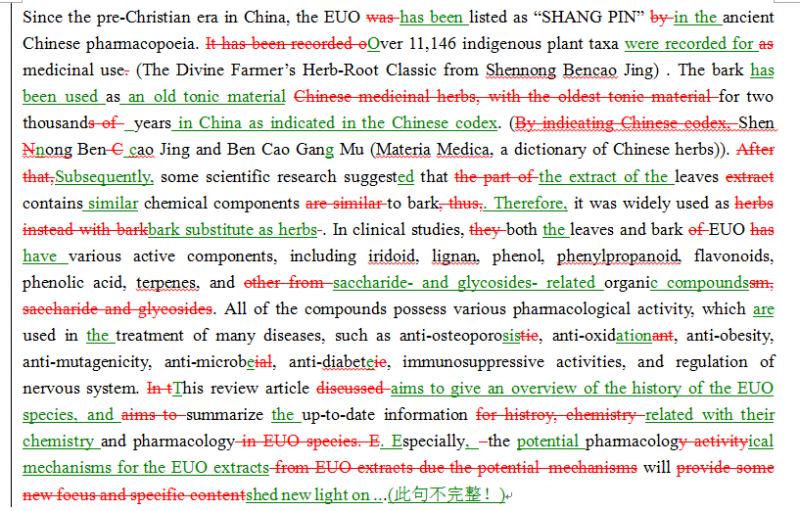 |
3楼2014-07-05 09:14:06
