









| 查看: 2730 | 回复: 31 | ||
| 【奖励】 本帖被评价26次,作者1949stone增加金币 20.6 个 | ||
[资源]
Phylogenetic Networks:Concepts, Algorithms and Applications
|
||

Phylogenetic Networks:Concepts, Algorithms and Applications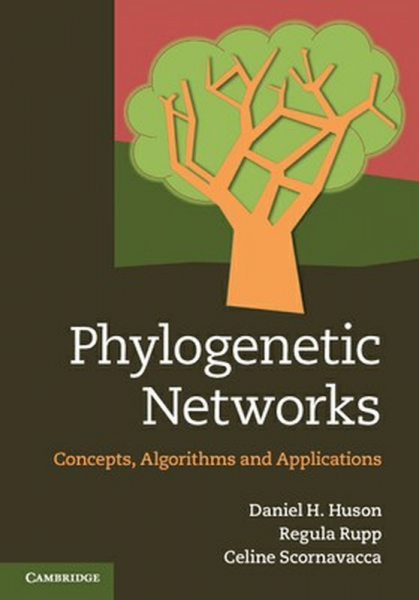 The evolutionary history of species is traditionally represented using a rooted phylogenetic tree. However, when reticulate events such as hybridization, horizontal gene transfer or recombination are believed to be involved, phylogenetic networks that can accommodate non-treelike evolution have an important role to play. This book provides the first interdisciplinary overview of phylogenetic networks. Beginning with a concise introduction to both phylogenetic trees and phylogenetic networks, the fundamental concepts and results are then presented for both rooted and unrooted phylogenetic networks. Current approaches and algorithms available for computing phylogenetic networks from different types of datasets are then discussed, accompanied by examples of their application to real biological datasets. The book also summarizes the algorithms used for drawing phylogenetic networks, along with the existing software for their computation and evaluation. All datasets, examples and other additional information and links are available fromthe book’s companion website at: www.phylogenetic-networks.org. Daniel H. Huson is Professor of Algorithms in Bioinformatics at T¨ubingenUniversity.He has authored numerous papers in bioinformatics, biology and mathematics, and is the main author of the widely used computer programs Dendroscope, MEGAN and SplitsTree. Regula Rupp received her PhD in Mathematics from Bern University in 2006. Between 2007 and 2009 she held a postdoctoral research position at T¨ubingen University, working with Daniel H. Huson in developing robust methods for computing phylogenetic networks from real biological data. Celine Scornavacca is a postdoctoral researcher working on algorithms for phylogenetic networks with Daniel H. Huson at T¨ubingen University. She received her PhD in Computer Science from Montpellier University in 2009. Preface page ix Part I Introduction 1 1 Basics 3 1.1 Overview 3 1.2 Undirected and directed graphs 3 1.3 Trees 7 1.4 Rooted DAGs 8 1.5 Traversals of trees and DAGs 9 1.6 Taxa, clusters, clades and splits 11 2 Sequence alignment 13 2.1 Overview 13 2.2 Pairwise sequence alignment 13 2.3 Multiple sequence alignment 20 3 Phylogenetic trees 23 3.1 Overview 23 3.2 Phylogenetic trees 24 3.3 The number of phylogenetic trees 27 3.4 Models of DNA evolution 29 3.5 The phylogenetic tree reconstruction problem 32 3.6 Sequence-based methods 33 3.7 Maximum parsimony 33 3.8 Branch-swapping methods 37 3.9 Maximum likelihood estimation 40 3.10 Bootstrap analysis 43 3.11 Bayesian methods 45 3.12 Distance-based methods 50 3.13 UPGMA 52 3.14 Neighbor-joining 54 3.15 Balanced minimum evolution 56 3.16 Comparing trees 60 3.17 Consensus trees 63 3.18 The Newick format 66 4 Introduction to phylogenetic networks 68 4.1 Overview 69 4.2 What is a phylogenetic network? 69 4.3 Unrooted phylogenetic networks 71 4.4 Rooted phylogenetic networks 76 4.5 The extended Newick format 81 4.6 Which types of networks are currently used in practice? 83 Part II Theory 85 5 Splits and unrooted phylogenetic networks 87 5.1 Overview 87 5.2 Splits 88 5.3 Compatibility and incompatibility 90 5.4 Splits and clusters 91 5.5 Split networks 93 5.6 The canonical split network 97 5.7 Circular splits and planar split networks 102 5.8 Weak compatibility 105 5.9 The split decomposition 107 5.10 Representing trees in a split network 121 5.11 Comparing split networks 122 5.12 T-theory 122 6 Clusters and rooted phylogenetic networks 127 6.1 Overview 127 6.2 Clusters, compatibility and incompatibility 128 6.3 Hasse diagrams 132 6.4 Cluster networks 133 6.5 Rooted phylogenetic networks 138 6.6 The lowest stable ancestor 140 6.7 Representing trees in rooted networks 144 6.8 Hardwired and softwired clusters 146 6.9 Minimum rooted phylogenetic networks 149 6.10 Decomposability 150 6.11 Topological constraints on rooted networks 156 6.12 Cluster containment in rooted networks 168 6.13 Tree containment 171 6.14 Comparing rooted networks 171 Part III Algorithms and applications 185 7 Phylogenetic networks from splits 187 7.1 The convex hull algorithm 187 7.2 The circular network algorithm 190 8 Phylogenetic networks from clusters 193 8.1 Cluster networks 193 8.2 Divide-and-conquer using decomposition 194 8.3 Galled trees 198 8.4 Galled networks 201 8.5 Level-k networks 210 9 Phylogenetic networks from sequences 216 9.1 Condensed alignments 216 9.2 Binary sequences and splits 216 9.3 Parsimony splits 218 9.4 Median networks 219 9.5 Quasi-median networks 223 9.6 Median-joining 227 9.7 Pruned quasi-median networks 232 9.8 Recombination networks 233 9.9 Galled trees 240 10 Phylogenetic networks from distances 250 10.1 Distances and splits 250 10.2 Minimum spanning networks 251 10.3 Split decomposition 251 10.4 Neighbor-net 254 10.5 T-Rex 261 11 Phylogenetic networks from trees 265 11.1 Consensus split networks 265 11.2 Consensus super split networks for unrooted trees 268 11.3 Distortion-filtered super split networks for unrooted trees 273 11.4 Consensus cluster networks for rooted trees 274 11.5 Minimum hybridization networks 275 11.6 Minimum hybridization networks and galled trees 285 11.7 Networks from multi-labeled trees 287 11.8 DLT reconciliation of gene and species trees 289 12 Phylogenetic networks from triples or quartets 300 12.1 Trees from rooted triples 300 12.2 Level-k networks from rooted triples 302 12.3 The quartet-net method 308 13 Drawing phylogenetic networks 312 13.1 Overview 312 13.2 Cladograms for rooted phylogenetic trees 312 13.3 Cladograms for rooted phylogenetic networks 316 13.4 Phylograms for rooted phylogenetic trees 323 13.5 Phylograms for rooted phylogenetic networks 324 13.6 Drawing rooted phylogenetic networks with transfer edges 327 13.7 Radial diagrams for unrooted trees 328 13.8 Radial diagrams for split networks 329 14 Software 332 14.1 SplitsTree 332 14.2 Network 333 14.3 TCS 334 14.4 Dendroscope 334 14.5 Other programs 335 Glossary 338 References 343 Index 358 [ Last edited by 1949stone on 2013-12-17 at 12:38 ] |
 回复此楼
» 本帖附件资源列表
-
欢迎监督和反馈:小木虫仅提供交流平台,不对该内容负责。
本内容由用户自主发布,如果其内容涉及到知识产权问题,其责任在于用户本人,如对版权有异议,请联系邮箱:xiaomuchong@tal.com - 附件 1 : Phylogenetic_Networks.pdf
2013-12-17 12:33:29, 6.73 M
» 猜你喜欢
 分子量 1157 的 PROTAC 怎么配不析出:SGK3-PROTAC1 的溶解、分装与图谱复核
已经有0人回复
-
logP 6.1 的羧酸怎么配母液:GSK 650394 的溶解窗口与稀释顺序
已经有0人回复
-
化学工程及工业化学论文润色/翻译怎么收费?
已经有159人回复
-
从"水不溶"到 71 mg/mL:雷特格韦的 pH 依赖溶解与螯合色谱边界
已经有0人回复
-
133 Ų 的极性表面积,如何决定 TNG462 的母液配制与色谱条件
已经有0人回复
-
两个氟原子与一段氨基甲酸甲酯:BLU-5937 的母液配制与稳定性边界
已经有0人回复
-
司美那非(TPN171):从嘧啶酮母核到工艺放大的结构、色谱与质控参数解析
已经有0人回复
-
同一瓶粉末,核磁却跑出两套峰:PF-07976016 的结构与母液笔记
已经有0人回复
-
诚挚招收全日制博士!!!中国农业科学院麻类研究所谭志坚研究员课题组招收博士
已经有23人回复
-
从片段筛选到公斤级工艺:PF-07293893 的 γ3 选择性结构解析
已经有0人回复
-
从噁唑酮母核到分子胶界面:BMS-986482 的结构、色谱与质控参数解析
已经有0人回复

15楼2014-09-22 16:42:30
19楼2015-01-15 22:29:41
20楼2015-01-15 22:30:34
23楼2015-03-21 09:58:57

29楼2018-02-07 11:36:43
31楼2021-04-26 16:14:31
简单回复
jinhx872楼
2013-12-17 13:11
回复
五星好评 顶一下,感谢分享!
2013-12-17 16:06
回复
五星好评 顶一下,感谢分享!
gooo684楼
2013-12-17 16:46
回复
五星好评 
2013-12-18 06:42
回复
五星好评 顶一下,感谢分享!
loriy6楼
2013-12-18 09:30
回复
三星好评 顶一下,感谢分享!
2014-01-14 23:39
回复
五星好评 顶一下,感谢分享!
zkrahfy8楼
2014-02-06 14:34
回复
五星好评 顶一下,感谢分享!
小仙女38669楼
2014-04-05 15:45
回复
五星好评 顶一下,感谢分享!
yypcnbe10楼
2014-05-15 21:41
回复
五星好评 顶一下,感谢分享!
59730760711楼
2014-05-27 20:38
回复
五星好评 顶一下,感谢分享!
laqiwe12楼
2014-05-30 22:14
回复
五星好评 顶一下,感谢分享!
zkrahfy13楼
2014-07-13 21:53
回复
顶一下,感谢分享!
丛海燕14楼
2014-09-02 17:10
回复
五星好评 顶一下,感谢分享!
二月的风cwh16楼
2014-10-02 17:19
回复
五星好评 顶一下,感谢分享!
紫霙17楼
2014-10-17 18:21
回复
五星好评 顶一下,感谢分享!
lauren18楼
2015-01-15 11:08
回复
五星好评 顶一下,感谢分享!
小平917521楼
2015-02-25 09:58
回复
五星好评 顶一下,感谢分享!
小平917522楼
2015-02-25 09:58
回复
感谢分享
二月的风cwh24楼
2015-11-25 08:38
回复
顶一下,感谢分享!
dectab25楼
2015-12-02 14:13
回复
五星好评 顶一下,感谢分享!
liyueyue26楼
2016-02-21 17:35
回复
五星好评 顶一下,感谢分享!
来苏儿27楼
2016-02-29 17:24
回复
五星好评 顶一下,感谢分享!
yan66628楼
2018-01-17 15:35
回复
ronghua432130楼
2019-11-24 21:49
回复
五星好评 顶一下,感谢分享!
D的小酒窝32楼
2024-06-19 21:53
回复
五星好评 顶一下,感谢分享!
