









| 查看: 1004 | 回复: 16 | |||
| 【奖励】 本帖被评价15次,作者ywl19870612增加金币 11.8 个 | |||
[资源]
Management of Food Allergens
|
|||

|
Management of Food Allergens 编者:Jacqueline Coutts , Richard Fielder 出版社: Wiley-Blackwell 出版时间:2009年10月6日 精装: 272页 语种: 英语 ISBN: 1405167580 目录 Contributors. Preface. PART I: RISK ASSESSMENT. 1 The reality of food allergy: the patients’ perspective (David Reading). 1.1 Background. 1.2 Consumer reaction. 1.3 Supporting consumers. 1.4 Allergy services. 1.5 Teenagers and young adults. 1.6 Food labelling. 1.7 Allergen thresholds. 1.8 Food alerts. 1.9 Our work with industry. 1.10 The work of the FSA. 1.11 Schools. 1.12 Eating out. 1.13 Daily life with a food allergy. 1.14 Hopes for the future. References. 2 Clinical incidence of food allergy (Zsolt Szépfalusi and Thomas Eiwegger). 2.1 Introduction. 2.2 Case 1 – Severe anaphylaxis to an unknown food product. 2.3 Case 2 – Idiopathic anaphylaxis. 2.4 Case 3 – Cross-reactivity or contamination? 2.5 Case 4 – To vaccinate or not in egg allergy. 2.6 Case 5 – Adrenalin auto-injector for all egg-allergic patients? 2.7 Case 6 – Immunotherapy for oral allergy syndrome? 2.8 Conclusion. References. 3 Identification and characterisation of food allergens (E.N. Clare Mills, Philip Johnson, Yuri Alexeev, and Heimo Breiteneder). 3.1 Introduction. 3.2 Classification of food allergens. 3.3 Plant food allergens. 3.4 Animal food allergens. 3.5 Conclusions. References. 4 Coeliac disease: allergy or intolerance? (Norma McGough). 4.1 Introduction. 4.2 About coeliac disease. 4.3 Prevalence and diagnosis. 4.4 What is gluten? 4.5 The gluten-free diet. 4.6 Gluten-free foods. 4.7 Prescriptions. 4.8 Allergen labelling. 4.9 Food production. 4.10 The Codex standard. 4.11 Gluten testing. 4.12 Gluten-free catering. 4.13 Cross-contamination. 4.14 Nutritional adequacy. 4.15 Lactose intolerance. 4.16 Coeliac UK. References. PART II: RISK MANAGEMENT. 5 Risk management – the principles (René Crevel). 5.1 Introduction. 5.2 Allergen management: the issues. 5.3 Development of allergen management plans: principles and considerations. 5.4 Objectives. 5.5 Application. 5.6 Concluding remarks. References. 6 Risk management – operational implications (Anton J. Alldrick). 6.1 Introduction. 6.2 Identifying the hazard. 6.3 Managing the hazard. 6.4 Conclusion. References. 7 Choices for cleaning and cross-contact (Steve Bagshaw). 7.1 Allergen management and cleaning. 7.2 The cleaning process. 7.3 Principles of cleaning. 7.4 Open plant cleaning. 7.5 Dry cleaning. 7.6 Manual cleaning. 7.7 Foam and gel cleaning. 7.8 Cross-contamination. 7.9 Floor cleaning. 7.10 Tray and rack washing machines. 7.11 Cleaning-in-place. 7.12 Management of allergen cross-contamination. 7.13 Cleaning management. 7.14 The cleaning programme. References. 8 Validation of cleaning and cross-contact (Helen M. Brown). 8.1 Introduction. 8.2 Validation of a cleaning regime. 8.3 Sampling to validate cleaning. 8.4 What to measure to validate cleaning. 8.5 Summary. References. 9 Validation, standardisation and harmonisation of allergen activities in Europe and worldwide (Bert Popping). 9.1 Analytical methods. 9.2 Method validation. 9.3 Standardisation of methods. 9.4 Harmonisation. References. 10 Standardisation of analytical methodology with special reference to gluten analysis (Ingrid Malmheden Yman). 10.1 Introduction. 10.2 Methods and standards. 10.3 Gluten analysis. 10.4 Gluten determination. 11 Analytical choices (Marie-Claude Robert). 11.1 Development of allergen testing. 11.2 Test formats. 11.3 Commercial test kits. 11.4 Analytical issues specific to immunoassays. 11.5 Conclusions. References. 12 Food allergen method development programme at Health Canada: support to standard setting and consumer protection (Samuel Benrejeb Godefroy, Michael Abbott, Terry Koerner, Dorcas Weber, and Theresa Paolisini). 12.1 Rationale to ACT on preventing food allergy incidents in Canada. 12.2 Health Canada’s food allergen methodology programme. 12.3 Conclusion. References. PART III: RISK COMMUNICATION. 13 Finished product labelling and legislation (Sue Hattersley). 13.1 Introduction. 13.2 Legislation on allergen labelling – European Directive 2003/89/EC and subsequent amendments. 13.3 Allergen cross-contamination and advisory labelling (such as ‘May Contain’ statements). 13.4 Provision of allergy information for foods that are not pre-packed. 13.5 ‘Free from’ foods. 13.6 Conclusions. References. 14 Guidelines for manufacturing and certification programmes (Neil Griffiths). 14.1 Preface. 14.2 Introduction. 14.3 The law. 14.4 Voluntary information. 14.5 Guidelines. 14.6 Certification schemes. 14.7 Training. 14.8 The use of risk assessment. 14.9 Management. 14.10 The environment. 14.11 Labelling and communication. 14.12 Thresholds. 14.13 Testing. 14.14 Conclusions. References. 15 Risk communication – a manufacturer’s perspective (Clive Beecham). 15.1 Background. 15.2 The process of going ‘nut free’. 15.3 The factory changes. 15.4 People disciplines. 15.5 Verification. 15.6 Retailer reaction. 15.7 What is nut free? – the problem of evolving science. 15.8 The need for thresholds. Appendix: Useful web links. Index. 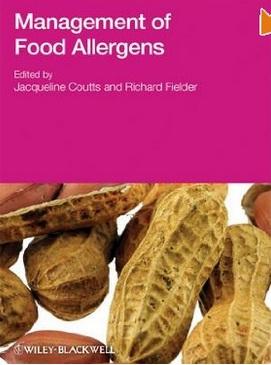 Cover.jpg |
 回复此楼
回复此楼» 本帖附件资源列表
-
欢迎监督和反馈:小木虫仅提供交流平台,不对该内容负责。
本内容由用户自主发布,如果其内容涉及到知识产权问题,其责任在于用户本人,如对版权有异议,请联系邮箱:xiaomuchong@tal.com - 附件 1 : ManagementofFoodAllergens食物过敏原管理(JacquelineCoutts,RichardFielder)(2009).pdf
2013-03-30 21:32:38, 3 M
» 猜你喜欢
 电子科技大学(深圳)高等研究院陈明豪课题组招收推免硕士研究生
已经有816人回复
电子科技大学(深圳)高等研究院陈明豪课题组招收推免硕士研究生
已经有816人回复
-
金铜纳米合成
已经有0人回复
-
食品科学论文润色/翻译怎么收费?
已经有96人回复
-
求助1977版中国药典,非常感谢!!!
已经有1人回复
-
萝卜干防腐 馊酸味 微生物
已经有1人回复
-
求助bncc来源的金黄色葡萄球菌批号
已经有1人回复
-
国自然和省自然祈祷
已经有52人回复
-
祈福今年面上得中
已经有14人回复
-
国社科又开始会评了,不知道这次命运如何
已经有14人回复
-
基金评审意见有问题
已经有5人回复
简单回复
rotam2楼
2013-03-31 06:36
回复
五星好评 顶一下,感谢分享!
jinhx873楼
2013-03-31 07:23
回复
五星好评 顶一下,感谢分享!
何君4楼
2013-03-31 16:13
回复
五星好评 顶一下,感谢分享!
2013-03-31 20:33
回复
五星好评 顶一下,感谢分享!
kane356楼
2013-03-31 21:22
回复
五星好评 顶一下,感谢分享!
老少爷们儿7楼
2013-03-31 22:30
回复
五星好评 顶一下,感谢分享!
2013-04-01 13:03
回复
五星好评 顶一下,感谢分享!
2013-04-01 16:16
回复
五星好评 顶一下,感谢分享!
xuezhou8810楼
2013-11-13 11:45
回复
五星好评 顶一下,感谢分享!
lossttee11楼
2014-07-07 16:03
回复
五星好评 顶一下,感谢分享!
wesley_Li12楼
2015-01-23 23:47
回复
五星好评 顶一下,感谢分享!
fly51013楼
2015-01-26 13:39
回复
三星好评 顶一下,感谢分享!
xiaxiaobo14楼
2015-03-09 21:31
回复
五星好评 顶一下,感谢分享!
caas200615楼
2015-04-12 10:33
回复
五星好评 顶一下,感谢分享!
xiaxiaobo16楼
2015-04-19 09:57
回复
顶一下,感谢分享!
boy168917楼
2015-08-28 13:44
回复
五星好评 顶一下,感谢分享!