











| 查看: 5447 | 回复: 114 | |||||
| 【奖励】 本帖被评价100次,作者1949stone增加金币 78.6 个 | |||||
| 当前只显示满足指定条件的回帖,点击这里查看本话题的所有回帖 | |||||
[资源]
Pharmaceutical Dosage Forms and Drug Delivery,SECOND EDITION
|
|||||

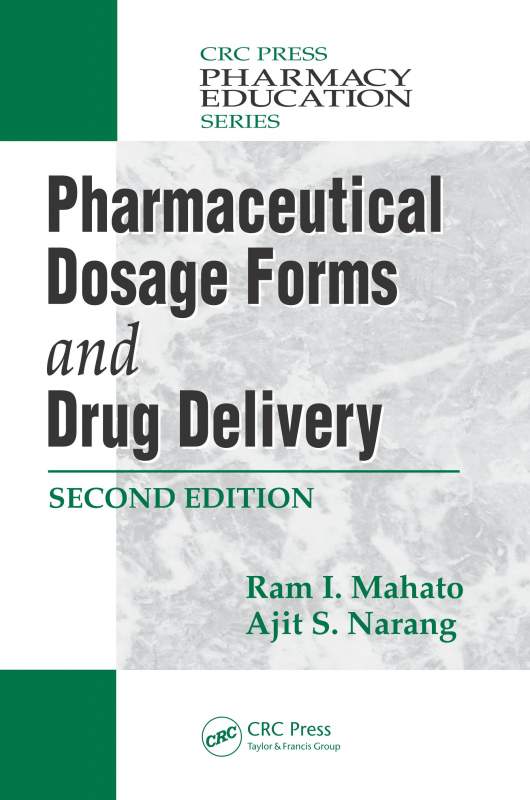 Table of Contents Drug Development and Regulatory Process Pharmacy Math and Statistics Pharmaceutical and Formulation Considerations Biopharmaceutical and Physiological Considerations Complexation and Protein Binding Chemical Kinetics and Stability Interfacial Phenomena Rheology Disperse System Basics Surfactants and Micelles Pharmaceutical Suspensions Pharmaceutical Emulsions Compounding Principles and Practices Pharmaceutical Solutions Powders and Granules Tablets Capsules Injectable Dosage Forms Semisolid Dosage Forms Inserts, Implants and Devices Pharmaceutical Polymers Pharmaceutical Calculations Compounding Principles and Practices Drug Delivery Systems Protein and Peptide-Based Dosage Forms Biotechnology Based Dosage Forms Answers to Review Questions Index These are exciting times in the pharmacy world. There has been, in fact, no other time in the history of pharmaceutical sciences that the entire world was fascinated as it is now by the spectacular advances in dosage form design and drug delivery, gene therapy, and nanotechnology. As you prepare to learn more about different dosage forms and related sciences, the University of Tennessee College of Pharmacy would like to assist you by introducing a new textbook, Pharmaceutical Dosage Forms and Drug Delivery. We are excited to have Ram I. Mahato, PhD, professor of phar- maceutical sciences at the University of Tennessee Health Science Center, write this important textbook for learning the basic principles of pharmaceutics, dosage form design, and drug delivery. This book has been meticulously designed to meet the requirements of professional students in this field. To include some new chapters and revise and expand the remaining ones, Mahato thoughtfully invited Ajit S. Narang, who utilized his expertise in making this new edition well suited to addressing phar- maceutics and drug delivery challenges in the twenty-first century. Although there are numerous books on the science of pharmaceutics and dosage form design, those books cover different areas of the discipline and do not provide an integrated approach, forcing students to refer to multiple textbooks to develop an overall understanding of the basic physicochemical principles and their applications to the design and development of different pharmaceutical dosage forms. Unlike other books, this book provides a unified perspective of the overall field to the stu - dents as well as faculty. Apart from the physicochemical principles and their application in the design of dosage forms, students should also be exposed to the latest developments in the application of biomaterials as well as protein and nucleic acid–based pharmaceuti- cal dosage forms and therapeutics and various biotechnology-based developments. Exposure of students to these latest developments is critical to the successful training of future pharmacists, because these therapeutic modalities and options are likely to be clinically significant in the future. All these principles and applications are inte - grated in this textbook so that the student develops a better and overall understand- ing of the principles involved in dosage form design and drug delivery. Moreover, this book also provides review questions and answers at the end of each chapter to improve students’ learning objectives. Dick R. Gourley, PharmD University of Tennessee College of Pharmacy Memphis, Tennessee Preface This book is designed as a textbook for teaching the basic principles of pharmaceu- tics, dosage form design, and drug delivery to doctor of pharmacy (PharmD) students in the United States and bachelor of pharmacy (BPharm) students in other countries. Although there are numerous books on the science of pharmaceutics and dosage form design, including Martin’s Physical Pharmacy and Pharmaceutical Sciences by Sinko, Physicochemical Principles of Pharmacy by Florence and Attwood, Pharmaceutics: The Science of Dosage Form Design by Aulton, Theory and Practice of Contemporary Pharmaceutics by Ghosh and Jasti, and Pharmaceutical Sciences by Remington, these books cover different areas of the discipline and do not provide an integrated approach to the students. Although these books have been used for teaching dosage form and drug delivery principles to PharmD students for a long time, they each cover different aspects of the field. This leads to the students as well as the teachers having to refer to many textbooks to develop an overall under- standing of the basic physicochemical principles and their applications to the design and development of different pharmaceutical dosage forms. In an attempt to over- come these challenges, this book provides a unified perspective of the overall field to the students as well as instructors. The students need to know the basic physicochemical principles, the application of these principles to the design of dosage forms, and the relevance of these prin- ciples to the biopharmaceutical aspects of drugs. Another important aspect of teach- ing that is urgently needed in our PharmD curricula is to expose students to the latest developments in the application of biomaterials as well as protein and nucleic acid– based pharmaceutical dosage forms and therapeutics, and various biotechnology- based developments. Various books that are currently taught to students miss these latest developments in the field of pharmaceutics and drug delivery. Exposure of stu - dents to these latest developments is critical to the successful training of future phar- macists, because these therapeutic modalities and options are likely to be clinically significant in the future. All these principles and applications needed to be integrated in a single textbook so that the student develops a better and overall understanding of the principles involved in dosage form design and drug delivery. This book covers an in-depth discussion on what physiochemical parameters can be used for the design, development, and evaluation of biotechnological dosage forms for the delivery of proteins, peptides, oligonucleotides, and genes. What is new in the second edition of Pharmaceutical Dosage Forms and Drug Delivery? Although the first edition was single-handedly written by Ram I. Mahato, he realized certain deficiencies in the book and hence he invited Ajit S. Narang to write two new chapters, one on pharmacy math and statistics and the other on powders and granules, and to assist in significantly revising and expanding a major- ity of the remaining chapters. This edition has also been thoughtfully reorganized into the following three parts: Introduction, Physicochemical Principles, and Dosage Forms. Additionally, many of the chapters were restructured and new contents were included. We also identified and corrected certain errors to our “Answers to Review Questions.” What you now have is a new book that can serve as a textbook for PharmD students and as a valuable resource for the novice in the pharmaceutics and drug delivery fields. |
 回复此楼
回复此楼» 本帖附件资源列表
-
欢迎监督和反馈:小木虫仅提供交流平台,不对该内容负责。
本内容由用户自主发布,如果其内容涉及到知识产权问题,其责任在于用户本人,如对版权有异议,请联系邮箱:xiaomuchong@tal.com - 附件 1 : Pharmaceutical_Dosage_Forms_and_Drug_Delivery.pdf
2015-09-25 23:04:42, 13.76 M
» 收录本帖的淘帖专辑推荐
 自然科学 自然科学 | organic chemistry | 药剂学实用专辑 |
» 猜你喜欢
 2026博士申请-药物化学方向(小分子化合物合成)
已经有4人回复
2026博士申请-药物化学方向(小分子化合物合成)
已经有4人回复
-
大肠杆菌临床分离菌株ETEC菌株求购
已经有5人回复
-
药理学论文润色/翻译怎么收费?
已经有50人回复
-
钯碳氢气还原脱cbz产物伯胺出现甲基化。
已经有4人回复
-
求助《化工原理》第四版 柴诚敬、贾绍义 课件
已经有1人回复
-
酯类化合物柱层析极性较大,使用醇类溶剂,怎么避免酯交换
已经有3人回复
-
求助骆广生微化工技术书籍
已经有1人回复
-
求助冯连芳、张才亮的《聚合过程强化技术》
已经有1人回复
-
2026考博
已经有0人回复
-
浙江中医药大学张勇民院士2026年博士研究生招生
已经有3人回复
-
硫醚氧化
已经有2人回复
» 本主题相关价值贴推荐,对您同样有帮助:
- 求“ACTA PHARMACEUT ”投稿网站!非常感谢!
已经有2人回复
- 请帮忙下载检索信息,pdf发送给我
已经有3人回复
- JP55076863
已经有3人回复
- 有人在INT J PHARMACEUT发过文章吗,小修外审会拒吗?
已经有4人回复
- 求助 日本专利 JP2002173428
已经有2人回复
- 求助日本专利 CLARITHROMYCIN TABLET AND METHOD FOR PRODUCING THE SAME
已经有3人回复

64楼2016-01-13 19:48:53