









| 查看: 8460 | 回复: 174 | |||||||||||||||||||||
| 【奖励】 本帖被评价162次,作者Pureland增加金币 128.8 个 | |||||||||||||||||||||
[资源]
2012年新著——二维纳米结构(英文版)
|
|||||||||||||||||||||

|
Two-Dimensional Nanostructures by Mahmood Aliofkhazraei and Nasar Ali English | ISBN: 1439866651 | 2012 | PDF | 309 pages | 8,9 MB After the 2010 Nobel Prize in Physics was awarded to Andre Geim and Konstantin Novoselov "for groundbreaking experiments regarding the two-dimensional material graphene," even more research and development efforts have been focused on two-dimensional nanostructures. Illustrating the importance of this area in future applications, Two-Dimensional Nanostructures covers the fabrication methods and properties of these materials. The authors begin with discussions on the properties, size effect, applications, classification groups, and growth of nanostructures. They then describe various characterization and fabrication methods, such as spectrometry, low-energy electron diffraction, physical and chemical vapor deposition, and molecular beam epitaxy. The remainder of the text focuses on mechanical, chemical, and physical properties and fabrication methods, including a new mechanical method for fabricating graphene layers and a model for relating the features and structures of nanostructured thin films. With companies already demonstrating the capabilities of graphene in a flexible touch-screen and a 150 GHz transistor, nanostructures are on their way to replacing silicon as the materials of choice in electronics and other areas. This book aids you in understanding the current chemical, mechanical, and physical processes for producing these "miracle materials." Contents Preface............................................................................................. .........................xi 1 Synthesis, Processing, and Application of Nanostructures................... 1 1.1 Introduction to Nanotechnology ........................................................ 1 1.2 History of Nanotechnology................................................................. 2 1.3 What Is a Nanomaterial?...................................................................... 3 1.4 Properties of Nanostructured Materials ........................................... 6 1.4.1 Physical Properties .................................................................. 9 1.4.1.1 Diffusion Coefficient................................................ 9 1.4.1.2 Thermal Expansion Coefficient............................ 12 1.4.1.3 Electrical Resistance............................................... 14 1.4.1.4 Solubility of Alloy Elements ................................. 15 1.4.1.5 Magnetic Properties............................................... 15 1.4.1.6 Corrosion Resistance ............................................. 17 1.4.1.7 Hydrogen Capacitance Properties ....................... 18 1.4.2 Mechanical Properties .......................................................... 18 1.4.2.1 Elastic Properties.................................................... 19 1.4.2.2 Plastic Properties .................................................... 20 1.4.2.3 Superplasticity ........................................................ 27 1.5 Thermal Stability of Nanostructures ............................................... 31 1.6 Nanotechnology and Future Perspectives ...................................... 36 1.7 Some Applications of Nanostructures............................................. 38 1.7.1 Nanoelectronic and Molecular Electronic.......................... 38 1.7.2 Nanorobots ............................................................................. 38 1.7.3 Biological Applications ......................................................... 38 1.7.4 Catalytic Applications ........................................................... 39 References .................................................................................................... ... 39 2 Classification of Two-Dimensional Nanostructures............................. 51 2.1 Introduction ......................................................................................... 51 2.2 Various Methods for Production of Nanostructures ..................... 51 2.2.1 Producing Nanoparticles by the Sol-Gel Process.............. 52 2.2.2 Production of Nanoparticles by the Chemical Deposition Method ................................................................ 52 2.2.3 Production of Nanoparticles by the Hydrothermal Method ... 53 2.2.4 Production of Nanoparticles by the Pyrolysis Method.... 53 2.2.5 Production of Nanoparticles by Chemical Vapor Deposition (CVD) ....................................................... 54 2.2.6 Solid-State Processes ............................................................. 54 2.2.7 Advanced Methods ............................................................... 54 2.3 Physical and Chemical Analysis of Nanoparticles ........................ 55 2.3.1 X-Ray Diffraction (XRD) ....................................................... 55 2.3.2 Scanning Electron Microscopy (SEM) ................................ 56 2.3.3 Transmission Electron Microscopy (TEM)......................... 56 2.3.4 Optical Spectrometry ............................................................ 56 2.3.5 Ultraviolet (UV)-Visible Spectroscopy................................ 57 2.3.6 Fluorescence ........................................................................... 57 2.3.7 Fourier Transform Infrared Spectrometry (FTIR) ............ 57 2.4 Different Forms of Growth ................................................................ 58 2.5 Relation between Growth and Energy Level.................................. 59 2.6 Overaturation Effect on Growth ....................................................... 60 2.7 Quantitative Description of Initial Stages of Film Growth........... 62 2.7.1 Volmer–Weber Theory .......................................................... 62 2.7.2 Three-Dimensional (3D) Island Growth............................. 62 2.7.3 Two-Dimensional (2D) Film Growth .................................. 63 2.8 Kinetic Theory of Growth.................................................................. 64 2.9 Orientation of Thin Films .................................................................. 67 2.10 Film Growth with a Certain Orientation......................................... 68 2.11 Film–Substrate Interfaces................................................................... 69 2.11.1 Abrupt Interface (Single Layer on Single Layer) ............... 69 2.11.2 Interface with Chemical Bond ............................................. 69 2.11.3 Distributed Film–Substrate Interfaces ................................ 69 2.11.4 Semidistribution Film–Material Interface.......................... 70 2.11.5 Mechanical Film–Substrate Interface.................................. 71 References .................................................................................................... ... 71 3 Characterization and Fabrication Methods of Two-Dimensional Nanostructures...................................................................................... ........ 81 3.1 Introduction ......................................................................................... 81 3.2 Silicon (Si) ............................................................................................. 82 3.3 Dimer-Adatom-Stacking Fault (DAS) Model .................................. 83 3.4 Auger Electron Spectrometry (AES)................................................. 84 3.5 Low-Energy Electron Diffraction (LEED) Technique .................... 85 3.6 X-Ray Phototransmission Spectrometry.......................................... 85 3.7 Physical Vapor Deposition (PVD) Methods .................................... 86 3.7.1 Thermal Evaporation............................................................. 86 3.7.2. Evaporation Sources .............................................................. 87 3.7.2.1 Resistive Heating.................................................... 88 3.7.2.2 Flash Evaporation................................................... 88 3.7.2.3 Arc Evaporation...................................................... 89 3.7.2.4 Laser Evaporation................................................... 91 3.7.2.5 Application of Electron Bombardment ............... 92 3.7.2.6 Evaporation through Radio Frequency (RF) Heating............................................................ 93 3.7.3 Sputtering Method................................................................. 93 3.7.3.1 Reactive and Nonreactive Processes ................... 93 3.7.3.2 Diode Sputtering .................................................... 94 3.7.3.3 RF Sputtering .......................................................... 94 3.7.3.4 Triode Sputtering ................................................... 95 3.7.3.5 Magnetron Sputtering ........................................... 96 3.7.3.6 Unbalanced Magnetron Sputtering..................... 98 3.8 Chemical Vapor Deposition (CVD) ................................................ 101 3.8.1 Introduction .......................................................................... 101 3.8.2 CVD System Requirements ................................................ 105 3.8.2.1 Gas Distribution System...................................... 105 3.8.2.2 CVD Reactors........................................................ 105 3.8.3 Plasma-Assisted Chemical Vapor Deposition (PACVD) ....109 3.8.3.1 Analysis of Physical and Chemical Aspects of Electrical Discharge......................................... 109 3.8.3.2 Main Processes of Plasma Medium................... 112 3.8.3.3 Kinetic and Thermodynamic Factors................ 113 3.8.3.4 Interactions between Plasma and Surface............115 3.8.4 Discharge System................................................................. 117 3.8.5 Advantages of the CVD Method ....................................... 117 3.8.6 Limitations and Disadvantages of CVD........................... 118 3.9 Molecular Beam Epitaxy (MBE)...................................................... 119 3.9.1 Ultrahigh (UHV) System .................................................... 119 3.9.2 Substrate Heater and Preserver ......................................... 121 3.9.3 Source Cell for MBE............................................................. 121 3.10 Ion Beam Assisted Film Deposition ............................................... 122 3.10.1 Partially Ionized Molecular Beam Epitaxy (PI-MBE)..... 122 3.10.2 Implant-Epitaxy Rig ............................................................ 123 3.10.3 IVD Technique ..................................................................... 124 3.10.4 Double Ionic Beam (DIB) Technique ................................. 126 3.10.5 Ionized Cluster Beam (ICB) ................................................ 127 3.10.5.1 Physical Process.................................................... 127 3.10.5.2 ICB Rig ................................................................... 127 3.10.5.3 ICB Advantages and Specifications ................... 127 3.11 Pulsed Laser Deposition (PLD)....................................................... 129 3.12 Chemical Bath Deposition (CBD).................................................... 130 References .................................................................................................... . 135 4 Mechanical Fabrication/Properties of Two-Dimensional Nanostructures...................................................................................... ...... 141 4.1 Introduction ....................................................................................... 141 4.2 Multiple-Layer Coatings .................................................................. 142 4.3 Fabrication Methods of Multiple-Layer Coatings ........................ 144 4.3.1 Multiple-Layer Electrodeposition Using a Single Bath .....147 4.3.2 Mechanical Cleavage for Synthesis of Graphene Layers....149 4.3.3 Chemomechanical Synthesis of Thin Films .................... 150 4.3.3.1 HgxCd1–xSe Thin Films ........................................ 150 4.3.3.2 Cd1–xZnxSe Thin Films......................................... 154 4.3.4 Achieving Enhanced Mechanical Properties .................. 157 4.4 Examining the Characteristics of the Multiple-Layer Coatings....161 4.4.1 Mechanical Properties of the Multiple-Layer Nanostructures .................................................................... 161 4.4.2 Strengthening Theories in Multiple-Layer Systems ....... 162 4.4.2.1 Orowan Mechanism ............................................ 162 4.4.2.2 Hall–Patch Mechanism ....................................... 162 4.4.2.3 Reinforcing by Virtual Forces ............................ 163 4.4.3 An Example from Cubic Boron Nitride Thin Films........ 164 4.4.4 The Effect of the Supermodule in Multilayer Systems.... 169 4.4.5 Tribological Behavior of the Multilayer Coatings ........... 170 4.5 Examples of Mechanical Affected Properties of Two-Dimensional Nanostructures ................................................. 172 4.5.1 TiN/CrN Nanomultilayer Thin Film ................................ 172 4.5.2 Mechanical Properties of Thin Films Using Indentation Techniques....................................................... 175 4.5.3 Nanostructured Carbon Nitride Thin Films ................... 177 4.5.4 Au–TiO2 Nanocomposite Thin Films ................................ 179 4.5.5 Effect of Internal Stress on the Mechanical Property of Thin CNx Films ................................................................ 181 References .................................................................................................... . 185 5 Chemical/Electrochemical Fabrication/Properties of Two-Dimensional Nanostructures.......................................................... 191 5.1 Introduction ....................................................................................... 191 5.2 History ................................................................................................ 191 5.3 Direct Writing of Metal Nanostructures ....................................... 193 5.4 Theory and Thermodynamic Method of Codeposition.............. 196 5.4.1 Nucleation ............................................................................. 196 5.4.2 Growth................................................................................... 199 5.4.3 Ostwald Ripening................................................................ 200 5.4.4 Final Growth and Formation of Stable Nanoparticles ......201 5.5 Phase Transition of Two-Dimensional Nanostructure by Electrochemical Potential ................................................................ 206 5.6 Procurement of Nanomaterials through Deposition................... 210 5.6.1 Procurement of Metals from Aqueous Solutions............ 210 5.6.2 Deposition of Metals by Reduction of Nonaqueous Solutions................................................................................ 213 5.6.3 Deposition of Oxides from Aqueous Solutions............... 219 5.6.5 Nanoimprint Lithography for Fabrication of Plasmonic Arrays ................................................................. 223 5.7 Conclusion.......................................................................................... 228 References .................................................................................................... . 229 6 Physical and Other Fabrication/Properties of Two-Dimensional Nanostructures...................................................................................... ...... 235 6.1 Introduction ....................................................................................... 235 6.2 Concepts of Nanostructured Thin Films....................................... 235 6.3 Important Physical Fabrication Methods ...................................... 239 6.3.1 Excimer Laser ....................................................................... 239 6.3.2 Molecular Beam Epitaxy (MBE)......................................... 239 6.3.3 Ion Implantation................................................................... 240 6.3.4 Focused Ion Beam (FIB) in Nanotechnology ................... 241 6.3.5 FIB-SEM Dual Beam System .............................................. 241 6.3.6 Langmuir–Blodgett Film (LBF).......................................... 242 6.3.7 Electrospinning.................................................................... 243 6.4 Specification of Sculptured Thin Films ......................................... 243 6.5 Phase, Length, and Time Sandwich ............................................... 248 6.6 A Model to Make a Relation between Features and Structures of Dielectric Helicoidal Sculptured Thin Films ........ 257 6.7 Analysis of Precise Couple Wave for the Incident Transverse Wave..................................................... 266 6.8 Physical Principles and Applications of Different Fabrication Methods ......................................................................... 274 6.8.1 Excimer Laser ....................................................................... 274 6.8.2 Molecular Beam Epitaxy (MBE)......................................... 275 6.8.3 Ion Implantation................................................................... 277 6.8.3.1 Doping ................................................................... 278 6.8.3.2 Mesotaxy ............................................................... 279 6.8.3.3 Surface Operations............................................... 279 6.8.3.4 Amorphous Fabrication....................................... 280 6.8.4 Focused Ion Beam (FIB) in Nanotechnology ................... 280 6.8.5 FIB-SEM Dual Beam System .............................................. 281 6.8.6 Langmuir–Blodgett Film (LBF).......................................... 281 6.8.7 Electrospinning.................................................................... 282 s .................................................................................................... . 283 s .................................................................................................... . 283 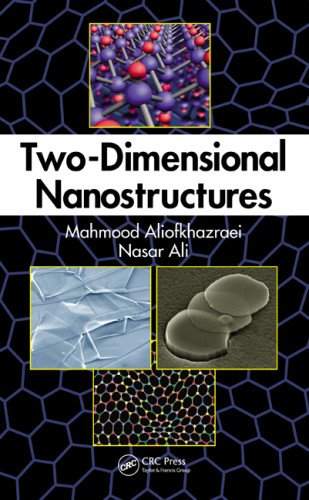 English | ISBN: 1439866651 | 2012 | PDF | 309 pages | 8,9 MB |
 回复此楼
回复此楼» 本帖附件资源列表
-
欢迎监督和反馈:小木虫仅提供交流平台,不对该内容负责。
本内容由用户自主发布,如果其内容涉及到知识产权问题,其责任在于用户本人,如对版权有异议,请联系邮箱:xiaomuchong@tal.com - 附件 1 : Two-Dimensional_Nanostructures.pdf
2014-10-15 08:08:14, 8.87 M
» 收录本帖的淘帖专辑推荐
 纳米技术与能源及模拟 纳米技术与能源及模拟 | 好书!好读! | Allen的英文原版+百科 | 锂电收藏 |
| 新能源 | 石墨烯+MoS2等 二维材料 | 纳米材料+光电子学 | 我喜爱的材料类书籍 |
| 纳米科技和纳米材料电子书饕餮 | 经典著作 | Cover_Letter | 数据处理 |
| 专业书 | MEMS与传统机械 | Allen的材料学 | 药学综合-南京药大学 |
| 2D 材料 | 化学类的书籍 | books |
» 猜你喜欢
 修改论文,如何借助其他力量?
已经有4人回复
修改论文,如何借助其他力量?
已经有4人回复
-
中山大学潘越教授课题组2027级推免硕士研究生招生 新增一个专业医学技术名额
已经有21人回复
-
金属材料论文润色/翻译怎么收费?
已经有166人回复
-
哈尔滨工程大学国家级青年人才-27年申请考核制博士招生(材料、化学、生物医学专业)
已经有12人回复
» 本主题相关商家推荐: (我也要在这里推广)

» 本主题相关价值贴推荐,对您同样有帮助:
- 分享——粘结科学与工艺:表面、化学与应用(英文版)
已经有221人回复
- 分享——纳米结构导电高分子(英文版)
已经有157人回复
- 2014年新著——石墨烯:凝聚态物质和器件中的新范例(英文版)
已经有332人回复
- 2013年新著——碳先进材料科学与工程(英文版)
已经有326人回复
- 2014年新著——石墨烯:制备、表征与器件(英文版)
已经有640人回复
- 2013年新著——石墨烯的物理与化学(英文版)
已经有453人回复
- 2014年新著——石墨烯物理(英文版)
已经有500人回复
- 2013年新著——纳米纤维进展(英文版)
已经有295人回复
- 2013年新著——微-纳米机电一体化(英文版)
已经有220人回复
- 2013年新著——石墨烯研究的新进展(英文版)
已经有648人回复
- 推荐一本新书 《纳米结构和纳米材料 -- 合成、性能及应用》第二版
已经有13人回复

2楼2014-10-15 08:10:35
3楼2014-10-15 08:32:26
31楼2014-10-16 04:49:51
简单回复
hfut18794楼
2014-10-15 08:57
回复
五星好评 顶一下,感谢分享!
2014-10-15 10:06
回复
五星好评 顶一下,感谢分享!
feng58006楼
2014-10-15 10:58
回复
五星好评 顶一下,感谢分享!
青青子衿19867楼
2014-10-15 11:28
回复
五星好评 顶一下,感谢分享!
2014-10-15 11:55
回复
五星好评 顶一下,感谢分享!
2014-10-15 11:55
回复
五星好评 顶一下,感谢分享!
15923647810楼
2014-10-15 12:00
回复
五星好评 顶一下,感谢分享!
许志新11楼
2014-10-15 12:53
回复
五星好评 顶一下,感谢分享!
2014-10-15 13:16
回复
五星好评 顶一下,感谢分享!
zzgui88813楼
2014-10-15 13:35
回复
五星好评 顶一下,感谢分享!
jtkdpangzi14楼
2014-10-15 13:50
回复
五星好评 顶一下,感谢分享!
lwg315楼
2014-10-15 14:47
回复
五星好评 顶一下,感谢分享!
zjys588716楼
2014-10-15 16:15
回复
五星好评 顶一下,感谢分享!
zxf98417楼
2014-10-15 16:18
回复
五星好评 顶一下,感谢分享!
wu_gang100018楼
2014-10-15 17:05
回复
五星好评 顶一下,感谢分享!
相识是缘19楼
2014-10-15 18:13
回复
五星好评 顶一下,感谢分享!
Adrean20楼
2014-10-15 18:17
回复
五星好评 顶一下,感谢分享!
罗纳尔多21楼
2014-10-15 18:26
回复
五星好评 顶一下,感谢分享!
jinpengfei22楼
2014-10-15 19:13
回复
五星好评 顶一下,感谢分享!
yuzhbt23楼
2014-10-15 20:00
回复
五星好评 顶一下,感谢分享!
dwysd24楼
2014-10-15 20:36
回复
五星好评 顶一下,感谢分享!
天使之翼MVP25楼
2014-10-15 20:45
回复
五星好评 顶一下,感谢分享!
zhaocl26楼
2014-10-15 21:42
回复
五星好评 顶一下,感谢分享!
zvs198827楼
2014-10-15 22:12
回复
五星好评 顶一下,感谢分享!
zhangxqustc28楼
2014-10-15 22:59
回复
五星好评 顶一下,感谢分享!
jj19739410129楼
2014-10-15 23:19
回复
五星好评 顶一下,感谢分享!
ertwe130楼
2014-10-15 23:31
回复
五星好评 顶一下,感谢分享!
吠陀32楼
2014-10-16 07:07
回复
五星好评 顶一下,感谢分享!
zwj273003833楼
2014-10-16 09:10
回复
五星好评 顶一下,感谢分享!
jiangyushuai34楼
2014-10-16 09:22
回复
五星好评 顶一下,感谢分享!
zju10035楼
2014-10-16 09:58
回复
五星好评 顶一下,感谢分享!
王亚东_NPU36楼
2014-10-16 10:09
回复
五星好评 顶一下,感谢分享!
王致远37楼
2014-10-16 11:25
回复
五星好评 顶一下,感谢分享!
zhengwei893138楼
2014-10-16 12:23
回复
五星好评 顶一下,感谢分享!
seinberg39楼
2014-10-16 14:06
回复
五星好评 顶一下,感谢分享!
swzxw40楼
2014-10-16 14:18
回复
五星好评 感谢分享!
Iamcat41楼
2014-10-16 14:28
回复
五星好评 顶一下,感谢分享!
huayuwuqi42楼
2014-10-16 14:30
回复
五星好评 顶一下,感谢分享!
csuyoyo43楼
2014-10-16 16:19
回复
五星好评 顶一下,感谢分享!
technology1144楼
2014-10-16 21:10
回复
五星好评 顶一下,感谢分享!
brillice45楼
2014-10-16 21:29
回复
五星好评 顶一下,感谢分享!
wangpinger46楼
2014-10-16 21:34
回复
五星好评 顶一下,感谢分享!
错落的光景47楼
2014-10-16 22:50
回复
五星好评 顶一下,感谢分享!
Sdresearcher48楼
2014-10-17 07:32
回复
五星好评 顶一下,感谢分享!
zl_zzn49楼
2014-10-17 07:44
回复
五星好评 顶一下,感谢分享!
liukainan50楼
2014-10-17 09:50
回复
五星好评 顶一下,感谢分享!