












| 查看: 3873 | 回复: 85 | |||||||||||
| 【奖励】 本帖被评价77次,作者nowitzki_ci增加金币 60.8 个 | |||||||||||
| 当前只显示满足指定条件的回帖,点击这里查看本话题的所有回帖 | |||||||||||
nowitzki_ci专家顾问 (著名写手)
|
[资源]
Acc. Chem. Res.最新综述:树枝状超分子聚合物
|
||||||||||


|
本文介绍了树枝状超分子聚合物的设计与制备:超分子树枝状大分子,超分子柱状树枝化聚合物,超分子超支化聚合物,超分子线性-树枝状嵌段共聚物,超分子树枝状-树枝状嵌段共聚物,超分子树枝状多臂共聚物。 Supramolecular Dendritic Polymers: From Synthesis to Applications 共11页 引文55篇 Ruijiao Dong, Yongfeng Zhou, and Xinyuan Zhu* School of Chemistry and Chemical Engineering, State Key Laboratory of Metal Matrix Composites, Shanghai Jiao Tong University, 800 Dongchuan Road, Shanghai 200240, People ’ s Republic of China CONSPECTUS: Supramolecular dendritic polymers (SDPs), which perfectly combine the advantages of dendritic polymers with those of supramolecular polymers, are a novel class of non-covalently bonded, highly branched macromolecules with three-dimensional globular topology. Because of their dynamic/reversible nature, unique topological structure, and exceptional physical/chemical properties (e.g., low viscosity, high solubility, and a large number of functional terminal groups), SDPs have attracted increasing attention in recent years in both academic and industrial fi elds. In particular, the reversibility of non-covalent interactions endows SDPs with the ability to undergo dynamic switching of structure, morphology, and function in response to various external stimuli, such as pH, temperature, light, stress, and redox agents, which further provides a fl exible and robust platform for designing and developing smart supramolecular polymeric materials and functional supramolecular devices. The existing SDPs can be systematically classi fi ed into the following six major types according to their topological features: supramolecular dendrimers, supramolecular dendronized polymers, supramolecular hyperbranched polymers, supramolecular linear − dendritic block copolymers, supramolecular dendritic − dendritic block copolymers, and supramolecular dendritic multiarm copolymers. These di ff erent types of SDPs possess distinct morphologies, unique architectures, and speci fi c functions. Bene fi ting from their versatile topological structures as well as stimuli-responsive properties, SDPs have displayed not only unique characteristics or advantages in supramolecular self-assembly behaviors (e.g., controllable morphologies, speci fi c performance, and facile functionalization) but also great potential to be promising candidates in various fi elds. In this Account, we summarize the recent progress in the synthesis, functionalization, and self-assembly of SDPs as well as their potential applications in a wide range of fi elds. A variety of synthetic methods using non-covalent interactions have been established to prepare di ff erent types of SDPs based on varied mono- or multifunctionalized building blocks (e.g., monomer, dendron, dendrimer, and hyperbranched polymer) with homo- or heterocomplementary units. In addition, SDPs can be further endowed with excellent functionalities by employing di ff erent modi fi cation approaches involving terminal, focal-point, and backbone modi fi cation. Similar to conventional dendritic polymers, SDPs can self-assemble into diverse supramolecular structures such as micelles, vesicles, fi bers, nanorings, tubes, and many hierarchical structures. Finally, we highlight some typical examples of recent applications of SDP-based systems in biomedical fi elds (e.g., controlled drug/gene/protein delivery, bioimaging, and biomimetic chemistry), nanotechnology (e.g., nanoreactors, catalysis, and molecular imprinting), and functional materials. The current research on SDPs is still at the very early stage, and much more work needs to be done. We anticipate that future studies of SDPs will focus on developing multifunctional, hierarchical supramolecular materials toward their practical applications by utilization of cooperative non-covalent interactions. 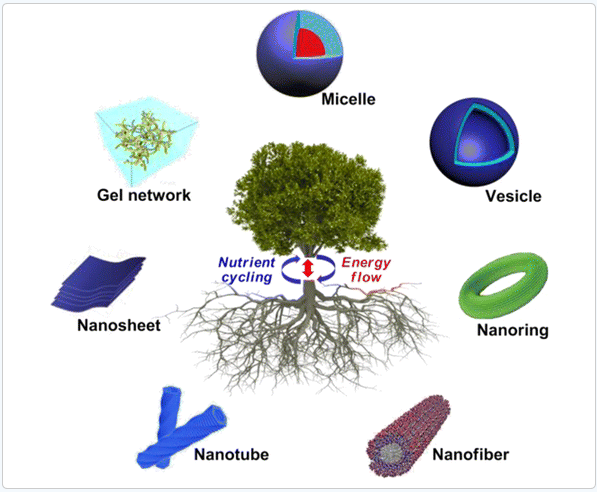 |
 回复此楼
回复此楼» 本帖附件资源列表
-
欢迎监督和反馈:小木虫仅提供交流平台,不对该内容负责。
本内容由用户自主发布,如果其内容涉及到知识产权问题,其责任在于用户本人,如对版权有异议,请联系邮箱:xiaomuchong@tal.com - 附件 1 : ar500057e.pdf
2014-04-30 17:13:08, 7.58 M
» 收录本帖的淘帖专辑推荐
 ★★★实用资源大收集(金币>200)★★★★ ★★★实用资源大收集(金币>200)★★★★ | Graphene | ebook | 超分子与自组装 |
| 超分子化学 | 储藏架 | 功能复合材料 |
» 本帖已获得的红花(最新10朵)
 xerwnas
» 猜你喜欢
 无机化学论文润色/翻译怎么收费?
已经有110人回复
无机化学论文润色/翻译怎么收费?
已经有110人回复

» 本主题相关商家推荐: (我也要在这里推广)

» 本主题相关价值贴推荐,对您同样有帮助:
 张希院士Acc. Chem. Res.最新综述:基于多功能生物界面的主客体作用的界面超分子化学
已经有64人回复
张希院士Acc. Chem. Res.最新综述:基于多功能生物界面的主客体作用的界面超分子化学
已经有64人回复- Chem. Soc. Rev.最新综述:聚集诱导荧光大分子AIE macromolecules——唐本忠院士出品
已经有45人回复
- Acc. Chem. Res. 最新综述:水溶液中的刺激响应性超分子聚合物——田禾院士出品
已经有28人回复
- 江雷院士Acc. Chem. Res.最新综述:具有优越力学性能的Bioinspired Layered Materials
已经有46人回复
- YASHIMA的Acc. Chem. Res.经典综述:Single- and Double-Stranded Helical Polymers
已经有15人回复
- Acc. Chem. Res综述-“Homeopathic”纳米Pd用于碳碳偶联反应+纳米金综述2篇
已经有29人回复
- 厦门大学Acc. Chem. Res.最新综述:具有高能晶面的金属氧化物微纳晶体及其应用
已经有322人回复
- Acc. Chem. Res.2013 唐本忠院士最新发表有关AIE(聚集诱导荧光)的综述
已经有216人回复
- Acc Chem Res 最新综述 : 石墨烯发展的安全顾虑 - 碳纳米管的教训
已经有249人回复
- Acc Chem Res 特刊-纪念Paul Barbara
已经有21人回复
- Acc. Chem. Res.最新综述:具有介孔-大孔多级纳米结构的碳材料---设计、表征及应用
已经有465人回复
- Acc. Chem. Res.最新综述:纳米石墨烯和石墨烯边缘---电子结构以及纳米制造
已经有100人回复
- Acc. Chem. Res. 新综述--量子点的细胞毒性及减小毒性的方法
已经有119人回复
- Chem. Soc. Rev.最新综述:用于水分解光电极的纳米结构和材料设计
已经有268人回复
- John B. Goodenough在Acc. Chem. Res.上的最新综述-现代可充电电池的策略演化
已经有440人回复
- 超级电容器大牛Y. Gogotsi在Acc. Chem. Res.的最新综述-纳米碳材料的电容能量存储
已经有1039人回复
- 张希院士在Acc. Chem. Res.上刚出的好综述:超两亲自组装
已经有604人回复
- Acc. Chem. Res.最新综述:高指数晶面贵金属纳米晶
已经有101人回复
2楼2014-05-01 01:14:10