









| 查看: 597 | 回复: 10 | |||
[交流]
Introduction要这么写,又快又好!深容Introduction智能体实测
|
|||

|
如需试用【深容SCI写作智能体】,请微信联系深容张老师:shenrongagent [https://scioriginal.com] SCI论文的Introduction部分,并不涉及自已的研究内容,而是通过对现有知识体系的批判性分析,引出自已研究的必要性。 通过分析大量的论文,我们发现中国作者写的Introduction篇幅一般都很短,好像三言两语就可以说明白了,但很难引人入胜:你可以说是言简意赅,也可以说是语言贫瘠。 下面我们看看如何利用【深容SCI写作智能体】更快、更好地写作Introduction。 您只需要输入论文标题,关键词,所涉及的内容提示词,智能体就可以从数据库中检索最新相关文献,然后高效起草Introduction。如下: 恭喜您!Introduction 起草成功了,让我们看看智能体的写作质量吧: ■ Introduction 1. Breast Cancer: A Prevalent and Complex Disease Breast cancer stands as one of the most prevalent malignancies among women worldwide, with a significant impact on public health and quality of life. According to global cancer statistics, breast cancer accounts for a substantial proportion of new cancer cases and cancer - related deaths each year [9]. Its high incidence rate underscores the urgent need for a comprehensive understanding of its underlying mechanisms and the development of effective therapeutic strategies. Breast cancer is a heterogeneous disease, characterized by diverse molecular subtypes that exhibit distinct biological behaviors, clinical features, and treatment responses. These subtypes are primarily classified based on the expression of hormone receptors, such as estrogen receptor (ER) and progesterone receptor (PR), as well as the human epidermal growth factor receptor 2 (HER2). Hormone - receptor - positive breast cancers, which express either ER or PR or both, constitute the majority of cases. These tumors are often driven by hormonal signaling pathways and are typically treated with endocrine therapies that target the estrogen signaling axis, such as tamoxifen and aromatase inhibitors [9]. HER2 - positive breast cancers, on the other hand, overexpress the HER2 protein and are associated with a more aggressive clinical course. Targeted therapies against HER2, such as trastuzumab, have significantly improved the prognosis of patients with this subtype [9]. Triple - negative breast cancer (TNBC), which lacks expression of ER, PR, and HER2, is known for its high aggressiveness and limited treatment options, often relying on chemotherapy as the mainstay of treatment [9]. 2. The Role of Cyclin - Dependent Kinases in Breast Cancer Cyclin - dependent kinases (CDKs) are a family of serine/threonine kinases that play crucial roles in regulating the cell cycle progression. In the context of breast cancer, dysregulation of CDK activity is a common feature and contributes to uncontrolled cell proliferation, a hallmark of cancer. CDK4 and CDK6, in particular, are key regulators of the G1 - S phase transition of the cell cycle. They form complexes with cyclin D and phosphorylate the retinoblastoma protein (Rb), leading to the release of transcription factors such as E2F, which then activate genes required for DNA synthesis and cell cycle progression [8]. In hormone - receptor - positive breast cancer, the cyclin D - CDK4/6 - Rb pathway is often hyperactivated. Cyclin D1 is an estrogen - responsive gene, and its overexpression is frequently observed in ER - positive breast tumors. This hyperactivation of the CDK4/6 pathway promotes cell cycle progression and tumor growth, making it an attractive therapeutic target [6]. As a result, CDK4/6 inhibitors have emerged as a new class of targeted therapies for hormone - receptor - positive breast cancer. 3. Ribociclib: A CDK4/6 Inhibitor in Breast Cancer Treatment Ribociclib is a selective oral CDK4/6 inhibitor that has shown promising results in the treatment of hormone - receptor - positive, HER2 - negative advanced breast cancer. By inhibiting CDK4/6 activity, ribociclib blocks the phosphorylation of Rb, thereby preventing the release of E2F and arresting the cell cycle in the G1 phase. This leads to inhibition of tumor cell proliferation and growth [6]. Clinical trials have demonstrated that the combination of ribociclib with endocrine therapies, such as letrozole or fulvestrant, significantly improves progression - free survival (PFS) compared to endocrine therapy alone in patients with advanced hormone - receptor - positive breast cancer [17]. These results have led to the approval of ribociclib by regulatory agencies for the treatment of this patient population, providing a new and effective treatment option. However, despite the initial success of ribociclib, the development of resistance remains a major challenge in the long - term management of breast cancer patients. Understanding the mechanisms underlying ribociclib resistance is crucial for the development of strategies to overcome it and improve patient outcomes. 4. The LAP2 - Emerin - MAN1 (LEM) Domain Family and LEM4 The LAP2 - Emerin - MAN1 (LEM) domain family is a group of inner nuclear membrane proteins that play important roles in nuclear structure, chromatin organization, and gene regulation. These proteins share a conserved LEM domain, which mediates their interaction with chromatin - associated proteins such as Barrier - to - Autointegration Factor (BAF) [3]. LEM4, also known as NET29, is a member of the LEM domain family. It is located at the inner nuclear membrane and has been implicated in various cellular processes, including cell cycle regulation, DNA damage response, and gene expression modulation [3]. Previous studies have shown that LEM4 can interact with several proteins involved in cell cycle control, such as CDK1 and cyclin B1, and regulate their activity. This suggests that LEM4 may play a role in cell cycle progression and tumor development [3]. In the context of breast cancer, the expression and function of LEM4 have not been extensively studied. However, emerging evidence suggests that LEM4 may be involved in the regulation of signaling pathways that are relevant to breast cancer progression and treatment resistance. For example, some studies have indicated that LEM4 can interact with components of the Wnt\/beta - catenin signaling pathway, which is known to be dysregulated in various cancers, including breast cancer [8]. 5. The Wnt/beta - Catenin Signaling Pathway and Its Role in Breast Cancer The Wnt\/beta - catenin signaling pathway is a highly conserved signaling cascade that plays critical roles in embryonic development, tissue homeostasis, and cancer. In the absence of Wnt ligands, beta - catenin is sequestered in a cytoplasmic complex consisting of axin, adenomatous polyposis coli (APC), glycogen synthase kinase - 3beta (GSK - 3beta), and casein kinase 1 (CK1). This complex promotes the phosphorylation and ubiquitination of beta - catenin, leading to its proteasomal degradation [3]. When Wnt ligands bind to their cell surface receptors, Frizzled and low - density lipoprotein receptor - related protein 5\/6 (LRP5\/6), the cytoplasmic complex is disrupted, and beta - catenin is stabilized. Stabilized beta - catenin then translocates into the nucleus, where it forms a complex with transcription factors such as T - cell factor/lymphoid enhancer factor (TCF\/LEF) and activates the transcription of target genes involved in cell proliferation, survival, and differentiation [6]. In breast cancer, dysregulation of the Wnt\/beta - catenin signaling pathway has been frequently observed. Aberrant activation of this pathway can contribute to tumor initiation, progression, and metastasis. For example, overexpression of Wnt ligands, mutations in components of the degradation complex (such as APC or beta - catenin itself), or activation of downstream signaling molecules can lead to constitutive activation of beta - catenin - dependent transcription and promote breast cancer development [8]. Moreover, the Wnt/beta - catenin pathway has been implicated in the regulation of cancer stem cells, which are thought to be responsible for tumor recurrence and treatment resistance [8]. 6. The Potential Link between LEM4, beta - Catenin, and Ribociclib Resistance Given the roles of LEM4 in cell cycle regulation and its potential interaction with the Wnt/beta - catenin signaling pathway, as well as the importance of the Wnt/beta - catenin pathway in breast cancer and treatment resistance, it is reasonable to hypothesize that LEM4 may be involved in the development of ribociclib resistance in breast cancer cells through its interaction with beta - catenin. Previous studies have shown that the Wnt\/beta - catenin pathway can cross - talk with other signaling pathways involved in cell cycle regulation, such as the CDK4/6 - Rb pathway. For example, beta - catenin can directly or indirectly regulate the expression of cyclin D1, a key component of the CDK4/6 - Rb pathway [8]. This suggests that activation of the Wnt\/beta - catenin pathway may bypass the inhibitory effects of CDK4/6 inhibitors, leading to the development of resistance. If LEM4 can promote beta - catenin - dependent transcription activity, it may enhance the expression of genes involved in cell cycle progression and survival, thereby counteracting the cell cycle arrest induced by ribociclib. This would provide a mechanism for breast cancer cells to escape the growth - inhibitory effects of ribociclib and develop resistance. Therefore, the LEM4/beta - catenin axis represents a potential therapeutic strategy to overcome ribociclib resistance in breast cancer cells. Breast cancer is a complex and heterogeneous disease with diverse molecular subtypes. The CDK4\/6 inhibitor ribociclib has shown significant efficacy in the treatment of hormone - receptor - positive breast cancer, but the development of resistance remains a major challenge. LEM4, a member of the LEM domain family, has the potential to interact with the Wnt/beta - catenin signaling pathway, which is dysregulated in breast cancer and implicated in treatment resistance. Understanding the role of the LEM4/beta - catenin axis in ribociclib resistance may provide new insights into the mechanisms of resistance and lead to the development of novel therapeutic strategies to overcome it, ultimately improving the prognosis of breast cancer patients. References [3] Nasiri Kenari F, Saberian M, Abikenari M, Najafi S, Sadeghizadeh M Restoring Tamoxifen Sensitivity in Breast Cancer: The Role of lncRNA MALAT1 and NanoCurcumin as Modulators of Drug Resistance. BioMed Research International. 2025. 2025. 5824748. PMID: 41031251. DOI: 10.1155/bmri/5824748. 篇幅原因,省略其它参考文献...... 以上这篇Introduction起草时间仅00:02:53 如需试用【深容SCI写作智能体】,请微信联系深容张老师:shenrongagent [https://scioriginal.com] #SCI论文 #科研 #实验 #博士 #投稿 更多推荐: [Method智能体]:3分钟起草SCI论文Method,并引用真实参考文献? 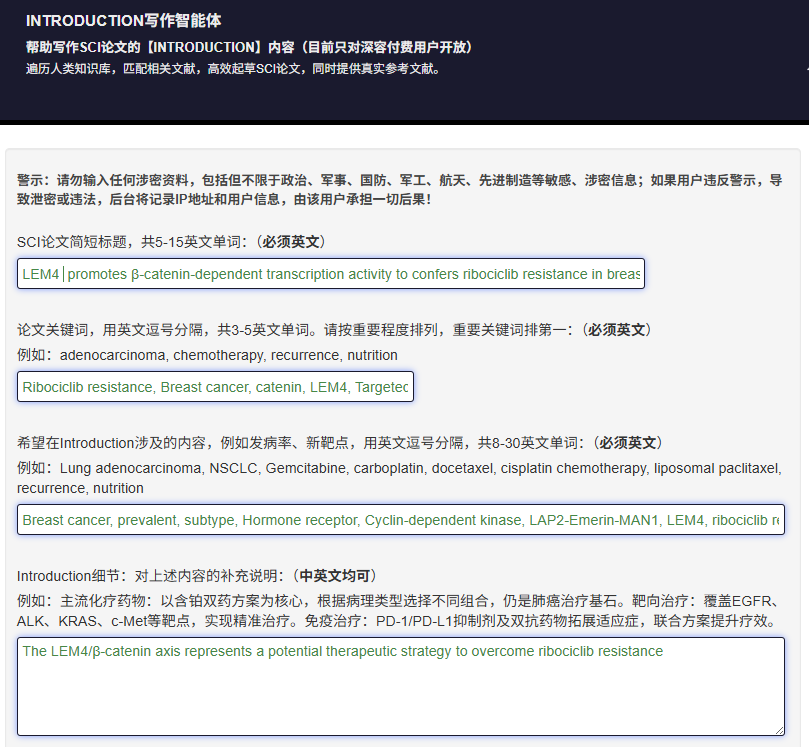 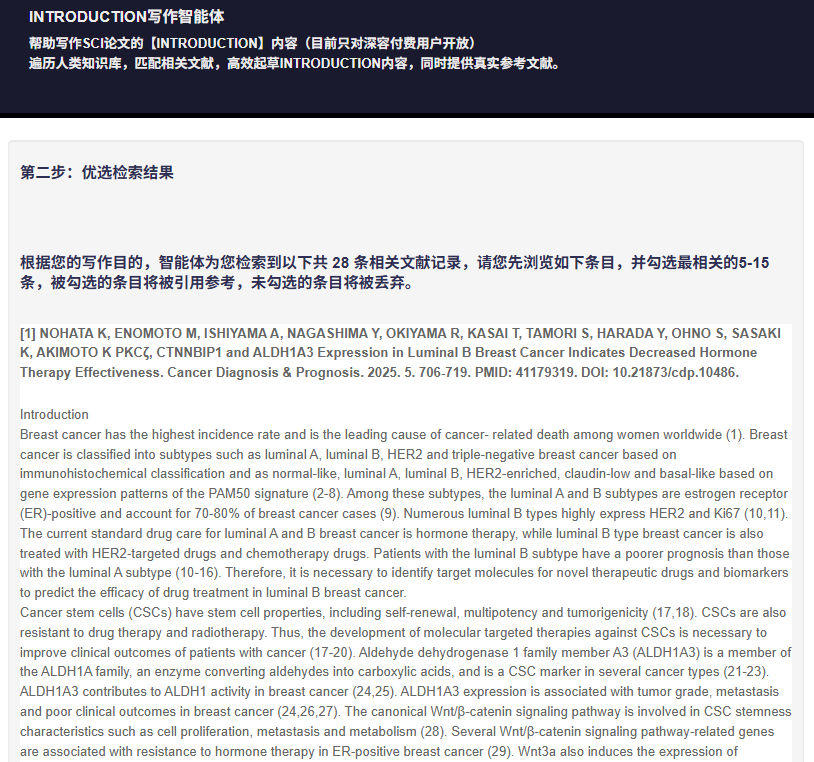 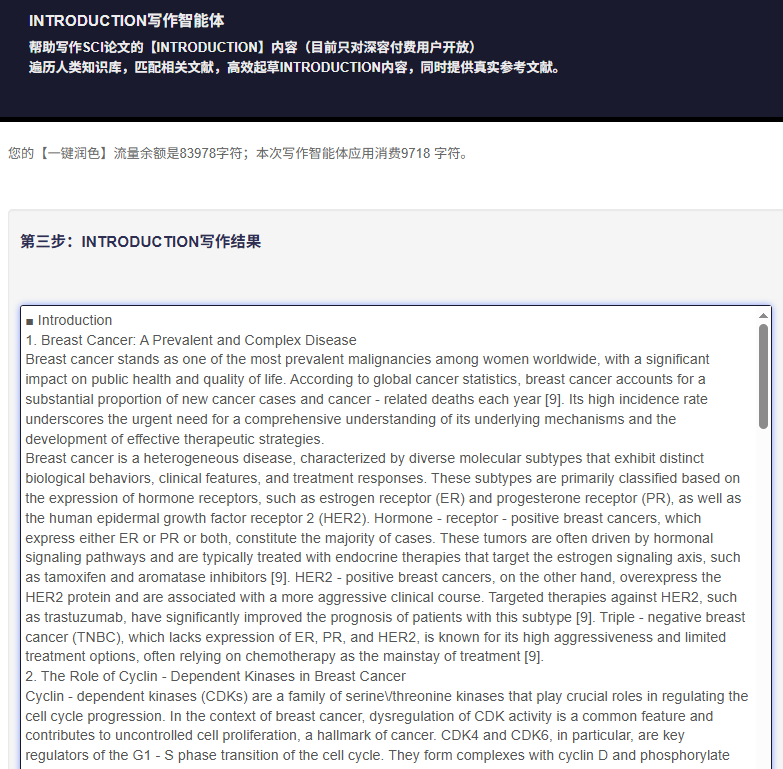 |
 回复此楼
回复此楼» 猜你喜欢
 OpenAI又攻克数学难题了,离AI做有机合成还有多远?
已经有12人回复
OpenAI又攻克数学难题了,离AI做有机合成还有多远?
已经有12人回复
-
极限拉扯,如何抉择
已经有13人回复
-
课题组会帮你通过考核么?
已经有7人回复
-
入职后第一次管课题组的专利缴费,对账才发现官费比别人多掏了一倍
已经有6人回复
-
售一区SCI文章T0P,我:8O.551.O54,科目全,可十急
已经有9人回复
-
售SCI一区T0P文章,我:8.O55.1.O.54,科目全,可十急
已经有8人回复
-
售SCI一区文章,我:8O5.5.1.O5.4,科目全,可伽急
已经有10人回复
-
售SCI一区T0P文章,我:8.O55.1.O.54,科目全,可十急
已经有9人回复
-
售SCI一区文章,我:8.O.55.1.O.54,科目齐全,可伽急
已经有7人回复
-
售SCI文章,我:8O5.5.1.O.54,科目齐全,可+急
已经有10人回复
» 抢金币啦!回帖就可以得到:
-
2026年人文教育与社会发展国际会议(HESD 2026)
 +1/837
-
诚征女友
+1/490
-
电子科技大学李卫课题组招收2027级博士(统计物理+生物物理方向)
+1/88
-
沈阳工业大学 环境电化学技术研究团队 招收硕士研究生(学硕/专硕)
+2/68
-
广州大学CJ学者教授团队高薪招聘博士后(环境/化学/生物)
+1/62
-
爱丁顿实验
+1/33
-
27年博士+申请考核+福州大学+管理科学与工程
+2/28
-
坐标广州,诚征女友,结婚对象,非诚勿扰
+1/27
-
招聘博士后+福州大学+管理科学与工程
+2/24
-
湖南大学-分析检测技术和生物柔性传感器-招收1名博士研究生 (2027年)
+1/24
-
高分辨质谱测试丨科研单位对外服务
+1/18
-
请问今年国基的评审费发放了吗?一般什么时候发放。
+1/15
-
中国科大-合肥国家实验室冷原子量子网络团队招聘启事
+1/15
-
北京工商大学食品与健康学院杨绍祥课题组食品科学与工程博士招生
+1/14
-
福建师范大学 智能光电子 招聘青年教师或福建省科研引进生
+1/12
-
南京理工大学环境与生物工程学院招收水污染控制方向2027年入学博士生
+1/11
-
大模型私有化部署做审定报告初稿与条款检索,MC符合性验证到故障树分析的算力工作站
+1/2
-
深圳大学金融科技学院王云奇团队博士后招聘
+1/1
-
蛋白翻译后修饰:解码细胞功能调控的分子密码
+1/1
-
委托检验的安全锁:质量保证协议,你签了吗?
+1/1
简单回复
yuekong2楼
2026-01-03 16:44
回复

2026-01-03 16:47
回复
2026-01-03 16:48
回复
XG-WUST5楼
2026-01-03 17:15
回复
pheiphei2025(金币+1): 谢谢参与
up 发自小木虫IOS客户端
s9659z6楼
2026-01-03 20:18
回复
pheiphei2025(金币+1): 谢谢参与

庚辰辛丑7楼
2026-01-03 20:36
回复
pheiphei2025(金币+1): 谢谢参与
2026-01-03 21:02
回复
pheiphei2025(金币+1): 谢谢参与
倾城染忆9楼
2026-01-03 22:25
回复
pheiphei2025(金币+1): 谢谢参与
。 发自小木虫IOS客户端
psylhh10楼
2026-01-03 23:44
回复
pheiphei2025(金币+1): 谢谢参与
我才是肖牧冲11楼
2026-01-04 08:58
回复
pheiphei2025(金币+1): 谢谢参与
。 发自小木虫手机客户端

