









| 查看: 9618 | 回复: 6 | ||
| 当前只显示满足指定条件的回帖,点击这里查看本话题的所有回帖 | ||
星海慧儿荣誉版主 (职业作家)
木虫精灵
|
[求助]
请教RLD和RS的区别 已有1人参与
|
|

|
在FDA上看到一个产品有RLD也有RS,但是两者不一个厂家,请教RLD和RS到底有何区别,单从字面讲,似乎RS更令人困惑。 MYLAN的是RS,但不是RLD;ASTRA的在橙皮书检索下是RLD,但在drugs@FDA搜索出来的RLD项下又都是NO,很困惑,求解。 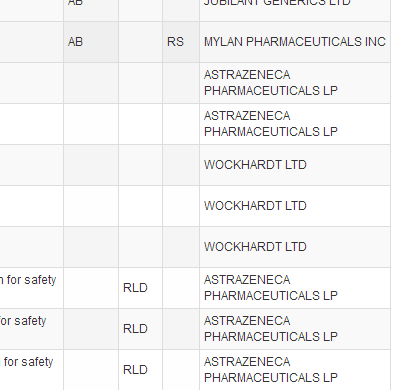 1.png 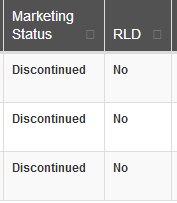 2.png |
 回复此楼
回复此楼» 猜你喜欢
 二乙烯基砜的合成路径
已经有4人回复
二乙烯基砜的合成路径
已经有4人回复
-
求一株[b]敲除MTAP(human)的HCT-116(人结肠癌细胞)/b]细胞
已经有0人回复
-
药理学论文润色/翻译怎么收费?
已经有107人回复
-
求助!求美国食品化学药典内容:FCC13【低聚果糖专论】
已经有0人回复
-
【2027博士申请】纳米药物递送方向
已经有5人回复
-
消耗微量API,便可预测早期研发阶段的HME工艺可行性
已经有0人回复
-
反应液中苯酐除去
已经有1人回复
-
看过往病历,有疑惑请教
已经有2人回复
-
【讨论】油脂性API、液体API及中药提取物直压解决方案--合成硅酸钙
已经有1人回复
-
一篇关于阿莫西林克拉维酸钾的文献
已经有0人回复


6楼2017-03-09 16:51:03
mouse103
专家顾问 (著名写手)
- DRDEPI: 16
- 应助: 218 (大学生)
- 贵宾: 0.384
- 金币: 1423.7
- 散金: 2586
- 红花: 171
- 沙发: 1
- 帖子: 1626
- 在线: 411.4小时
- 虫号: 466716
- 注册: 2007-11-24
- 专业: 合成药物化学
- 管辖: 生物医药区
【答案】应助回帖
★ ★ ★ ★ ★ ★ ★ ★ ★ ★ ★ ★ ★ ★ ★ ★ ★ ★ ★ ★ ★ ★ ★ ★ ★
感谢参与,应助指数 +1
星海慧儿: 金币+20, ★★★★★最佳答案, 非常感谢! 2017-02-10 14:57:38
kk1424: 金币+5 2017-02-10 15:24:33
感谢参与,应助指数 +1
星海慧儿: 金币+20, ★★★★★最佳答案, 非常感谢! 2017-02-10 14:57:38
kk1424: 金币+5 2017-02-10 15:24:33
|
Reference Listed Drug and Reference Standard A reference listed drug (21 CFR 314.3(b)) means the listed drug identified by FDA as the drug product upon which an applicant relies in seeking approval of its ANDA. Generally, a reference listed drug is a drug product approved in a new drug application under section 505(c) of the FD&C Act based on full reports of investigations of safety and effectiveness. A reference standard is the drug product selected by FDA that an applicant seeking approval of an ANDA must use in conducting an in vivo bioequivalence study required for approval. FDA generally selects a single reference standard that ANDA applicants must use in in vivo bioequivalence testing. Ordinarily, FDA will select the reference listed drug as the reference standard. However, in some instances (e.g., where the reference listed drug has been withdrawn from sale and an ANDA is selected as the reference standard), the reference listed drug and the reference standard may be different. FDA has identified reference listed drugs in the Prescription Drug Product and OTC Drug Product Lists. Forthcoming, FDA will identify reference listed drugs in the Discontinued Drug Product List. These identified reference listed drugs represent drug products upon which an applicant can rely in seeking approval of an ANDA. FDA intends to update periodically the reference listed drugs identified in the Prescription Drug Product, OTC Drug Product, and Discontinued Drug Product Lists, as appropriate. FDA also has identified in the Prescription Drug Product and OTC Drug Product Lists reference standards to which the in vivo bioequivalence is compared. These identified reference standards represent the FDA’s best judgment at this time as to the appropriate comparator for purposes of in vivo bioequivalence testing. In some instances when a listed drug is not designated as a reference listed drug, such listed drug may be shielded from generic competition. If FDA has not designated a reference listed drug for a drug product the applicant intends to duplicate, the potential applicant may ask FDA to designate a reference listed drug for that drug product. Potential applicants should consult agency guidance related to referencing approved drug products in ANDA submissions for information on submitting such a request. If the request is granted, the listed drug will be designated as a reference listed drug, in which case an ANDA citing the designated reference listed drug may be submitted. Section 1.7, Therapeutic Equivalence Evaluations Codes (products meeting necessary bioequivalence requirements) explains the character coding system (e.g., AB, AB1, AB2, AB3...) for multisource drug products listed under the same heading with two reference listed drugs. A potential applicant should consult agency guidance related to referencing approved drug products in ANDA submissions for information on submitting a request for selection of a reference standard. FDA may, on its own initiative, select a new reference standard when doing so will help to ensure that potential applicants have adequate information required for in vivo bioequivalence studies, e.g., in the event that the listed drug currently selected as the reference standard has been withdrawn from sale for other than safety and efficacy reasons. Historically, there were two situations in which two listed drugs that had been shown to be bioequivalent to each other had both been identified by the symbol “+” in the Orange Book. The first situation was when the in vivo determination of bioequivalence is self-evident and a waiver of any in vivo bioequivalence may be granted. The second situation was when the bioequivalence of two listed products may be determined through in vitro methodology. If an applicant has a question related to the appropriate reference standard, it is recommended that an applicant planning to conduct an in vivo bioequivalence study submit a controlled correspondence to the Office of Generic Drugs. |
2楼2017-02-10 14:39:16
小朋友681
木虫 (正式写手)
- 应助: 1 (幼儿园)
- 金币: 3370.3
- 散金: 60
- 红花: 3
- 帖子: 785
- 在线: 200小时
- 虫号: 553909
- 注册: 2008-05-05
- 性别: GG
- 专业: 有机合成

 星海慧儿
星海慧儿3楼2017-02-19 22:51:53
星海慧儿
荣誉版主 (职业作家)
木虫精灵

- DRDEPI: 17
- 应助: 849 (博后)
- 贵宾: 0.978
- 金币: 22119.4
- 散金: 3714
- 红花: 103
- 沙发: 5
- 帖子: 3828
- 在线: 803.1小时
- 虫号: 568253
- 注册: 2008-06-03
- 专业: 分析化学
- 管辖: 新药研发
4楼2017-02-19 23:37:15


 200
200