









| 查看: 6004 | 回复: 116 | ||||||||
| 【奖励】 本帖被评价100次,作者YuanGD增加金币 80.4 个 | ||||||||
| 当前只显示满足指定条件的回帖,点击这里查看本话题的所有回帖 | ||||||||
[资源]
Chem.Soc.Rev.最新综述:二维层状硫属化合物的输运物理和迁移率优化 (入选期刊封面)
|
||||||||

|
Chem. Soc. Rev.最新综述:二维层状硫属化合物的输运物理和迁移率优化 (入选期刊封面) Charge transport and mobility engineering in two-dimensional transition metal chalcogenide semiconductors[swf] [/swf] Song-Lin Li, Kazuhito Tsukagoshi, Emanuele Orgiu and Paolo Samori http://dx.doi.org/10.1039/C5CS00517E 这是迄今关于二维层状硫属化合物的电学输运方面最为全面和深入的一篇综述,由欧洲科学院院士、法国斯特拉斯堡大学超分子科学与工程研究所所长Paolo Samori教授撰写。文章从介绍二维层状硫属化合物的各项与电学输运性能相关的物化参数开始,包括晶体结构、晶格声子模式、能带结构、介电常数等。随后介绍了材料的一些基本电学特性,包括输运特性对厚度、温度及载流子浓度的依赖关系。第四节重点介绍了影响电学输运性质的主要因素,具体包括材料/电极接触、晶体管结构下材料沟道载流子的散射机理(表面库仑杂质散射、各种晶格声子散射、材料晶格缺陷等)的物理起因和计算方法。第五节则介绍了基于接触电阻和载流子散射机制下的各种迁移率优化方法,总结了近年在接触优化、库仑杂质抑制、原子空位修复等方面的工作。节末还对优化后的最佳迁移率的手段和输运结果做了一个小结。第六节简略介绍了一些在电学测试和表征方面易犯的错误。文章对材料、化学、物理、电子学等领域研究人员尤其是研究生有很好的指导作用。 文章英文摘要和目录如下: Abstract:Two-dimensional (2D) van der Waals semiconductors represent the thinnest, air stable semiconducting materials known. Their unique optical, electronic and mechanical properties hold great potential for harnessing them as key components in novel applications for electronics and optoelectronics. However, the charge transport behavior in 2D semiconductors is more susceptible to external surroundings (e.g. gaseous adsorbates from air and trapped charges in substrates) and their electronic performance is generally lower than corresponding bulk materials due to the fact that the surface and bulk coincide. In this article, we review recent progress on the charge transport properties and carrier mobility engineering of 2D transition metal chalcogenides, with a particular focus on the markedly high dependence of carrier mobility on thickness. We unveil the origin of this unique thickness dependence and elaborate the devised strategies to master it for carrier mobility optimization. Specifically, physical and chemical methods towards the optimization of the major factors influencing the extrinsic transport such as electrode/semiconductor contacts, interfacial Coulomb impurities and atomic defects are discussed. In particular, the use of ad hoc molecules makes it possible to engineer the interface with the dielectric and heal the vacancies in such materials. By casting fresh light on the theoretical and experimental studies, we provide a guide for improving the electronic performance of 2D semiconductors, with the ultimate goal of achieving technologically viable atomically thin (opto)electronics. 1 Introduction 2 Basic material properties 2.1 Atomic structure 2.2 Lattice phonon modes 2.3 Band structure and electrical permittivity 3 Electronic performance at early times (with slight or without mobility engineering) 3.1 Thickness dependence 3.2 Temperature dependence 3.3 Dependence of the electronic phase on carrier density 4 Factors related to electronic transport 4.1 Electrode/semiconductor contacts 4.1.1 Schottky barrier and Fermi pinning 4.1.2 Current crowding effect 4.2 Carrier scattering mechanisms 4.2.1 Interfacial impurities 4.2.2 Deformation potential 4.2.3 Frohlich and piezoelectric interactions 4.2.4 Remote interfacial phonons 4.2.5 Atomic and structural defects 4.2.6 Other scattering mechanisms 5 Mobility engineering strategies and state-of-the-art performance 5.1 Contact optimization 5.2 Reduction of impurity scattering 5.3 Dielectric screening versus RIP scattering 5.4 Atomic vacancy healing 5.5 State-of-the-art performance 6 Experimental traps and standards 6.1 Mobility overestimation in a dual-gated structure 6.2 Four-terminal measurement 6.3 Barrier height extraction by thermionic emission 7 Summary and outlook (34 pages, 19 figures, 6 tables, 229 references) Chem. Soc. Rev., 2016, 45, 118--151 http://dx.doi.org/10.1039/C5CS00517E 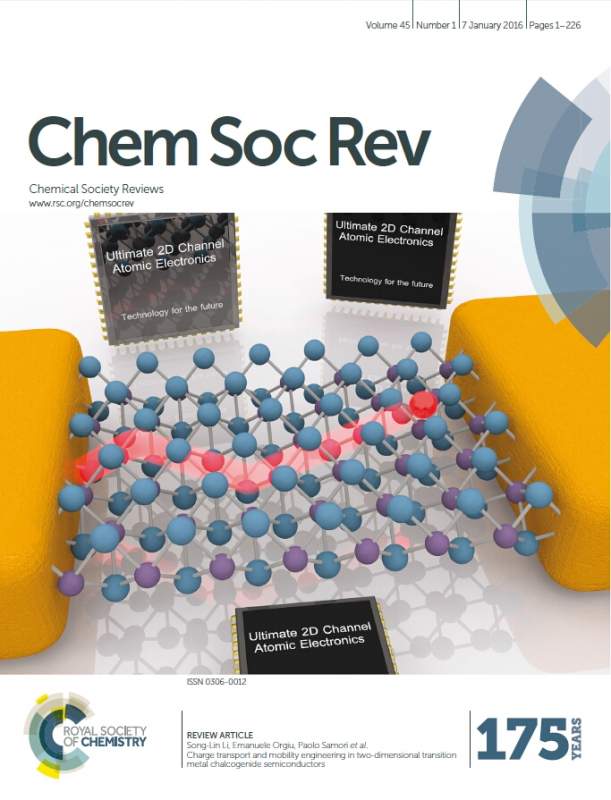 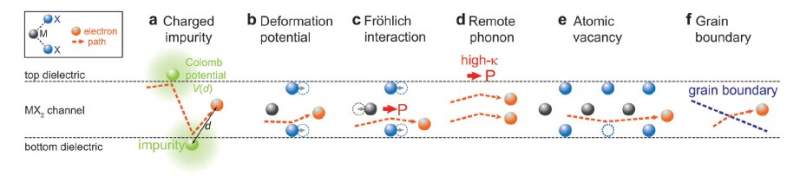 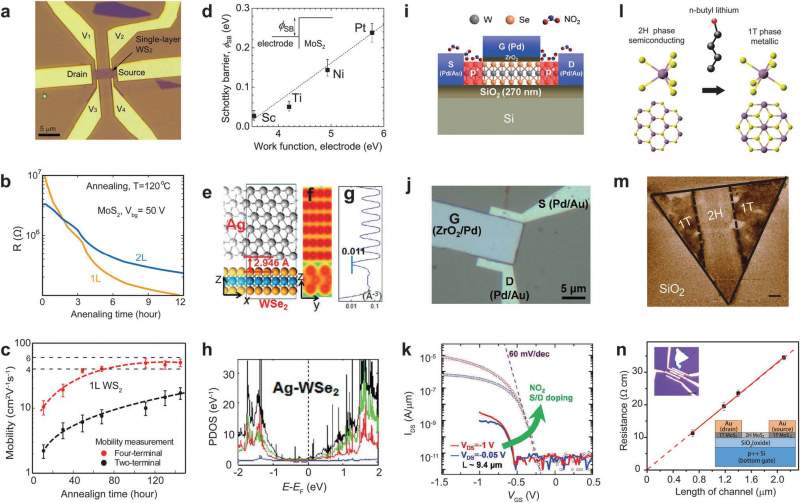 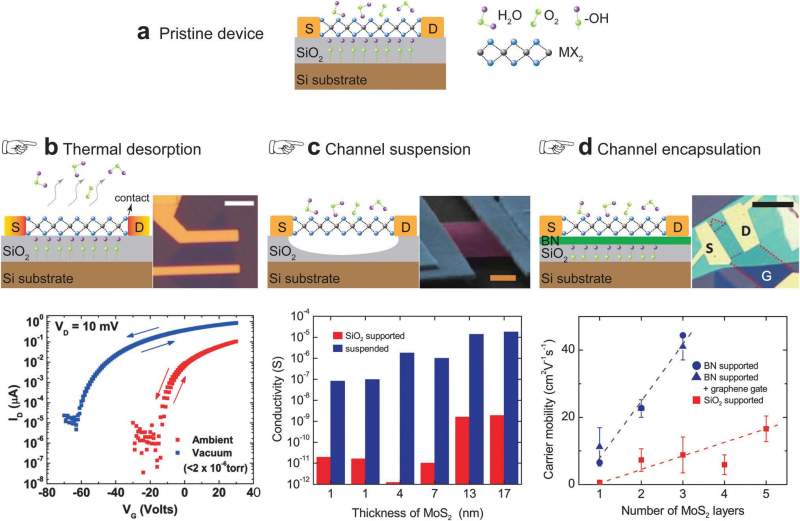 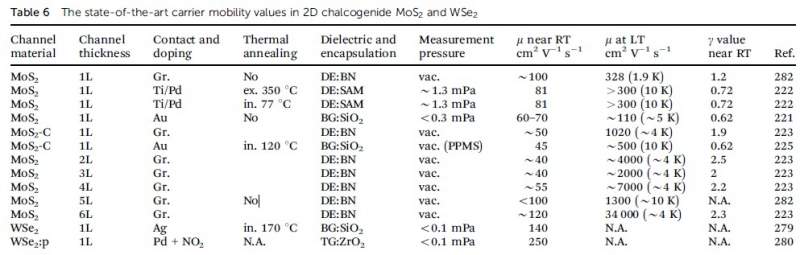 |
 回复此楼
回复此楼» 本帖附件资源列表
-
欢迎监督和反馈:小木虫仅提供交流平台,不对该内容负责。
本内容由用户自主发布,如果其内容涉及到知识产权问题,其责任在于用户本人,如对版权有异议,请联系邮箱:xiaomuchong@tal.com - 附件 1 : ChemSocRev-review-2D_transport.pdf
2015-12-27 07:47:58, 7.81 M
» 收录本帖的淘帖专辑推荐
 纳米技术与能源及模拟 纳米技术与能源及模拟 | 先进材料 | 第一性原理相关文档 | uicorn3 |
| 纳米材料+光电子学 | VASP计算 |
» 猜你喜欢
 修改论文,如何借助其他力量?
已经有4人回复
修改论文,如何借助其他力量?
已经有4人回复
-
中山大学潘越教授课题组2027级推免硕士研究生招生 新增一个专业医学技术名额
已经有21人回复
-
无机化学论文润色/翻译怎么收费?
已经有145人回复
» 本主题相关商家推荐: (我也要在这里推广)



10楼2015-12-27 21:55:18
简单回复
lwg32楼
2015-12-27 14:05
回复
五星好评 顶一下,感谢分享!
2015-12-27 15:45
回复
五星好评 顶一下,感谢分享!
若只如初jian4楼
2015-12-27 16:02
回复
五星好评 顶一下,感谢分享!
2015-12-27 19:38
回复
五星好评 顶一下,感谢分享!
韩大脚6楼
2015-12-27 19:57
回复
五星好评 顶一下,感谢分享!
cqu35557楼
2015-12-27 20:13
回复
五星好评 顶一下,感谢分享!
zju1008楼
2015-12-27 21:06
回复
五星好评 顶一下,感谢分享!
2015-12-27 21:49
回复
五星好评 顶一下,感谢分享!
liangpei11楼
2015-12-27 22:08
回复
五星好评 顶一下,感谢分享!
echoli12楼
2015-12-27 23:38
回复
五星好评 顶一下,感谢分享!
罗纳尔多13楼
2015-12-27 23:48
回复
五星好评 顶一下,感谢分享!
lhw796214楼
2015-12-28 07:26
回复
五星好评 顶一下,感谢分享!