









| 查看: 1734 | 回复: 6 | |||
半调子梅花铁虫 (初入文坛)
|
[交流]
apolipoprotein b 的分子量是多少?
|

我购买了apolipoprotein b的抗体,说明书上说可以说识别apo b-100 和apo b-48。然而,我做western blot 发现条带出现在比75KD稍大的位置,我想知道apolipoprotein B-48的分子量的大小,是否存在多亚基及亚基大小等。还有关于apolipoprotein b-100的分子信息,分子量啊、亚基及亚基大小等。我查看文献发现apolipoprotein b-100是已知最大的单体蛋白之一,分子量的大于500KD的,不知道是什么地方出了错?apo b-100经SDS-PAGE容易降解么?apo B-48的分子量是多少?这条条带会是apo b-48的么?求各位大神相助。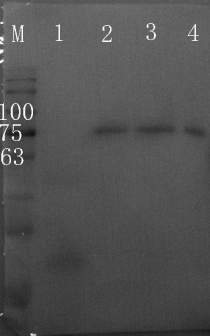 wb.jpg |
 回复此楼
回复此楼» 猜你喜欢
 含氟糖皮质激素的外用抗炎利器醋酸氟轻松
已经有0人回复
含氟糖皮质激素的外用抗炎利器醋酸氟轻松
已经有0人回复
-
阿莫奈韦(Amenamevir):解旋酶-引物酶靶向分子的结构特征与合成路径全解析
已经有0人回复
-
化学工程及工业化学论文润色/翻译怎么收费?
已经有214人回复
-
利瑞鲁单抗:靶向KIR的NK细胞检查点工具抗体,结构基础与科研应用全解析
已经有0人回复
-
Wnt-C59:PORCN靶向化学探针,Wnt信号通路阻断机制与科研应用全解析
已经有0人回复
-
Fexaramine:肠道限制性FXR化学探针,结构特征与信号通路研究全解析
已经有0人回复
-
NVS-STG2:靶向STING跨膜域的分子胶类激动剂,结构特征与寡聚化机制研究全解析
已经有0人回复
-
DOTA-GPC3肽(CAS 3066439-94-6):双功能分子探针前体的结构特征与标记应用解析
已经有0人回复
-
科研用 TLR7/8 双激动剂怎么选?现货与质控要点
已经有0人回复
-
SEL120-34A HCl:CDK8/CDK19高选择性激酶抑制剂
已经有0人回复
» 本主题相关商家推荐: (我也要在这里推广)

★
半调子梅花(金币+1): 谢谢参与
半调子梅花(金币+1): 谢谢参与
 |
2楼2015-11-05 21:28:21
3楼2015-11-05 21:30:13
|
|
4楼2015-11-05 21:42:12
| 哦 ! |
5楼2015-11-05 21:55:42
mascotte
金虫 (正式写手)
- 应助: 10 (幼儿园)
- 金币: 1998.9
- 红花: 3
- 帖子: 328
- 在线: 193.4小时
- 虫号: 492008
- 注册: 2008-01-07
- 专业: 生物化学
★ ★ ★ ★
小木虫: 金币+0.5, 给个红包,谢谢回帖
半调子梅花: 金币+3 2015-11-09 14:32:14
小木虫: 金币+0.5, 给个红包,谢谢回帖
半调子梅花: 金币+3 2015-11-09 14:32:14
| Human apoB-100 is a glycoprotein with a molecular mass of about 550 kDa, consisting of 4536 amino acid residues. Both ApoB-48 and ApoB-100 are coded by APOB and by a single mRNA transcript larger than 16 kb. ApoB-48 is generated when a stop codon (UAA) at residue 2153 is created by RNA editing. As a result of the RNA editing, ApoB-48 and ApoB-100 share a common N-terminal sequence, but ApoB-48 lacks ApoB-100's C-terminal LDL receptor binding region. In fact, ApoB-48 is so called because it constitutes 48% of the sequence for ApoB-100. |

6楼2015-11-07 04:26:11
半调子梅花
铁虫 (初入文坛)
- 应助: 0 (幼儿园)
- 金币: 43.3
- 散金: 5
- 帖子: 30
- 在线: 7.4小时
- 虫号: 2390207
- 注册: 2013-03-31
- 专业: 生物物理、生物化学与分子
 还是不能解释我的结果
 还是谢谢你了。
 7楼2015-11-09 14:39:56

