









| 查看: 1604 | 回复: 32 | ||||
| 【奖励】 本帖被评价31次,作者1949stone增加金币 24.6 个 | ||||
| 当前只显示满足指定条件的回帖,点击这里查看本话题的所有回帖 | ||||
[资源]
Pharmacognosy and Pharmacobiotechnology,Second Edition
|
||||

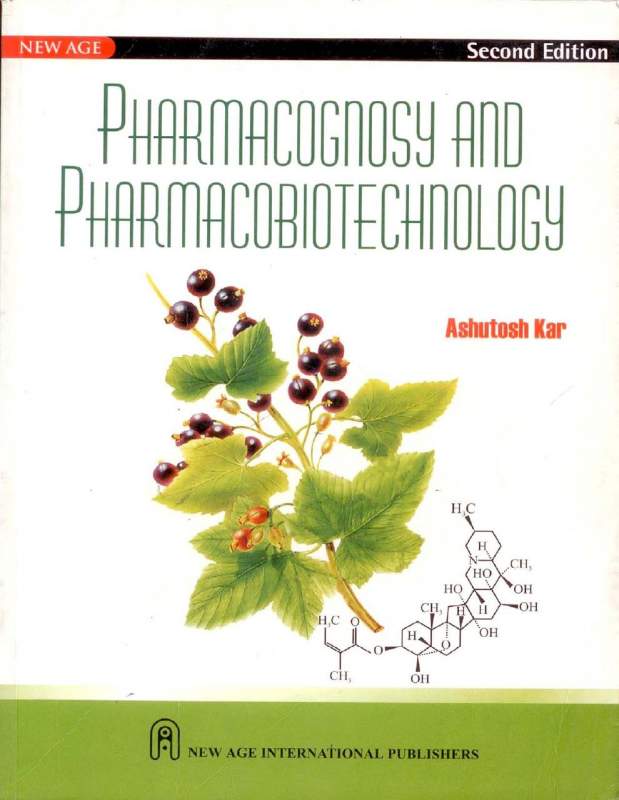 Overwhelming appreciation, whole-hearted acceptance, and qualified success of the First Edition of the textbook entitled ‘Pharmacognosy and Pharmacobiotechnology’ extended by the postgraduate students specializing in Pharmacognosy and Phytochemistry, Biotechnology, Pharmaceutical Chemistry, Chemistry of Natural Products; besides the enormous undergraduate students in Bachelor of Pharmacy programmes in all the reputed Pharmacy Degree Colleges not only in India but also abroad are quite encouraging. Exclusively based upon the commendable comments and constructive criticisms received from various academic colleagues across the country the author has meticulously presented this entirely revised and duly expanded Second Edition. Moreover, the reading text material has been updated thoroughly, various biosynthetic pathways modified adequately, chemical structures and tabular contents enumerated more explicitly. Besides, the critical definitions, important statements, terminologies, names of chemical constituents have been duly highlighted so as to facilitate its readers to comprehend them accurately. Tremendous achievement and advance in the different segments of highly sophisticated ‘Research Techniques’ solely based on PC-modulated modern analytical techniques helped not only to clarify the rather complex chemical structures of unravelled chemical constituents from Natural Products, but also established precisely the plethora of ‘Biosynthetic Pathways’ dominating the plant kingdom. The present textbook essentially comprises of nearly sixty ‘biosynthetic routes’ of predominantly important natural chemical entities, such as: alkaloids, antibiotics, glycosides, marine-derived drug substances, and terpenoids. It is, however, pertinent to add here that certain extremely preliminary aspects to the related pharmacognostical characteristic features of ‘Natural Plant Products’, namely: morphological structures, adulterants used in herbal products, habitats, method of cultivation, geographical distribution etc., have been expunged from the text, to which the students invariably obtain sufficient exposure in the early stages of their systematic curriculum follow up. The Second Edition essentially comprises of five additional chapters, namely: (i) Nutraceuticals, (ii) Enzymes and Protein Drugs, (iii) Biomedicinals from Plant Tissue Cultures, (iv) Hi-Tech Products from Plant Sources, and (v) Indian Traditional Herbal Drugs, i.e., chapter-11 through chapter-15. The judicious and thoughtful inclusion of these five chapters would certainly expose the PG/UG students of the aforesaid disciplines to an exceptionally solid platform in the scientific pursuit of their knowledge. The author feels convinced and earnestly believes that the Second Revised and Expanded Edition of Pharmacognosy and Pharmacobiotechnology shall largely fulfil the much needed value-added substantial text materials. It is hoped that Pharmacognosy and Pharmacobiotechnology will continue to enjoy its popularity amongst the august teaching fraternity, brilliant students, herbal practitioners, pharmacognosists, herbal chemists, phytochemists, biotechnologists, and above all the researchers who would like to make an illustrious career in their respective professional discipline in the New Millennium. Finally, the author wishes to place on record his deep sense of gratitude to Shri Saumya Gupta M.D., and the entire professionals of New Age International (P) Limited Publishers, for their excellent support to bring out this edition in such a short-span. Gurgaon Dr. Ashutosh Kar |
 回复此楼
回复此楼» 本帖附件资源列表
-
欢迎监督和反馈:小木虫仅提供交流平台,不对该内容负责。
本内容由用户自主发布,如果其内容涉及到知识产权问题,其责任在于用户本人,如对版权有异议,请联系邮箱:xiaomuchong@tal.com - 附件 1 : Pharmacognosy_and_Pharmacobiotechnology.pdf
2015-04-07 23:46:42, 7.46 M
» 收录本帖的淘帖专辑推荐
 药物合成 药物合成 | 药物设计大全 |
» 猜你喜欢
 胰岛素的实验室表达
已经有0人回复
胰岛素的实验室表达
已经有0人回复
-
求助电子版:晶型药物研发理论与应用
已经有0人回复
-
药理学论文润色/翻译怎么收费?
已经有232人回复
-
北京大学药学院诚招药物化学/有机化学方向博士后
已经有6人回复
-
看过往病历,有疑惑请教
已经有2人回复
-
2027药学博士申请
已经有1人回复
-
扩散模型生成分子目前痛点,改进方向有哪些,论文创新性卡住了现在
已经有0人回复
-
求解答药物生成模型痛点以及创新点,扩散模型创新
已经有0人回复
-
亚甲基引入
已经有2人回复
-
高温加热及反应瓶材质选型
已经有1人回复
» 本主题相关价值贴推荐,对您同样有帮助:
- Phase Equilibria, Phase Diagrams and Phase Transformations Second Edition
已经有124人回复
- Handbook of Multisensor Data Fusion: Theory and Practice, Second Edition
已经有88人回复
- The Organic Chemistry of Drug Design and Drug Action,Second Edition(1)
已经有33人回复
- Nanomaterials: Synthesis, Properties and Applications, Second Edition 原帖失效
已经有130人回复
32楼2018-07-14 00:57:18
简单回复
2015-04-08 06:54
回复
五星好评 顶一下,感谢分享!
anruoka3楼
2015-04-08 08:48
回复
五星好评 顶一下,感谢分享!
2015-04-08 09:31
回复
五星好评 顶一下,感谢分享!
quietdon5楼
2015-04-08 09:56
回复
五星好评 顶一下,感谢分享!
liqide6楼
2015-04-08 13:49
回复
五星好评 顶一下,感谢分享!
huliyong7楼
2015-04-08 15:06
回复
五星好评 顶一下,感谢分享!
amunesia8楼
2015-04-08 15:41
回复
五星好评 顶一下,感谢分享!
lionguy9楼
2015-04-08 19:34
回复
五星好评 顶一下,感谢分享!
sjshvdc10楼
2015-04-08 20:40
回复
五星好评 顶一下,感谢分享!
silentsoul11楼
2015-04-08 21:09
回复
五星好评 顶一下,感谢分享!
wang36912楼
2015-04-08 21:54
回复
五星好评 顶一下,感谢分享!
xwj00713楼
2015-04-08 21:57
回复
五星好评 顶一下,感谢分享!
pingshan14楼
2015-04-09 05:17
回复
五星好评 顶一下,感谢分享!


 10
10