









| 查看: 2115 | 回复: 2 | |||
[交流]
巴黎十一大Marie ERARD教授招CSC博士生~~~
|

替老师发帖,女教授,法国人,非常漂亮,非常nice,从不生气 至少我们没有见过。我只负责帮老师传递消息,因为功课很紧张,可能没有时间回复。希望大家踊跃申请,直接联系老师即可。对法语没有要求,老师英文非常好。 至少我们没有见过。我只负责帮老师传递消息,因为功课很紧张,可能没有时间回复。希望大家踊跃申请,直接联系老师即可。对法语没有要求,老师英文非常好。Laboratory name :Laboratoire de Chimie Physique Laboratory web site http://www.lcp.u-psud.fr/ PhD supervisor (contact person) Marie ERARD Associate Professor marie.erard@u-psud.fr [/email] +33 1 69 15 30 14 Specific requirements to apply, if any Applications containing a detailed CV, a description of previous research experience and interests and names of two references should be send by email Thesis proposal (max 1500 words) 1. State of the art and project Green fluorescent proteins (GFPs) have given rise to new powerful bioanalytical imaging techniques that are increasingly used in pharmacological and clinical research, as well as in environmental sciences and biotechnologies. In particular, FPs are widely used as genetically encoded biosensors to image and quantify biochemical activities in living cells. [1-4] They can be classified in three categories (For a complete review on FP based biosensors see [4]). The first one takes advantage of the intrinsic sensitivity of the FP’s photophysical property to a physico- chemical parameter or an ion concentration. For example, we recently exploit the pH sensitivity of the cyan ECFP to monitor the intragranular pH of secretory granules in chromaffin cells by fluorescence lifetime imaging or FLIM (Fig1A). [5,6] In the second category, the FP is fused with a sensor module. When the latter is modified by the binding of a metabolite or an enzymatic activity, its conformation changes and modulates the fluorescence of the nearby FP. The third and last group is based on Förster Resonant Energy Transfer or FRET between two FPs grafted around a sensing module whose conformation controls the FRET efficiency (Fig 1B). More than 60 % of FRET based biosensors use cyan and yellow variants. If in the first category, the calibrated responses of FPs may be used to monitor specific parameters, the other cases require FPs with fully controlled photophysical response to any changes in their environment in order to avoid any misinterpretation of the fluorescence signals. To achieve this goal, we recently genetically engineered a new bright cyan fluorescent protein variant mainly insensitive to its environment called Aquamarine. This FP  has a fluorescence quantum yield close to 90%, an impressive pH stability (pK1/2 = 3,3) and a near- single exponential fluorescence decay.[7-9] This result was obtained with only two single point mutations (65S and 148G) on the genuine ECFP. Aquamarine was introduced with a great success in a cAMP-dependant kinase sensor to produce an efficient FRET based biosensor (Fig1B).[7]  Figure 1. A. ECFP, a lifetime-based pH sensor.[5] (left) Intensity and FLIM images of chromaffin cells at three pH values. FLIM images were obtained on the chosen ROI after a 4x4 binning of the intensity image. Cell size ca 10 μm. (right) pH dependence of the fluorescence lifetime of CgA-ECFP in chromaffin cells (average ± SEM, N ranging from 10 to 40). Solid line corresponds to the best fit to a sigmoidal analytical model and is for eye guidance only. B. AqAKARCit biosensor response in BHK cells.[7] (left) Schematic representation of conformational reorganizations in AKAR probe upon phosphorylation by PKA. (middle) Evolution of fluorescence intensities of Aquamarine (F480) and Citrine (F535) upon Aquamarine excitation and of their ratio (F535/F480) versus time upon activation of PKA by Forskolin in presence of IBMX. (right) From top to bottom: intensity image of the cell and ROI used to calculate the average ratio plotted on the left, ratio images corresponding to the points a, b and c on the F535/F480 trace. Based on our previous work the aim of the project will be to (i) complete the improvements performed on Aquamarine by optimizing its resistance to photobleaching and/or (ii) develop new FRET based biosensors taking advantage of its amazing properties for calcium, reactive oxygen species or cAMP-dependant kinase activity. The detailed working plan of the PhD project will depend on the skills and the interests of the candidate. He/she will have either a strong background in molecular biology and biochemistry or a deep knowledge in photophysics and fluorescence spectroscopy. Some expertise in cell biology or optical microscopy will also be appreciated. In addition, the candidate should also show interest for working in a multidisciplinary atmosphere as the project will be performed in close collaboration with cell biologists (Pr. Oliver Nüsse at UPSud, Orsay, Dr. Pierre Vincent at UPMC, Paris or Dr. Catherine Berthomieu at CEA). References 1. De Michele R, Carimi F, Frommer WB (2014) Mitochondrial biosensors. International Journal of Biochemistry & Cell Biology 48:39-44. 2. Ohba Y, Fujioka Y, Nakada S, Tsuda M (2013) Fluorescent Protein-Based Biosensors and Their Clinical Applications. In: Fluorescence-Based Biosensors: From Concepts to Applications, 113:313-348. 3. Sipieter F, Vandame P, Spriet C, Leray A, Vincent P, Trinel D, Bodart JF, Riquet FB, Heliot L (2013) From FRET Imaging to Practical Methodology for Kinase Activity Sensing in Living Cells. In: Fluorescence-Based Biosensors: From Concepts to Applications, 113:145-216. 4. Newman RH, Fosbrink MD, Zhang J (2011) Genetically encodable fluorescent biosensors for tracking signaling dynamics in living cells. Chemical reviews 111 (5):3614-3666. 5. Poea-Guyon S, Pasquier H, Merola F, Morel N, Erard M (2013) The enhanced cyan fluorescent protein: a sensitive pH sensor for fluorescence lifetime imaging. Anal Bioanal Chem 405 (12):3983-3987 6. Poea-Guyon S, Rafet MA, Erard M, Amar M, Moreau AW, Fossier P, Gleize V, Vitale N, Morel N (2013) The V- ATPase membrane domain is a sensor of granular pH that controls the exocytotic machinery. The Journal of Cell Biology 203(2):283-98 7. Erard M, Fredj A, Pasquier H, Beltolngar DB, Bousmah Y, Derrien V, Vincent P, Merola F (2013) Minimum set of mutations needed to optimize cyan fluorescent proteins for live cell imaging. Molecular Biosystems 9:258-267 8. Fredj A, Pasquier H, Demachy I, Jonasson G, Levy B, Derrien V, Bousmah Y, Manoussaris G, Wien F, Ridard J, Erard M, Merola F (2012) The Single T65S Mutation Generates Brighter Cyan Fluorescent Proteins with Increased Photostability and pH Insensitivity. PLosOne 7 (11):e49149 9. Pasquier H, Merola F, Fredj A, Espagne A, Erard M (2011) Méthode pour générer des protéines fluorescentes cyans ayant une sensibilité réduite au pH. Patent pending Ref : DI-03624-01 CNRS Universite Paris Sud 2011 Sample Text Dr Erard’s team has developed a FLIM microscope based on an inverted microscope stage equipped with a high NA objective and appropriate filters sets for FRET studies using CFP, YFP and other fluorophores. The fluorescence lifetime detection mode is based on laser-scanning TCSPC imaging achieving high time-accuracy and sensitivity. The time-tagged technique used for photon coding allows the flexible reconstruction of data subsets according to variable time- and space- criteria. The microscope is equipped with all required accessories, including temperature control, camera- based quantitative intensity imaging, spectral analysis and fast illumination shutter/filter wheel. The laboratory is also equipped with an up-to-date wide field imaging station dedicated to multicolour imaging and ratiometric FRET detection. It is also equipped with all required accessories, including temperature control. The work will be realized in the Biophysics Group at the Laboratoire de Chimie Physique and will benefit from all supports available: - - - - molecular biology facilities biochemistry (cold room, equipment for protein purification) fluorescence spectroscopy (plate reader equipped with monochromators, a spectrofluorimeter and a stopped flow) cell biology infrastructures (L2 equipped with microbiology security workstation, incubators, sterilization autoclave) Complementary techniques may be used in nearby imaging platforms or in the frame of our collaborations: cytometry, FCS, ... 3. Candidate's training acquired during the PhD program The candidate will be supervised and trained by a team having a widely recognized thorough knowledge on fluorescent protein biophysics, from engineering and photodynamic responses to structural analysis by mass spectroscopy and expertise in fluorescence microspectroscopy as well in fluorescence lifetime imaging techniques. He/she will have the unique opportunity to work in a multidisciplicary environment on a project at the frontiers of biochemistry / biophysics, photophysics, and cell biology. He/she will use state of the art equipment and will contribute to their improvement. At the end of his/her thesis, he/she will have acquired an excellent training in advanced biological imaging techniques and a deep knowledge on the development of new biosensors and their use for biomedicine or biotechnology. Publications of the laboratory in the field (max 5) 1. Erard M, Fredj A, Pasquier H, Beltolngar DB, Bousmah Y, Derrien V, Vincent P, Merola F Minimum set of mutations needed to optimize cyan fluorescent proteins for live cell imaging. Molecular BioSystems, 2013, 9, 258-267 2. Poëa-Guyon S, Pasquier H, Mérola F, Morel N, Erard M The enhanced cyan fluorescent protein: a sensitive pH sensor for fluorescence lifetime imaging. Analytical and Bioanalytical Chemistry 2013, 405, 3983-87 3. Berthelot V, Steinmetz V, Alvarez LA, Houée-Levin C, Merola F, Rusconi F, Erard M An analytical workflow for the molecular dissection of irreversibly modified fluorescent proteins. Analytical and Bioanalytical Chemistry 2013, 405(27), 8789-98  4. Poëa-Guyon S, Rafet Ammar M, Erard M, Amar M, Moreau AW, Fossier P, Gleize V, Vitale N, Morel N. The v-ATPase membrane domain is a sensor of intra-secretory vesicle pH screening the vesicle loading status for exocytosis. The Journal of Cell Biology 2013, 203(2), 283-98 5. Mérola F, Fredj A, Betolngar DB, Ziegler C, Erard M, Pasquier M New engineered cyan fluorescent proteins with ultimate performances for live cell FRET imaging. Biotechnology Journal 2014, 9(2), 180-191 Specific requirements to apply, if any Applications containing a detailed CV, a description of previous research experience and interests and names of two references should be send by email. 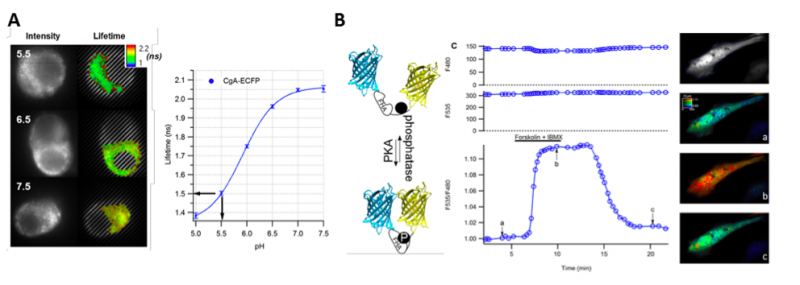 屏幕快照 2014-12-17 下午8.50.18.png |
 回复此楼
回复此楼» 猜你喜欢
 OpenAI又攻克数学难题了,离AI做有机合成还有多远?
已经有13人回复
OpenAI又攻克数学难题了,离AI做有机合成还有多远?
已经有13人回复
-
申请科研项目纯靠实力能成功吗?
已经有7人回复
-
极限拉扯,如何抉择
已经有14人回复
-
课题组会帮你通过考核么?
已经有7人回复
-
入职后第一次管课题组的专利缴费,对账才发现官费比别人多掏了一倍
已经有6人回复
-
售一区SCI文章T0P,我:8O.551.O54,科目全,可十急
已经有9人回复
-
售SCI一区文章,我:8O5.5.1.O5.4,科目全,可伽急
已经有10人回复
-
售SCI一区T0P文章,我:8.O55.1.O.54,科目全,可十急
已经有8人回复
-
售SCI一区T0P文章,我:8.O55.1.O.54,科目全,可十急
已经有9人回复
-
售SCI一区文章,我:8.O.55.1.O.54,科目齐全,可伽急
已经有7人回复


2楼2014-12-18 04:33:27
xuxian1800
银虫 (正式写手)
- 应助: 2 (幼儿园)
- 金币: 4272.4
- 散金: 1105
- 红花: 5
- 帖子: 709
- 在线: 193.5小时
- 虫号: 3276975
- 注册: 2014-06-16
- 专业: 生物物理、生物化学与分子
3楼2014-12-18 13:43:50


 200
200