









| 查看: 2514 | 回复: 55 | ||
| 当前只显示满足指定条件的回帖,点击这里查看本话题的所有回帖 | ||
[资源]
透射电镜分析试样的制备手册
|
||

|
Sample Preparation Handbook for Transmission Electron Microscopy: Techniques 论坛中原链接http://muchong.com/html/201103/3011144.html链接已过期 Author(s): Jeanne Ayache, Luc Beaunier, Jacqueline Boumendil, Gabrielle Ehret, Daniele Laub Year: 2010 Edition: 1st Edition. Language: English Pages: 336 This two-volume Handbook is a comprehensive guide to sample preparation for the transmission electron microscope. Sample Preparation Handbook for Transmission Electron Microscopy: Volume 2: Techniques describes 14 different preparation techniques, including 22 detailed protocols for preparing thin slices for TEM analysis. Compatibility and pre-treatments are also discussed. Experimental conditions and guidelines, options and variations, advantages and constraints, technical hints from the authors’ years of experience, common artifacts, and theoretical issues are all considered. Particular attention is given to the type of material, conditioning, compatible analysis of a given preparation, and risks. This practical and authoritative reference companion deserves a place on the bench in every TEM lab. Key Features of the Handbook: Combines all of the latest techniques for the preparation of mineral to biological samples Compares techniques in terms of their application areas, limitations, artifacts, and types of analysis (macroscopic, atomic, or molecular level) Describes physical characteristics, chemistry, structure/texture, and orientation properties of materials in relation to the most appropriate type of TEM analysis Links to a complementary interactive database website which is available to scientists worldwide* Written by authors with 100 years of combined experience in electron microscopy *http://temsamprep.in2p3.fr/ Table of contents : Sample Preparation Handbook for Transmission Electron Microscopy......Page 1 ISBN 1441959742......Page 5 Foreword......Page 8 Preface to the English Edition......Page 12 About the Authors......Page 16 Contents......Page 18 1 Techniques: General Introduction......Page 27 Conclusion......Page 30 1.2.1 Equipment and Supplies......Page 31 1.2.2 Procedure......Page 36 1.3.1 Annular Wheel Saw......Page 37 1.3.3 Acid Saw......Page 38 1.5 Limitations......Page 39 2.1 Principle......Page 40 2.2.2 Procedure......Page 41 2.3.2 Punching (Stamping)......Page 42 2.3.4 Electrochemical Cutting......Page 43 2.3.5 Electro-erosion Cutting......Page 44 2.6 Compatible Techniques......Page 45 3.2.1 Equipment and Supplies......Page 46 3.2.2 Procedure......Page 55 3.5 Limitations......Page 58 4.2.1 Equipment and Supplies......Page 59 4.2.2 Procedure......Page 60 4.5 Limitations......Page 62 5.2.1 Equipment and Supplies......Page 63 5.2.2 Procedure......Page 64 5.4 Advantages......Page 66 5.7 Risks......Page 67 6.2.1 Equipment and Supplies......Page 68 6.4 Advantages......Page 69 7.1 Principle......Page 70 7.2.1 Equipment and Supplies......Page 71 7.2.2 Procedure......Page 72 7.3.1 Variant 1......Page 75 7.3.2 Variant 2......Page 76 7.6 Compatible Techniques......Page 77 8.1 Principle......Page 78 8.2.2 Procedure......Page 79 8.3.1 Double Embedding Variant......Page 83 8.3.3 Variant in Specific Media......Page 84 8.5 Limitations......Page 85 9.2.1 Equipment and Supplies......Page 86 9.2.2 Procedure......Page 87 9.3.3 Variant 3......Page 89 9.4 Advantages......Page 90 9.5 Limitations......Page 91 SubstitutionInfiltrationEmbedding at Low Temperatures......Page 92 10.1 Principle......Page 93 10.2.2 Procedure......Page 94 10.3.3 Variant 3......Page 95 10.5 Limitations......Page 96 Appendix: Physical Preparation Protocols......Page 97 11.2.1 Equipment and Supplies......Page 98 11.2.2 Procedure......Page 99 11.3.1 Fixation for the Immunolabeling and Cytochemical Techniques......Page 101 11.3.3 Fixation of Materials by Perfusion......Page 102 11.5 Limitations......Page 104 11.5.4 Structural Transformation: Artifacts Due to the Tissue-Sampling Method......Page 105 11.5.5 Chemical Changes: Artifacts Linked to the Composition of the Fixative Mixture......Page 106 12.2.1 Equipment and Supplies......Page 108 12.2.2 Procedure......Page 109 12.4 Advantages......Page 113 12.5 Limitations......Page 114 12.6 Compatible Techniques......Page 117 13.2.1 Equipment and Supplies......Page 118 13.2.2 Procedure......Page 119 13.4 Advantages......Page 123 14.1 Principle......Page 124 14.2.2 Procedure......Page 125 14.4 Advantages......Page 129 14.8 Conclusion......Page 130 Bibliography......Page 131 1.2.1 Equipment and Supplies......Page 133 1.3 Variants......Page 135 1.6 Artifacts......Page 137 Full-Bath Electrolytic Thinning (Window Technique)......Page 138 2.2.1 Equipment and Supplies......Page 139 2.2.2 Procedure......Page 140 2.6 Artifacts......Page 143 3.1 Principle......Page 144 3.2.1 Equipment and Supplies......Page 145 3.4 Advantages......Page 146 4.1 Principle......Page 147 4.2.2 Procedure......Page 148 4.5 Limitations......Page 150 5.1 Principle......Page 151 5.2.1 Equipment and Supplies......Page 152 5.2.2 Procedure......Page 153 5.5 Limitations......Page 159 5.8 Risks......Page 160 6.1 Principle......Page 161 6.2.2 Procedure......Page 164 6.4 Advantages......Page 175 6.7 Type of Analysis......Page 176 Bibliography......Page 177 1.2.2 Procedure......Page 179 1.3.1 Glass-Slide Technique......Page 181 1.3.2 Cryo-crushing......Page 182 1.4 Advantages......Page 183 1.5 Limitations......Page 184 2.1 Principle......Page 186 2.2.1 Equipment and Supplies......Page 188 2.2.2 Procedure......Page 189 2.3.1 Adapting the Method for the Small Angle Cleavage Technique (SACT)......Page 196 2.4 Advantages......Page 198 2.5 Limitations......Page 201 2.9 Conclusion......Page 202 3.1 Principle......Page 203 3.2.1 Equipment and Supplies......Page 204 3.2.2 Procedure......Page 206 3.5 Limitations......Page 225 3.6 Artifacts......Page 226 4.1 Principle......Page 227 4.2.2 Procedure......Page 228 4.2.3 Observations......Page 238 4.4 Advantages......Page 240 4.6 Artifacts......Page 241 4.6.1 Examples of Defects......Page 243 4.9 Conclusion......Page 244 5.2.1 Equipment and Supplies......Page 245 5.2.2 Procedure......Page 246 5.3.1 Tokuyasu Method......Page 250 5.5 Limitations......Page 251 5.6 Artifacts......Page 252 Bibliography......Page 253 1.2.1 Equipment and Supplies......Page 255 1.2.2 Procedure......Page 256 1.4 Advantages......Page 258 1.5 Limitations......Page 259 2.1 Principle......Page 260 2.2.2 Procedure......Page 261 2.4 Advantages......Page 262 3.1 Principle......Page 263 3.2.2 Procedure......Page 264 3.3.1 Two-Step Carbon/Plastic Extraction Replica Technique......Page 268 3.8 Risks......Page 270 4.2.1 Equipment and Supplies......Page 271 4.2.2 Procedure......Page 273 4.2.3 Observations......Page 276 4.4 Advantages......Page 277 4.5 Limitations......Page 278 4.8 Risks......Page 280 Bibliography......Page 281 1.2.2 Procedure......Page 283 1.3.2 Dispersion on the Surface of Water (Langmuir Film)......Page 286 1.3.3 Aerosol Dispersion......Page 287 1.3.4 ''Spin Coating'' Dispersion......Page 288 1.3.5 Dispersion and Spreading Nucleic Acids (DNA, RNA, and Associated Proteins)......Page 289 1.6 Artifacts......Page 292 2.1 Principle......Page 293 2.2.2 Procedure......Page 294 2.2.3 Observation in Cryo-microscopy......Page 297 2.4 Advantages......Page 298 2.7 Type of Analysis......Page 299 Bibliography......Page 300 1.2.2 Procedure......Page 302 1.3.2 Rotary Shadowing......Page 307 1.5 Limitations......Page 309 1.7 Type of Analysis......Page 310 2.1 Principle......Page 311 2.2.2 Procedure......Page 312 2.2.3 Observations......Page 317 2.6 Artifacts......Page 319 2.9 Conclusion......Page 320 3.2.2 Procedure......Page 321 3.3.1 Variant for Spread-Out Molecules......Page 325 3.4 Advantages......Page 326 3.6 Artifacts......Page 328 3.8 Risks......Page 329 4.2.1 Equipment and Supplies......Page 330 4.2.2 Procedure......Page 331 4.2.3 Observations......Page 335 4.3.1 Double Labeling......Page 337 4.4 Advantages......Page 338 4.8 Risks......Page 339 Bibliography......Page 340 Glossary......Page 342 Photo Credits......Page 350 Index......Page 352 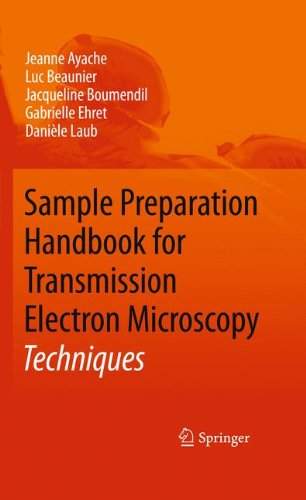 |
 回复此楼
回复此楼» 本帖附件资源列表
-
欢迎监督和反馈:小木虫仅提供交流平台,不对该内容负责。
本内容由用户自主发布,如果其内容涉及到知识产权问题,其责任在于用户本人,如对版权有异议,请联系邮箱:xiaomuchong@tal.com - 附件 1 : Sample_Preparation_Handbook_for_Transmission_Electron_Microscopy__Techniques.pdf
2014-12-11 08:11:18, 11.69 M
» 猜你喜欢
 2026年5月批次 | 海南大学 |博士招生|国家重大人才工程人才团队|2名
已经有0人回复
2026年5月批次 | 海南大学 |博士招生|国家重大人才工程人才团队|2名
已经有0人回复
-
寻求 氧化铝棉负载催化剂做成催化棉的实验室
已经有1人回复
-
冶金与矿业论文润色/翻译怎么收费?
已经有224人回复
-
仿真模拟
已经有0人回复
-
求一个催化的学术会议群
已经有0人回复
-
材料模拟计算
已经有0人回复
-
多孔结构的镍基催化剂
已经有7人回复
54楼2019-03-16 11:48:14
简单回复
2014-12-11 08:23
回复
五星好评 顶一下,感谢分享!
相识是缘3楼
2014-12-11 08:39
回复
五星好评 顶一下,感谢分享!
2014-12-11 08:45
回复
五星好评 顶一下,感谢分享!
2014-12-11 09:19
回复
五星好评 顶一下,感谢分享!
laopan6楼
2014-12-11 10:09
回复
五星好评 顶一下,感谢分享!
2014-12-11 10:31
回复
五星好评 顶一下,感谢分享!
雷智锋石芸竹8楼
2014-12-11 16:58
回复
五星好评 顶一下,感谢分享!
zjys588710楼
2014-12-11 17:54
回复
五星好评 顶一下,感谢分享!
cocol11楼
2014-12-12 06:47
回复
五星好评 顶一下,感谢分享!
wjy201112楼
2014-12-12 08:44
回复
五星好评 顶一下,感谢分享!
jzw041213楼
2014-12-12 08:53
回复
五星好评 顶一下,感谢分享!
愉博雅14楼
2014-12-12 09:03
回复
五星好评 顶一下,感谢分享!