











| 查看: 3430 | 回复: 56 | ||
| 当前只显示满足指定条件的回帖,点击这里查看本话题的所有回帖 | ||
[资源]
平板轧制基础(Flat Rolling Fundamentals)
|
||

|
Flat Rolling Fundamentals平板轧制基础 第一个文件为压缩的网页格式,第二个为epub格式 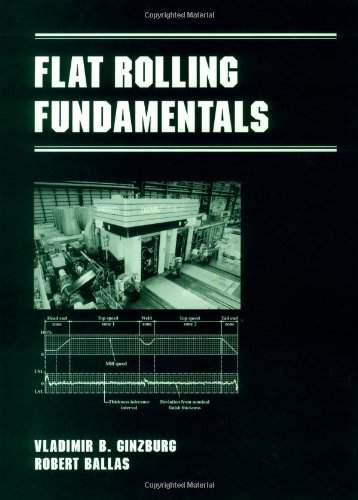 An multidisciplinary reference on the fundamental characteristics of flat rolling steel, from analyses of the metal properties involved to the latest technologies in application. Covers operational problems and executive decisions about optimization and upgrading, using a system approach. Synopsizes the automation and computerization of the entire process. The steel industry has a long history of development, and despite the many decades that have passed, it still demonstrates all the signs of longevity. New ideas continue to revolutionize the steel-producing process today as much as they did 150 years ago. The last two decades were especially beneficial for the steel industry, which went through a series of revolutionary steps, significantly improving the quality of steel and, at the same time, reducing the production cost. In the flat rolling of steel, these revolutionary steps included successful implementation of continuous strip production plants utilizing both thin and intermediate thickness slabs, introduction of strip profile and flatness control technology, and, most importantly, the complete automation and computerization of the entire rolling process. Remarkably, all these developments were achieved with a simultaneous reduction in the workforce, greatly reducing the labor cost per ton of rolled steel. These positive developments, however, were not made without sacrifices. Many steel research centers and plant engineering groups were either significantly downsized or closed altogether, transferring their responsibilities to mill management and technical personnel. Consequently, besides solving everyday mill problems, these specialists also had to make long-term decisions regarding both the optimization of the rolling process and the upgrading of mill equipment. Several training courses have been conducted throughout the years to help mill personnel successfully accomplish their novel tasks. A number of books have also been published on this subject. Among them are: Steel-Rolling Technology: Theory and Practice and High-Quality Steel Rolling: Theory and Practice both by Vladimir B. Ginzburg. The authors of this book, however, recognized a need for a textbook summarizing the fundamentals of flat rolling in a form that is aimed specifically at training mill operating and maintenance personnel. Flat Rolling Fundamentals underlines the multidisciplinary nature of the rolling process which requires knowledge in rolling theory along with several adjacent fields. These fields include physics, metallurgy, mechanical and electrical engineering, automation, process control, metrology, and quality control. Although, each of these disciplines can be pursued in academia, such courses are usually not sufficient for a complete understanding of the rolling process. This is due to the fact that the majority of problems in rolling mills arise at the interfaces among the different disciplines. Therefore, this book leads to the concept of a system approach for both the understanding of rolling theory and solving mill problems. Creating experts who can utilize this system approach is not the easiest task. Nevertheless, the authors believe that this area of expertise will attract many talented engineers and scientists and also hope that this book will be helpful to them in their exciting endeavor. 目录如下: Preface iii Part I Principal Characteristics of Steel Chapter 1 Structure of Metals 1 Chapter 2 Metallurgical Characteristics of Steel 12 Chapter 3 Chemical Compositions of Steel 28 Chapter 4 Classification of Steel 49 Chapter 5 Physical Properties of Steel Products 96 Chapter 6 Metallurgical Factors Controlling the Properties of Steel 127 Part II Deformation of Steel Chapter 7 Microscopic and Macroscopic Plasticity 159 Chapter 8 Analysis of Workpiece Deformation 178 Chapter 9 Resistance to Deformation in Hot Rolling 199 Chapter 10 Roll Force and Torque in Flat Rolling 219 Chapter 11 Friction and Lubrication in Rolling 239 Part III Metallurgical Aspects of Hot Rolling Process Chapter 12 Heat Transfer in Hot Rolling 283 Chapter 13 Structural Changes in Steel During Hot Rolling 311 Chapter 14 Thermomechanical Treatment Combined with Rolling 325 Chapter 15 Metallurgical Defects in Cast Slabs and Hot Rolled Products 354 |
 回复此楼
回复此楼» 本帖附件资源列表
-
欢迎监督和反馈:小木虫仅提供交流平台,不对该内容负责。
本内容由用户自主发布,如果其内容涉及到知识产权问题,其责任在于用户本人,如对版权有异议,请联系邮箱:xiaomuchong@tal.com - 附件 1 : Flat_Rolling_Fundamentals.rar
- 附件 2 : Flat_Rolling_Fundamentals_(Manufacturing_Engineering_and_Materials_Processing).epub
2014-11-26 17:17:00, 24.31 M
2014-11-26 17:33:17, 24.2 M
» 猜你喜欢
 要不要辞职读博?
已经有6人回复
要不要辞职读博?
已经有6人回复
-
实验室接单子
已经有3人回复
-
不自信的我
已经有10人回复
-
磺酰氟产物,毕不了业了!
已经有8人回复
-
求助:我三月中下旬出站,青基依托单位怎么办?
已经有10人回复
-
26申博(荧光探针方向,有机合成)
已经有4人回复
-
论文终于录用啦!满足毕业条件了
已经有26人回复
-
2026年机械制造与材料应用国际会议 (ICMMMA 2026)
已经有4人回复
-
Cas 72-43-5需要30g,定制合成,能接单的留言
已经有8人回复
-
北京211副教授,35岁,想重新出发,去国外做博后,怎么样?
已经有8人回复

51楼2018-01-14 19:00:51

7楼2014-11-28 20:05:20
简单回复
zjys58872楼
2014-11-26 19:53
回复
五星好评 顶一下,感谢分享!
雷智锋石芸竹3楼
2014-11-26 21:21
回复
五星好评 顶一下,感谢分享!
2014-11-27 08:28
回复
五星好评 顶一下,感谢分享!
wmnick5楼
2014-11-28 14:45
回复
五星好评 顶一下,感谢分享!
2014-11-28 16:23
回复
五星好评 顶一下,感谢分享!
jzw04128楼
2014-11-29 11:49
回复
五星好评 顶一下,感谢分享!
迷失的羊羔9楼
2014-11-29 20:03
回复
五星好评 顶一下,感谢分享!
bcsnow10楼
2014-11-29 22:52
回复
五星好评 顶一下,感谢分享!
kejia11楼
2014-11-30 01:56
回复
五星好评 顶一下,感谢分享!
chivuqiwo12楼
2014-12-24 10:45
回复
五星好评 顶一下,感谢分享!
rickhuang13楼
2014-12-27 19:33
回复
五星好评 顶一下,感谢分享!
wxp04030114楼
2015-01-10 22:08
回复
五星好评 顶一下,感谢分享!