









| 查看: 691 | 回复: 8 | |||
| 当前主题已经存档。 | |||
| 当前只显示满足指定条件的回帖,点击这里查看本话题的所有回帖 | |||
catju至尊木虫 (职业作家)
小木虫科技部部长
|
[交流]
The Chemist's Guide to Valence Bond Theory
|
||

|
The Chemist's Guide to Valence Bond Theory Sason S. Shaik, Philippe C. Hiberty ISBN: 978-0-470-03735-5 Hardcover 316 pages December 2007 This is the first book to discuss modern valence bond theory in a pedagogical context, written by leading authorities in the field. It comprehensively addresses the theoretical aspects and applications of the valence bond method to chemical calculations. This book is designed to teach chemists how to use VB theory to think concisely and rigorously and how to use VB computations. It is intended for chemists who are not necessarily experts on theory, but have some background in quantum chemistry. It will familiarize the reader with the various VB-based computational tools and methods available today and their use for a given chemical problem. From the Back Cover Modern valence bond theory and state-of-the-art methodologies Since the 1980s, valence bond (VB) theory has enjoyed a renaissance characterized both in the qualitative application of the theory and in the development of new methods for its computer implementation. Written by leading authorities, this is the premier reference on current VB theory and applications in a pedagogical context, perhaps the first such attempt since Pauling's The Nature of the Chemical Bond. After an introduction, A Chemist's Guide to Valence Bond Theory pre-sents a practical system that can be applied to a variety of chemical problems in a uniform manner. Concise yet comprehensive, it includes: A tour of some VB outputs and terminology An explanation of basic VB theory A discussion of various applications of the VB method to chemical problems, encompassing bonding problems, aromaticity and antiaromaticity, the dioxygen molecule, polyradicals, excited states, organic reactions, inorganic/organometallic reactions, photochemical reactions, and catalytic reactions Samples of inputs/outputs and instructions for interpreting results A short programmable outline for converting molecular orbital wave functions to VB structures A guide for performing VB calculations Complete with exercises and answers at the end of chapters, numerous solved problems, and a glossary of terms and symbols, this is the authoritative guide for computational chemists, chemical physicists, and research chemists in organic and organometallic/inorganic chemistry concerned with reactivity and molecular structure. It is also an excellent text for advanced undergraduate and graduate students 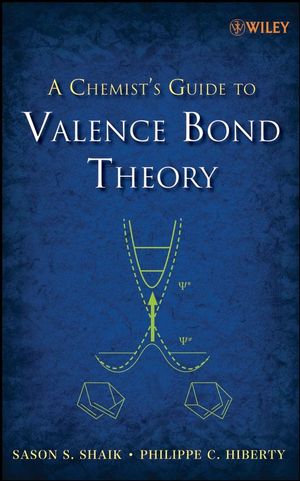 下载链接: http://rapidshare.com/files/1039 ... gapedia.info__.html http://rapidshare.com/files/104031004/ValenceBondTheory.rar |
 回复此楼
回复此楼» 猜你喜欢
 [武汉纺织大学]材料学院[姜伟团队名称]课题组-2026年硕士研究生调剂信息
已经有0人回复
[武汉纺织大学]材料学院[姜伟团队名称]课题组-2026年硕士研究生调剂信息
已经有0人回复
-
中国科学院·过程工程研究所·招聘海内外高层次人才---过程所“百人计划”
已经有1人回复
-
有机高分子材料论文润色/翻译怎么收费?
已经有269人回复
-
中国科学院·过程工程研究所·招聘海内外高层次人才---过程所“百人计划”
已经有5人回复
-
2026考博自荐
已经有4人回复
-
温敏水凝胶收缩
已经有0人回复
-
PDMS膜在溶液中的离子透过率
已经有0人回复
-
攒人品 论文祈福
已经有139人回复
-
science advances的AAAS系统上返修
已经有0人回复
-
science advances的AAAS系统上返修问题
已经有2人回复
-
LDPE黑十字为什么那么大
已经有0人回复
yinjj
金虫 (职业作家)
- 应助: 0 (幼儿园)
- 金币: 1181.6
- 红花: 10
- 帖子: 4308
- 在线: 585小时
- 虫号: 84177
- 注册: 2005-08-03
- 性别: GG
- 专业: 化学计量学与化学信息学



3楼2008-04-07 13:26:20


2楼2008-04-07 10:31:00


 30
30