













| 查看: 10030 | 回复: 285 | ||||
| 当前只显示满足指定条件的回帖,点击这里查看本话题的所有回帖 | ||||
nowitzki_ci专家顾问 (著名写手)
|
[资源]
Chemical Reviews最新综述:石墨烯及其相关材料的电化学
|
|||


|
Electrochemistry of Graphene and Related Materials 共39页 引文477篇 Adriano Ambrosi, Chun Kiang Chua, Alessandra Bonanni, and Martin Pumera* Division of Chemistry & Biological Chemistry, School of Physical and Mathematical Sciences, Nanyang Technological University,Singapore 637371, Singapore Corresponding Author :* E-mail: pumera@ntu.edu.sg; pumera.research@outlook.com. CONTENTS 1. Introduction A 2. Preparation of Graphene and Its Properties C 2.1. Top-down Methods C 2.1.1. Mechanical Exfoliation of Graphite C 2.1.2. Solution-Based Exfoliation of Graphite D 2.1.3. Electrochemical Exfoliation of Graphite E 2.1.4. Chemical Oxidation of Graphite, Exfoliation, and Reduction E 2.1.5. Opening/Unzipping Carbon Nanotubes: Graphene Nanoribbons G 2.1.6. Graphite and Carbon Nanotubes: Source of Impurities G 2.2. Bottom-up Methods H 2.2.1. Chemical Synthesis H 2.2.2. Epitaxial Growth on SiC H 2.2.3. Chemical Vapor Deposition H 2.2.4. 3D Graphene J 2.3. Processability of Graphene Materials J 2.4. Characterization Methods K 3. Electrochemistry at Graphene Surfaces L 3.1. Graphene and Heterogeneous Electron Transfer L 3.2. Inherent Electrochemical Activity of Graphene-Related Materials N 3.3. In fl uence of Dopants and Impurities on Graphene Electrochemistry O 3.4. Spectroelectrochemistry of Graphene P 4. Graphene in Electrochemical Sensing and Biosensing Q 4.1. Voltammetric and Amperometric Graphene Sensors and Biosensors Q 4.1.1. Analysis of Biomarkers Q 4.1.2. DNA Analysis R 4.1.3. Protein Analysis T 4.1.4. Cell Analysis T 4.1.5. Analysis of Heavy Metals T 4.1.6. Graphene in Security Applications U 4.2. Impedimetric Graphene Sensors and Biosensors: Toward Label-Free Detection U 4.2.1. DNA Analysis V 4.2.2. Protein Analysis V 4.2.3. Cell Analysis V 4.3. Potentiometric Graphene Sensors and Biosensors W 5. Graphene in Energy Systems W 5.1. Graphene for Capacitors and Supercapacitors W 5.2. Oxygen Reduction Reaction on Graphene Y 5.3. Graphene-Based Solar Cells Z 5.4. Graphene-Based Lithium Ion Batteries AB 6. Conclusion and Future Perspectives AD Appendix 1: IUPAC De fi nitions of Graphite, Graphene, and Amorphous Carbon AE Appendix 2: Overview of the Electrochemistry of Graphene, Graphite, and Graphene-Related Materials AE Author Information AE Corresponding Author AE Notes AE Biographies AE Acknowledgments AF References AF Sustainable energy production, environmentally sustainable development, and a ff ordable healthcare are three major challenges of the current global community. Electrochemistry is at the heart of many chemical and biological sensors, as well as energy storage and generation technologies. Electrochemistry utilizes energy in the cleanest possible form, as electricity, to collect or inject electrons through electrodes. New advanced materials are always sought after to improve the performances of existing devices or to create new disruptive technologies. Graphene and related materials bring new perspectives and prospects to electrochemical systems. The advantages of graphene for electrochemical devices are manyfold. The overall aim of this review is to provide a critical overview of our understanding on the electrochemistry of graphene and related materials. We will fi rst discuss the way how the graphene and related materials are prepared, since the methods have strong in fl uences on the materials properties. Consecutively, we describe how the fundamental electro- chemical properties of graphene are in fl uenced by the materials properties of graphene. Spectroelectrochemistry and its insight into graphene structure and function are discussed. We will demonstrate the role of dopants and impurities on graphene electrochemistry. We then focus on numerous application of graphene in electrochemical devices, starting with sensors and biosensors and continuing with energy storage and generation applications. We critically discuss the advantages and disadvantages of graphene-based systems and we outline future challenges. 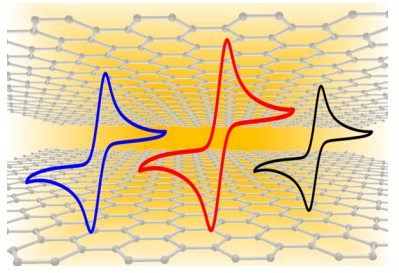 |
 回复此楼
回复此楼» 本帖附件资源列表
-
欢迎监督和反馈:小木虫仅提供交流平台,不对该内容负责。
本内容由用户自主发布,如果其内容涉及到知识产权问题,其责任在于用户本人,如对版权有异议,请联系邮箱:xiaomuchong@tal.com - 附件 1 : cr500023c.pdf
2014-06-05 11:58:17, 20.47 M
» 本帖已获得的红花(最新10朵)
 zhzx2009
» 猜你喜欢
 化工学院(学院正式调剂群+联系方式)
已经有0人回复
化工学院(学院正式调剂群+联系方式)
已经有0人回复
-
化工学院(学院官方群)-院士团队招生-学生自由度高-培养模式成熟高效
已经有0人回复
-
金属材料论文润色/翻译怎么收费?
已经有197人回复
-
黑龙江大学分析化学招调剂
已经有0人回复
-
武汉高校国家级人才团队招收材料,化学,纺织等专业硕士调剂生
已经有26人回复
-
纺大化工学院(官方群)-院士团队招生-学生自由度高发展好-培养模式成熟
已经有0人回复
-
温州大学化材学院王娟课题组招生
已经有5人回复
-
学院官方群-院士团队招生-学生自由度高-培养模式成熟已有10余名学生赴985海外深造
已经有0人回复
-
武汉纺织大学化工学院官方群-院士团队招生-学生自由度高-10余名学生赴985海外深造
已经有0人回复
-
南昌航空大学蒋华麟教授课题组招收化学、环境、碳达峰碳中和及相关专业硕士信息
已经有0人回复
-
湖北师范大学复试调剂
已经有0人回复
» 本主题相关商家推荐: (我也要在这里推广)



68楼2014-06-08 19:07:55
简单回复
2014-06-05 13:25
回复
五星好评 顶一下,感谢分享!
赵煦小窝3楼
2014-06-05 13:55
回复
五星好评 顶一下,感谢分享!
lwg34楼
2014-06-05 15:48
回复
五星好评 顶一下,感谢分享!
xuezhiye5楼
2014-06-05 16:44
回复
五星好评 顶一下,感谢分享!
2014-06-05 17:41
回复
五星好评 顶一下,感谢分享!
cwsl77楼
2014-06-05 18:10
回复
五星好评 顶一下,感谢分享!
2014-06-05 18:13
回复
五星好评 顶一下,感谢分享!
2014-06-05 20:22
回复
五星好评 顶一下,感谢分享!
jasenkingjoy10楼
2014-06-05 21:38
回复
五星好评 顶一下,感谢分享!
liangpei11楼
2014-06-05 21:39
回复
五星好评 顶一下,感谢分享!
shiyunbuji12楼
2014-06-05 22:17
回复
五星好评 顶一下,感谢分享!
yangshuhui13楼
2014-06-05 22:27
回复
五星好评 顶一下,感谢分享!
gengxin6014楼
2014-06-05 22:33
回复
五星好评 顶一下,感谢分享!

