









| 查看: 1112 | 回复: 9 | |||||||||
| 【奖励】 本帖被评价9次,作者nowitzki_ci增加金币 7.2 个 | |||||||||
nowitzki_ci专家顾问 (著名写手)
|
[资源]
Acc. Chem. Res.最新综述:RNA自组装与RNA纳米技术
|
||||||||


|
RNA Self-Assembly and RNA Nanotechnology Wade W. Grabow* ,† and Luc Jaeger* ,‡ †Department of Chemistry and Biochemistry, Seattle Paci fi c University, 3307 Third Avenue West, Seattle, Washington 98119, United States ‡ Department of Chemistry and Biochemistry, Bio-Molecular Science and Engineering Program, University of California, Santa Barbara, California 93106-9510, United States CONSPECTUS: Nanotechnology ’ s central goal involves the direct control of matter at the molecular nanometer scale to build nanofactories, nanomachines, and other devices for potential applications including electronics, alternative fuels, and medicine. In this regard, the nascent use of nucleic acids as a material to coordinate the precise arrangements of speci fi c molecules marked an important milestone in the relatively recent history of nanotechnology. While DNA served as the pioneer building material in nucleic acid nanotechnology, RNA continues to emerge as viable alternative material with its own distinct advantages for nanoconstruction. Several complementary assembly strategies have been used to build a diverse set of RNA nanostructures having unique structural attributes and the ability to self-assemble in a highly programmable and controlled manner. Of the di ff erent strategies, the architectonics approach uniquely endeavors to understand integrated structural RNA architectures through the arrangement of their characteristic structural building blocks. Viewed through this lens, it becomes apparent that nature routinely uses thermodynamically stable, recurrent modular motifs from natural RNA molecules to generate unique and more complex programmable structures. With the design principles found in natural structures, a number of synthetic RNAs have been constructed. The synthetic nanostructures constructed to date have provided, in addition to a ff ording essential insights into RNA design, important platforms to characterize and validate the structural self-folding and assembly properties of RNA modules or building blocks. Furthermore, RNA nanoparticles have shown great promise for applications in nanomedicine and RNA-based therapeutics. Nevertheless, the synthetic RNA architectures achieved thus far consist largely of static, rigid particles that are still far from matching the structural and functional complexity of natural responsive structural elements such as the ribosome, large ribozymes, and riboswitches. Thus, the next step in synthetic RNA design will involve new ways to implement these same types of dynamic and responsive architectures into nanostructures functioning as real nanomachines in and outside the cell. RNA nanotechnology will likely garner broader utility and in fl uence with a greater focus on the interplay between thermodynamic and kinetic in fl uences on RNA self-assembly and using natural RNAs as guiding principles. 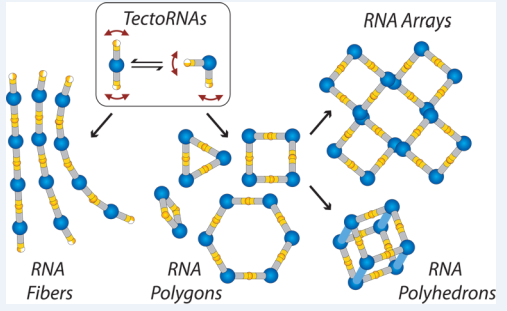 |
 回复此楼
回复此楼» 本帖附件资源列表
-
欢迎监督和反馈:小木虫仅提供交流平台,不对该内容负责。
本内容由用户自主发布,如果其内容涉及到知识产权问题,其责任在于用户本人,如对版权有异议,请联系邮箱:xiaomuchong@tal.com - 附件 1 : ar500076k.pdf
2014-05-25 11:07:24, 5.53 M
» 收录本帖的淘帖专辑推荐
 Nano&Micro Nano&Micro | 科研啊 努力啊 希望有用啊 | 软件学习与论文写作 | 纳米材料 |
| 观-精-记 |
» 猜你喜欢
 修改论文,如何借助其他力量?
已经有4人回复
修改论文,如何借助其他力量?
已经有4人回复
-
中山大学潘越教授课题组2027级推免硕士研究生招生 新增一个专业医学技术名额
已经有21人回复
-
无机化学论文润色/翻译怎么收费?
已经有285人回复
-
哈尔滨工程大学国家级青年人才-27年申请考核制博士招生(材料、化学、生物医学专业)
已经有12人回复
-
HRTEM/原位TEM/HRSTEM检测|价格优·周期短·可加急
已经有0人回复
-
大家平时也可以交流下
已经有1人回复
» 本主题相关商家推荐: (我也要在这里推广)

7楼2015-03-03 17:43:23
简单回复
2014-05-26 14:02
回复
五星好评 顶一下,感谢分享!
2014-05-26 22:00
回复
五星好评 顶一下,感谢分享!
韩大脚4楼
2014-05-27 20:39
回复
五星好评 顶一下,感谢分享!
逍潇5楼
2015-01-06 14:48
回复
五星好评 顶一下,感谢分享!
2015-01-06 18:51
回复
五星好评 顶一下,感谢分享!
2015-11-11 15:13
回复
五星好评 顶一下,感谢分享!
轻轻红过9楼
2018-03-25 09:31
回复
五星好评 顶一下,感谢分享!
tutu200010楼
2020-03-21 16:27
回复
五星好评 顶一下,感谢分享!