









| 查看: 12413 | 回复: 332 | |||
| 【奖励】 本帖被评价253次,作者Pureland增加金币 200.6 个 | |||
| 当前只显示满足指定条件的回帖,点击这里查看本话题的所有回帖 | |||
[资源]
2014年新著——石墨烯:凝聚态物质和器件中的新范例(英文版)
|
|||

|
E. L. Wolf, "Graphene: A New Paradigm in Condensed Matter and Device Physics" 2014 | ISBN-10: 0199645868 | 320 pages | PDF | 6,7 MB The book is an introduction to the science and possible applications of Graphene, the first one-atom-thick crystalline form of matter. Discovered in 2004 by now Nobelists Geim and Novoselov, the single layer of graphite, a hexagonal network of carbon atoms, has astonishing electrical and mechanical properties. It supports the highest electrical current density of any material, far exceeding metals copper and silver. Its absolute minimum thickness, 0.34 nanometers, provides an inherent advantage in possible forms of digital electronics past the era of Moore's Law. The book describes the unusual physics of the material, that it offers linear rather than parabolic energy bands. The Dirac-like electron energy bands lead to high constant carrier speed, similar to light photons. The lattice symmetry further implies a two-component wave-function, which has a practical effect of cancelling direct backscattering of carriers. The resulting high carrier mobility allows observation of the Quantum Hall Effect at room temperature, unique to Graphene. The material is two-dimensional, but in sizes micrometers nearly to meters displays great tensile strength but vanishing resistance to bending. The book reviews theoretical predictions of excessive atomic vibrational motion, tied to the dimensionality. As explained, these predictions seem not of practical consequence, and such effects are unobservable in samples up to nearly one meter size. The disintegration temperature of this refractory material is estimated as 4900K, certainly higher than the measured sublimation temperature of graphite, 3900K. As explained, applications of Graphene come in classes that range from additives to composite materials to field effect transistor elements capable of extremely high frequency operation. The classes of applications correlate with differing methods of fabrication, from inexpensive chemical exfoliations of graphite, to chemical vapour deposition on catalytic substrates as Cu and Ni, at temperatures around 1300K. The book reviews potential applications within existing electronics, to include interconnect wires, flash-memory elements, and high frequency field effect transistors. The chance to supplant the dominant CMOS family of silicon logic devices is assessed. Contents 1 Introduction 1 1.1 “Crystals” one atom thick: a new paradigm 1 1.2 Roles of symmetry and topology 7 1.2.1 Linear bands, “massless Dirac” particles 7 1.2.2 “Pseudo-spins” from dual sublattices and helicity 11 1.3 Analogies to relativistic physics backed by experiment 14 1.4 Possibility of carbon ring electronics 17 1.5 Nobel Prize in Physics in 2010 to Andre K. Geim and Konstantin S. Novoselov 17 1.6 Perspective, scope and organization 18 2 Physics in two dimensions (2D) 20 2.1 Introduction 20 2.2 2D electrons on liquid helium and in semiconductors 21 2.3 The quantum Hall effect, unique to 2D 24 2.3.1 Hall effect at low magnetic field 25 2.3.2 High field effects 27 2.3.3 von Klitzing’s discovery of the quantized Hall effect 28 2.4 Formal theorems on 2D long-range order 32 2.4.1 Absolute vs. relative thermal motions in 2D 32 2.4.2 The Hohenberg–Landau–Mermin–Peierls–Wagner Theorem 38 2.4.3 2D vs. 2D embedded in 3D 39 2.4.4 Soft membrane, crumpling instability 40 2.5 Predictions against growth of 2D crystals 44 2.6 “Artificial” methods for creating 2D crystals 45 2.7 Elastic behavior of thin plates and ribbons 45 2.7.1 Strain Nomenclature and Energies 47 2.7.2 Curvature and Gaussian curvature 49 2.7.3 Isometric distortions of a soft inextensible membrane 50 2.7.4 Vibrations and waves on elastic sheets and ribbons of graphene 51 2.7.5 An excursion into one dimension 55 3 Carbon in atomic, molecular and crystalline (3D and 2D) forms 57 3.1 Atomic carbon C: (1s)2 (2s)2 (2p)2 57 3.1.1. Wavefunctions for principal quantum numbers n = 1 and n = 2 58 3.1.2 Linear combinations of n = 2 wavefunctions 3.1.2 Linear combinations of n = 2 wavefunctions 3.1.3 Two-electron states as relevant to covalent bonding 61 3.1.4 Pauli principle and filled states of the carbon atom 61 3.2 Molecular carbon: CH4, C6 H6 , C60 63 3.2.1 Covalent bonding in simple molecules 63 3.2.2 Methane CH4 : tetrahedral bonding 67 3.2.3 Benzene C6 H6 : sp2 and π bonding 68 3.2.4 Fullerene C60 81 3.2.5 Graphane and Fluorographene 82 3.3 Crystals: diamond and graphite 83 3.3.1 Mined graphite 83 3.3.2 Synthetic “Kish” graphite 83 3.3.3 Synthetic HOPG: Highly Oriented Pyrolytic Graphite 84 4 Electron bands of graphene 86 4.1 Semimetal vs. conductor of relativistic electrons 86 4.2 Linear bands of Wallace and the anomalous neutral point 90 4.2.1 Pseudo-spin wavefunction 90 4.3 L. Pauling: graphene lattice with “1/3 double-bond character” 92 4.4 McClure: diamagnetism and zero-energy Landau level 92 4.5 Fermi level manipulation by chemical doping 93 4.6 Bilayer graphene 93 5 Sources and forms of graphene 98 5.1 Graphene single-crystals, flakes and cloths 98 5.1.1 Micro-mechanically cleaved graphite 98 5.1.2 Chemically and liquid-exfoliated graphite flakes 101 5.2 Epitaxially and catalytically grown crystal layers 108 5.2.1 Epitaxial growth on SiC: Si face vs. C face 109 5.2.2 Catalytic growth on Ni or Cu, with transfer 112 5.2.3 Large area roll-to-roll production of graphene 114 5.2.4 Grain structure of CVD graphene films 115 5.2.5 Hybrid boron-carbon-nitrogen BCN films 118 5.2.6 Atomic layer deposition 120 5.3 Graphene nanoribbons 121 5.3.1 Zigzag and armchair terminations 122 5.3.2 Energy gap at small ribbon width, transistor dynamic range 123 5.3.3 Chemical synthesis of perfect armchair nanoribbons 125 6 Experimental probes of graphene 128 6.1 Transport, angle-resolved photoemission spectroscopy 128 6.2 Optical, Raman effect, thermal conductivity 129 6.3 Scanning tunneling spectroscopy and potentiometry 132 6.4 Capacitance spectroscopy 133 6.5 Inverse compressibility with scanning single electron transistor (SSET) 136 7 Mechanical and physical properties of graphene 139 7.1 Experimental aspects of 2D graphene crystals 139 7.1.1 Classical (extrinsic) origin of ripples and wrinkles in monolayer graphene 141 7.1.2 Stability of graphene in supported samples up to 30 inches 146 7.1.3 Phonon dispersion in graphene 150 7.1.4 Experimental evidence of nanoscale roughness 158 7.1.5 Electrical conductivity of graphene in experiment 164 7.2 Theoretical approaches to “intrinsic corrugations” 169 7.3 Impermeable even to helium 176 7.4 Nanoelectromechanical resonators 178 7.5 Metal-insulator Mott–Anderson transition in ultrapure screened graphene 179 7.6 Absence of “intrinsic ripples” and “minimum conductivity” in graphene 183 8 Anomalous properties of graphene 185 8.1 Sublimation of graphite and “melting” of graphene 185 8.2 Electron and hole puddles, electrostatic doping and the “minimum conductivity” 191 8.3 Giant non-locality in transport 193 8.4 Anomalous integer and fractional quantum Hall effects 197 8.5 Absence of backscattering, carrier mobility 199 8.6 Proposed nematic phase transition in bilayer graphene 202 8.7 Klein tunneling, Dirac equation 204 8.8 Superconducting proximity effect, graphene Josephson junction 213 8.9 Quasi-Rydberg impurity states; Zitterbewegung 219 9 Applications of graphene 223 9.1 Transistor-like devices 224 9.1.1 High-frequency FET transistors 225 9.1.2 Vertically configured graphene tunneling FET devices 231 9.1.3 The graphene Barristor, a solid state triode device 237 9.2 Phototransistors, optical detectors and modulators 237 9.3 Wide area conductors, interconnects, solar cells, Li-ion batteries and hydrogen storage 244 9.3.1 Interconnects 248 9.3.2 Hydrogen storage, supercapacitors 249 9.4 Spintronic applications of graphene 251 9.5 Sensors of single molecules, “electronic nose” 254 9.6 Metrology, resistance standard 255 9.7 Memory elements 255 9.8 Prospects for graphene in new digital electronics beyond CMOS 257 9.8.1 Optimizing silicon FET switches 257 9.8.2 Potentially manufacturable graphene FET devices 263 9.8.3 Tunneling FET devices 264 9.8.4 Manufacturable graphene tunneling FET devices 266 10 Summary and assessment 270 References 275 Author Index 296 Sub ject Index 301 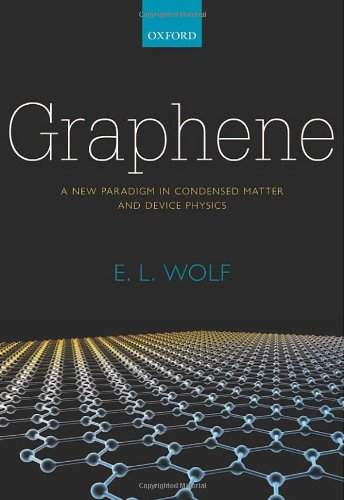 2014 | ISBN-10: 0199645868 | 320 pages | PDF | 6,7 MB |
 回复此楼
回复此楼» 本帖附件资源列表
-
欢迎监督和反馈:小木虫仅提供交流平台,不对该内容负责。
本内容由用户自主发布,如果其内容涉及到知识产权问题,其责任在于用户本人,如对版权有异议,请联系邮箱:xiaomuchong@tal.com - 附件 1 : Graphene_A_New_Paradigm_in_Condensed_Matter_and_Device_Physics.pdf
2014-04-10 09:40:00, 6.64 M
» 收录本帖的淘帖专辑推荐

» 本帖已获得的红花(最新10朵)
 erick258369
» 猜你喜欢
 修改论文,如何借助其他力量?
已经有4人回复
修改论文,如何借助其他力量?
已经有4人回复
-
中山大学潘越教授课题组2027级推免硕士研究生招生 新增一个专业医学技术名额
已经有21人回复
-
无机化学论文润色/翻译怎么收费?
已经有164人回复
-
哈尔滨工程大学国家级青年人才-27年申请考核制博士招生(材料、化学、生物医学专业)
已经有12人回复
-
HRTEM/原位TEM/HRSTEM检测|价格优·周期短·可加急
已经有0人回复
-
大家平时也可以交流下
已经有1人回复
» 本主题相关商家推荐: (我也要在这里推广)

» 本主题相关价值贴推荐,对您同样有帮助:
- 2014年新著——石墨烯:制备、表征与器件(英文版)
已经有640人回复
- 2014年新著——二氧化碳的吸收与利用(英文版)
已经有133人回复
- 2013年新著——石墨烯的物理与化学(英文版)
已经有453人回复
- 2014年新著——石墨烯物理(英文版)
已经有500人回复

30楼2014-04-11 11:16:18
2楼2014-04-10 09:43:27
nowitzki_ci
专家顾问 (著名写手)
-

专家经验: +139 - MN-EPI: 17
- 应助: 67 (初中生)
- 金币: 21070.8
- 帖子: 2329
- 在线: 1507.1小时
- 虫号: 1035941
3楼2014-04-10 09:47:53
简单回复
wmnick4楼
2014-04-10 10:18
回复
五星好评 顶一下,感谢分享!
2014-04-10 11:08
回复
五星好评 顶一下,感谢分享!
lwg36楼
2014-04-10 11:15
回复
五星好评 顶一下,感谢分享!
2014-04-10 12:33
回复
五星好评 顶一下,感谢分享!
2014-04-10 12:56
回复
五星好评 顶一下,感谢分享!
2014-04-10 14:45
回复
五星好评 顶一下,感谢分享!
wanghan83810楼
2014-04-10 14:48
回复
五星好评 顶一下,感谢分享!
lj110811楼
2014-04-10 15:33
回复
五星好评 顶一下,感谢分享!
lj110812楼
2014-04-10 15:35
回复
顶一下,感谢分享!
wxwbgao13楼
2014-04-10 17:13
回复
五星好评 顶一下,感谢分享!
lijiayupku14楼
2014-04-10 18:20
回复
五星好评 顶一下,感谢分享!