









| 查看: 3571 | 回复: 63 | |||||||
| 【奖励】 本帖被评价57次,作者nowitzki_ci增加金币 44.8 个 | |||||||
| 当前只显示满足指定条件的回帖,点击这里查看本话题的所有回帖 | |||||||
nowitzki_ci专家顾问 (著名写手)
|
[资源]
Acc. Chem. Res.最新综述:无定型的金属——有机骨架
|
||||||


|
Amorphous Metal − Organic Frameworks 共8页 引文38篇 Thomas D. Bennett * and Anthony K. Cheetham * Department of Materials Science and Metallurgy, University of Cambridge, 27 Charles Babbage Road, Cambridge CB3 0FS, United Kingdom CONSPECTUS: Crystalline metal − organic frameworks (MOFs) are porous frameworks comprising an in fi nite array of metal nodes connected by organic linkers. The number of novel MOF structures reported per year is now in excess of 6000, despite signi fi cant increases in the complexity of both component units and molecular networks. Their regularly repeating structures give rise to chemically variable porous architectures, which have been studied extensively due to their sorption and separation potential. More recently, catalytic applications have been proposed that make use of their chemical tunability, while reports of negative linear compressibility and negative thermal expansion have further expanded interest in the fi eld. Amorphous metal − organic frameworks (aMOFs) retain the basic building blocks and connectivity of their crystalline counterparts, though they lack any long-range periodic order. Aperiodic arrangements of atoms result in their X-ray di ff raction patterns being dominated by broad “ humps ” caused by di ff use scattering and thus they are largely indistinguishable from one another. Amorphous MOFs o ff er many exciting opportunities for practical application, either as novel functional materials themselves or facilitating other processes, though the domain is largely unexplored (total aMOF reported structures amounting to under 30). Speci fi cally, the use of crystalline MOFs to detect harmful guest species before subsequent stress-induced collapse and guest immobilization is of considerable interest, while functional luminescent and optically active glass-like materials may also be prepared in this manner. The ion transporting capacity of crystalline MOFs might be improved during partial structural collapse, while there are possibilities of preparing superstrong glasses and hybrid liquids during thermal amorphization. The tuning of release times of MOF drug delivery vehicles by partial structural collapse may be possible, and aMOFs are often more mechanically robust than crystalline materials, which is of importance for industrial applications. In this Account, we describe the preparation of aMOFs by introduction of disorder into their parent crystalline frameworks through heating, pressure (both hydrostatic and nonhydrostatic), and ball-milling. The main method of characterizing these amorphous materials (analysis of the pair distribution function) is summarized, alongside complementary techniques such as Raman spectroscopy. Detailed investigations into their properties (both chemical and mechanical) are compiled and compared with those of crystalline MOFs, while the impact of the fi eld on the processing techniques used for crystalline MOF powders is also assessed. Crucially, the bene fi ts amorphization may bring to existing proposed MOF applications are detailed, alongside the possibilities and research directions a ff orded by the combination of the unique properties of the amorphous domain with the versatility of MOF chemistry. Biography Thomas D. Bennett was born in South Shields, U.K. (1986). He read the Natural Sciences Tripos at the University of Cambridge, specializing in Chemistry, where he completed an M.Sci. project on hybrid framework materials under Paul T. Wood. After moving to the Department of Materials Science and Metallurgy, he completed a Ph.D. on the thermomechanical properties of zeolitic imidazolate frameworks, under Professor Anthony Cheetham. In 2009, he was elected to a honorary research fellowship at the Ras Al Khaimah center for advanced materials (RAK-CAM), and in 2012, he won the Panalytical prize for an outstanding contribution to X-ray diffraction. Thomas is currently a Research Fellow at Trinity Hall, University of Cambridge, and focuses on the synthesis, structure, properties, and applications of amorphous hybrid frameworks Biography Tony Cheetham obtained his D.Phil. at Oxford in 1971 and joined the chemistry faculty in 1974. In 1992, he took up the Directorship of the new Materials Research Laboratory at the University of California at Santa Barbara, before moving to Cambridge in 2007 to become the Goldsmiths’ Professor of Materials Science. Cheetham is a Fellow of the Royal Society (1994) and several other academies and has received numerous major awards for his work in the field of inorganic and materials chemistry, including a Chemical Pioneer Award from the American Institute of Chemists (2014). He became the Treasurer and Vice-President of the Royal Society at the end of November 2012. 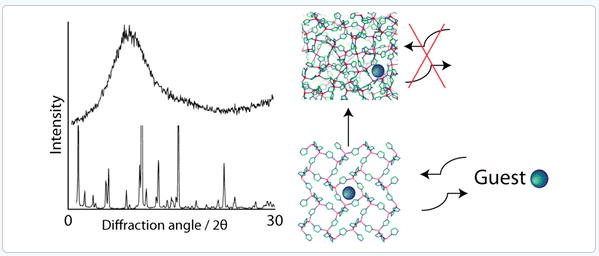 |
 回复此楼
回复此楼» 本帖附件资源列表
-
欢迎监督和反馈:小木虫仅提供交流平台,不对该内容负责。
本内容由用户自主发布,如果其内容涉及到知识产权问题,其责任在于用户本人,如对版权有异议,请联系邮箱:xiaomuchong@tal.com - 附件 1 : ar5000314.pdf
2014-04-08 18:00:51, 2.3 M
» 收录本帖的淘帖专辑推荐
 2012 2012 | mofs | 材料物理与化学 |
» 猜你喜欢
 修改论文,如何借助其他力量?
已经有4人回复
修改论文,如何借助其他力量?
已经有4人回复
-
中山大学潘越教授课题组2027级推免硕士研究生招生 新增一个专业医学技术名额
已经有21人回复
-
金属材料论文润色/翻译怎么收费?
已经有174人回复
6楼2014-04-11 14:13:44
简单回复
2014-04-10 19:41
回复
五星好评 顶一下,感谢分享!
zhaocl3楼
2014-04-10 23:35
回复
五星好评 顶一下,感谢分享!
2014-04-11 09:18
回复
五星好评 顶一下,感谢分享!
2014-04-11 12:09
回复
五星好评 顶一下,感谢分享!
51zhuce7楼
2014-04-11 15:28
回复
3KS [ 发自手机版 http://muchong.com/3g ]
lwg38楼
2014-04-11 16:03
回复
五星好评 顶一下,感谢分享!
tjuxt9楼
2014-04-11 16:40
回复
五星好评 顶一下,感谢分享!
llhljsy10楼
2014-04-11 17:45
回复
五星好评 顶一下,感谢分享!
南懿11楼
2014-04-11 19:49
回复
五星好评 顶一下,感谢分享!
冷面桃花12楼
2014-04-11 21:26
回复
五星好评 顶一下,感谢分享!
gengxin6013楼
2014-04-11 22:01
回复
五星好评 顶一下,感谢分享!
wangpinger14楼
2014-04-11 22:24
回复
五星好评 顶一下,感谢分享!