








| 查看: 6837 | 回复: 127 | ||||
| 当前只显示满足指定条件的回帖,点击这里查看本话题的所有回帖 | ||||
nowitzki_ci专家顾问 (著名写手)
|
[资源]
Chemical Reviews最新综述:Upconversion Nanoparticles
|
|||


|
Upconversion Nanoparticles: Design, Nanochemistry, and Applications in Theranostics Theranostics is a concept of integrating imaging and therapy into a single platform for use in the next generation of personalized medicine to meet the challenges in modern health care.The diagnostic role of theranostic agents reports the presence of a disease, its status, and its response to a speci fi c treatment, while the therapeutic role of the agent can be implemented in several forms  i) The fi rst is imaging-guided i) The fi rst is imaging-guidedsurgery for tumor resection and postsurgery evaluation. Intraoperative visualization of diseased areas is important for precision surgery, as the location of the tumor may change after presurgical imaging and during resection. Furthermore,postsurgical assessment is valuable in ensuring complete removal of the diseased sections. (ii) The second is delivery or release of therapeutic entities to the intended site. The delivered entities can be small molecule chemotherapeutics (such as cisplatin, doxorubicin, and paclitaxel), biologics (such as protein drugs and antibodies), gene products (DNA, siRNA, and miRNA), nanotherapeutic agents, and even cells.The release/therapy can be light-activated such as in photodynamic therapy (PDT) for destruction of the tumor or heat activated by nonradiative conversion of absorbed photon energy into heat such as in photothermal therapy (PTT), which disrupts the structure of the cells and shrinks the tumor volume. (iii)The third is disruption of a cellular or metabolic pathway. An occupation of speci fi c cell surface receptors by introduced theranostic agents with appropriate chemistry can disrupt cell regulation, producing a therapeutic e ff ect Theranostics o ff ers an opportunity to embrace multiple techniques to arrive at a comprehensive imaging/therapy regimen. Incorporation of therapeutic functions into molecular imaging contrasts plays a pivotal role in developing theranostic agents Molecular imaging using photoluminescence (PL) spectroscopy is an important technique in biochemistry and molecular biology. It has become the dominant method revolutionizing medical diagnostics, bioassays, DNA sequencing, and genomics.It can be used to study a wide range of biological specimens, from cells to ex vivo tissue samples, and to in vivo imaging of live objects; it can also cover a broad range of length scale, from submicrometer-sized viruses and bacteria, to macroscopic-sized live biological speciesThus, PL imaging provides a powerful noninvasive tool to visualize morphological details in tissue with subcellular resolution. However, the imperfect optical properties of conventional PL imaging agents and the challenge in incorporation of therapeutic functions onto them have severely limited their abilities for use in theranostics. CONTENTS 1. Introduction B 1.1. Upconversion Nanoparticles (UCNPs) C 1.2. Upconversion Mechanisms E 1.2.1. Excited-State Absorption E 1.2.2. Energy Transfer Upconversion E 1.2.3. Cooperative Sensitization Upconversion E 1.2.4. Cross Relaxation E 1.2.5. Photon Avalanche E 2. Architecting Upconversion Nanoparticles with High E ffi ciency F 2.1. Selection of Novel Host Materials F 2.2. Tailoring Local Crystal Field F 2.3. Plasmonic Enhancement G 2.4. Engineering Energy Transfers within Lan- thanide Dopants H 2.5. Suppression of Surface-Related Deactiva- tions H 2.5.1. Enhancing Upconversion Photolumines- cence with a Homogeneous Core/Shell Structure I 2.5.2. Enhancing Upconversion Photolumines- cence with a Heterogeneous Core/Shell Structure I 2.5.3. Enhancing Upconversion Photolumines- cence with an Active Core/Active Shell Structure J 2.6. Future Directions of Improving Upconver- sion E ffi ciency J 3. Upconversion Emission Color Tunability K 3.1. Multicolor Emission Using Di ff erent Activa- tors or Combinations L 3.2. Tuning Upconversion Emission by Interpar- ticle Energy Transfer or Antenna E ff ect L 3.3. Tuning Upconversion Emission through Energy Migration L 3.4. Tuning Upconversion Emission Using Cross- Relaxation Processes M 3.5. Tuning Upconversion Emission Using Core/ Shell Structures N 3.6. Tuning Upconversion Emission Using Li- gand E ff ects N 3.7. Tuning Upconversion Emission Using Size- and Shape-Induced Surface E ff ects N 3.8. Tuning Upconversion Emission Using FRET or LRET O 3.9. Future Opportunities for Tuning Upconver- sion Emission Q 4. Nanochemistry for Controlled Synthesis S 4.1. Thermolysis Strategy S 4.1.1. Thermolysis in Oleic Acid and Octade- cene S 4.1.2. Thermolysis in Oleic Acid/Oleylamine, Oleic Acid/Oleylamine/Octadecene, and Oleylamine Solvents S 4.1.3. Thermolysis in Oleic Acid/Trioctylphos- phine Oxide/Octadecene T 4.2. Ostwald-Ripening Strategy T 4.3. Hydro(solvo)thermal Strategy T 4.4. Hierarchical Core/Shell Upconversion Nano- particles U 4.5. Future Opportunities for Synthetic Chem- istry V 5. Nanochemistry for Surface Engineering V 5.1. Ligand Exchange V 5.2. Ligand Removal W 5.3. Ligand Oxidation W 5.4. Layer-by-Layer Assembly W 5.5. Surface Silanization W 5.6. Amphiphilic Polymer Coating X 5.7. Bioconjugation Chemistry X 5.8. Future Opportunities for Surface Engineer- ing Y 6. Biosensing and Bioassays Y 6.1. Temperature Sensing in Cells AA 6.2. Biosensing of Metal Ions AA 6.3. Biosensing of Gas Molecules AA 6.4. Bioassays AB 6.4.1. Heterogeneous Assay AB 6.4.2. Homogeneous Assay AC 6.5. Future Opportunities for Biosensing and Bioassays AD 7. High Contrast Bioimaging AE 7.1. In Vitro and In Vivo Toxicity Assessment AE 7.2. Cellular Imaging AF 7.3. Whole-Body Photoluminescent Imaging AG 7.3.1. Passive Imaging AG 7.3.2. Active Targeting AH 7.3.3. Deep Tissue Imaging AH 7.4. Optical Tomography AI 7.5. Multimodal Imaging AJ 7.5.1. Upconversion Photoluminescence and Magnetic Resonance Imaging (MRI) AJ 7.5.2. Upconversion Photoluminescence and X-ray Computed Tomography (CT) AL 7.5.3. Upconversion Photoluminescence and Positron Emission Tomography (PET) AL 7.5.4. Upconversion Photoluminescence, Magnetic Resonance Imaging (MRI), and Positron Emission Tomography (PET) or X-ray Computed Tomography (CT) AM 7.6. Future Directions for High Contrast Bioimag- ing AN 8. Application of Upconversion Nanoparticles in Drug Delivery and Therapy AO 8.1. Drug Delivery AO 8.2. In Vitro and In Vivo Photoactivations AP 8.3. Upconversion-Guided Photothermal Ther- apy AR 8.4. Upconversion Photodynamic Therapy AR 8.5. Future Directions for Therapeutics AS 9. Concluding Remarks AS Author Information AT Corresponding Authors AT Notes AT Biographies AT Acknowledgments AU References AU 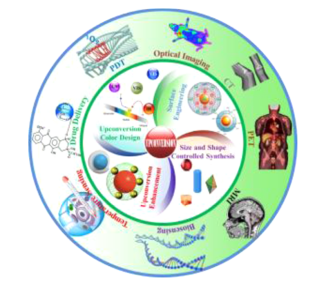 0.png |
 回复此楼
回复此楼» 本帖附件资源列表
-
欢迎监督和反馈:小木虫仅提供交流平台,不对该内容负责。
本内容由用户自主发布,如果其内容涉及到知识产权问题,其责任在于用户本人,如对版权有异议,请联系邮箱:xiaomuchong@tal.com - 附件 1 : cr400425h.pdf
2014-03-11 16:55:34, 59.52 M
» 猜你喜欢
 无机化学论文润色/翻译怎么收费?
已经有279人回复
无机化学论文润色/翻译怎么收费?
已经有279人回复

74楼2014-04-08 13:28:41
简单回复
2014-03-11 22:06
回复
五星好评 顶一下,感谢分享!
Solar_WB3楼
2014-03-12 08:05
回复
五星好评 顶一下,感谢分享!
2014-03-12 08:55
回复
五星好评 顶一下,感谢分享!
马踏冰河5楼
2014-03-12 09:49
回复
五星好评 顶一下,感谢分享!
2014-03-12 10:19
回复
五星好评 顶一下,感谢分享!
yuan9997楼
2014-03-12 14:30
回复
五星好评 顶一下,感谢分享!
lwg38楼
2014-03-12 15:58
回复
五星好评 顶一下,感谢分享!
eroszhyx9楼
2014-03-12 16:26
回复
五星好评 顶一下,感谢分享!
hero3_gpj10楼
2014-03-12 19:18
回复
五星好评 顶一下,感谢分享!
guolin808411楼
2014-03-12 22:11
回复
五星好评 顶一下,感谢分享!
wangpinger12楼
2014-03-12 22:16
回复
五星好评 顶一下,感谢分享!
zhulw13楼
2014-03-13 08:36
回复
五星好评 顶一下,感谢分享!
幽兰摇月影14楼
2014-03-13 08:53
回复
五星好评 顶一下,感谢分享!

