









| 查看: 1335 | 回复: 5 | |||
| 当前只显示满足指定条件的回帖,点击这里查看本话题的所有回帖 | |||
[交流]
Get to know something about sports English
|
|||

|
Last Sunday evening I was watching a basketball game and talking with an American student. This game was between the basketball teams between Tsinghua University(THU) and University of California Los Angeles (UCLA), and that guy I was talking to is also from UCLA. At the beginning we had a good talk, while watching some art performances from THU and UCLA. He asked me a lot about the life and study here in THU. I explained those questions in detail and I also told him something about the Chinese traditional Lover Day, because that day happened to be July the 7th on Chinese lunar calendar. However when the basketball game began, I realized that I became speechless. I don’t know what to say to him. Maybe it’s because I don’t usually talk too much when watching a basketball match. Maybe it’s because I am not so familiar with the American student sitting besides me. But not knowing how to describe a basketball game in English can be part of the reason. English is my second language (In my life I only speak two languages: Chinese or English). Most of the time my English is quite OK when having a daily conversation with some native speakers. But when I get into a specific field, like spots, I don’t know what to say and how to describe a match. So I guess I need to learn some new English terms when I encounter some field that I am not so familiar with. Here are some basketball English. I hope it will help you to upgrade your English. Basketball is getting more and more popular in China, maybe you will have the chance to watch a game with your foreign friends someday. Basketball is a team sport. Two teams of five players each try to score by shooting a ball through a hoop elevated 10 feet above the ground. The game is played on a rectangular floor called the court, and there is a hoop at each end. The court is divided into two main sections by the mid-court line. If the offensive team puts the ball into play behind the mid-court line, it has ten seconds to get the ball over the mid-court line. If it doesn't, then the defense gets the ball. Once the offensive team gets the ball over the mid-court line, it can no longer have possession of the ball in the area in back of the line. If it does, the defense is awarded the ball. The ball is moved down the court toward the basket by passing or dribbling. The team with the ball is called the offense. The team without the ball is called the defense. They try to steal the ball, contest shots, steal and deflect passes, and garner rebounds. When a team makes a basket (field goal), they score two points and the ball goes to the other team. If a basket, or field goal, is made outside of the three-point arc, then that basket is worth three points. A free throw is worth one point. Free throws are awarded to a team according to some formats involving the number of fouls committed in a half and/or the type of foul committed. Fouling a shooter always results in two or three free throws being awarded the shooter, depending upon where he was when he shot. If he was beyond the three-point line, then he gets three shots. Other types of fouls do not result in free throws being awarded until a certain number have accumulated during a half. Once that number is reached, then the player who was fouled is awarded a '1-and-1' opportunity. If he makes his first free throw, he gets to attempt a second. If he misses the first shot, the ball is live on the rebound. Each game is divided into sections. All levels have two halves. In college, each half is twenty minutes long. In high school and below, the halves are divided into eight (and sometimes, six) minute quarters. In the pros, quarters are twelve minutes long. There is a gap of several minutes between halves. Gaps between quarters are relatively short. If the score is tied at the end of regulation, then overtime periods of various lengths are played until a winner emerges. Each team is assigned a basket or goal to defend. This means that the other basket is their scoring basket. At halftime, the teams switch goals. The game begins with one player from either team at center court. A referee will toss the ball up between the two. The player that gets his hands on the ball will tip it to a teammate. This is called a tip-off. In addition to stealing the ball from an opposing player, there are other ways for a team to get the ball. One such way is if the other team commits a foul or violation. VIOLATIONS Walking/Traveling. Taking more than a step and a half without dribbling the ball is traveling. Moving your pivot foot once you've stopped dribbling is traveling. Carrying/palming. When a player dribbles the ball with his hand too far to the side of or, sometimes, even under the ball. Double Dribble. Dribbling the ball with both hands on the ball at the same time or picking up the dribble and then dribbling again is a double dribble. Held ball. Occasionally, two or more opposing players will gain possession of the ball at the same time. In order to avoid a prolonged and/or violent tussle, the referee stops the action and awards the ball to one team or the other on a rotating basis. Goaltending. If a defensive player interferes with a shot while it's on the way down toward the basket, while it's on the way up toward the basket after having touched the backboard, or while it's in the cylinder above the rim, it's goaltending and the shot counts. If committed by an offensive player, it's a violation and the ball is awarded to the opposing team for a throw-in. Backcourt violation. Once the offense has brought the ball across the mid-court line, they cannot go back across the line during possession. If they do, the ball is awarded to the other team to pass inbounds. Time restrictions. A player passing the ball inbounds has five seconds to pass the ball. If he does not, then the ball is awarded to the other team. Other time restrictions include the rule that a player cannot have the ball for more than five seconds when being closely guarded and, in some states and levels, shot-clock restrictions requiring a team to attempt a shot within a given time frame. PALYER POSITIONS Center. Centers are generally your tallest players. They generally are positioned near the basket. Offensive -- The center's goal is to get open for a pass and to shoot. They are also responsible for blocking defenders, known as picking or screening, to open other players up for driving to the basket for a goal. Centers are expected to get some offensive rebounds and put-backs. Defensive -- On defense, the center's main responsibility is to keep opponents from shooting by blocking shots and passes in the key area. They also are expected to get a lot of rebounds because they're taller. Forward. Your next tallest players will most likely be your forwards. While a forward may be called upon to play under the hoop, they may also be required to operate in the wings and corner areas. Offensive -- Forwards are responsible to get free for a pass, take outside shots, drive for goals, and rebound. Defensive -- Responsibilities include preventing drives to the goal and rebounding. Guard. These are potentially your shortest players and they should be really good at dribbling fast, seeing the court, and passing. It is their job to bring the ball down the court and set up offensive plays. Offensive -- Dribbling, passing, and setting up offensive plays are a guard's main responsibilities. They also need to be able to drive to the basket and to shoot from the perimeter. Defensive -- On defense, a guard is responsible for stealing passes, contesting shots, preventing drives to the hoop, and for boxing out. FOULS Personal fouls: Personal fouls include any type of illegal physical contact such as Hitting, Pushing, Slapping, Holding and Illegal pick/screen when an offensive player is moving. (When an offensive player sticks out a limb and makes physical contact with a defender in an attempt to block the path of the defender. ) Personal foul penalties: If a player is shooting while a being fouled, then he gets two free throws if his shot doesn't go in, but only one free throw if his shot does go in. Three free throws are awarded if the player is fouled while shooting for a three-point goal and they miss their shot. If a player is fouled while shooting a three-point shot and makes it anyway, he is awarded one free throw. (Thus, he could score four points on the play.) Inbounds. If fouled while not shooting, the ball is given to the team the foul was committed upon. They get the ball at the nearest side or baseline, out of bounds, and have 5 seconds to pass the ball onto the court. One & one. If the team committing the foul has seven or more fouls in the game, then the player who was fouled is awarded one free throw. If he makes his first shot, then he is awarded another free throw. Ten or more fouls. If the team committing the foul has ten or more fouls, then the fouled player receives two free throws. Charging. An offensive foul that is committed when a player pushes or runs over a defensive player. The ball is given to the team that the foul was committed upon. Blocking. Blocking is illegal personal contact resulting from a defender not establishing position in time to prevent an opponent's drive to the basket. Flagrant foul (bad or offensive). Violent contact with an opponent. This includes hitting, kicking, and punching. This type of foul results in free throws plus the offense retaining possession of the ball after the free throws. Intentional foul. When a player makes physical contact with another player with no reasonable effort to steal the ball. It is a judgment call for the officials. Technical foul. Technical foul is referred to the unsportsmanlike conducts or unsporting behavior or ungentlemanly conduct. A player or a coach can commit this type of foul. It does not involve player contact or the ball but is instead about the 'manners' of the game. Foul language, obscenity, obscene gestures, and even arguing can be considered a technical foul, as can technical details regarding filling in the scorebook improperly or dunking during warm-ups. 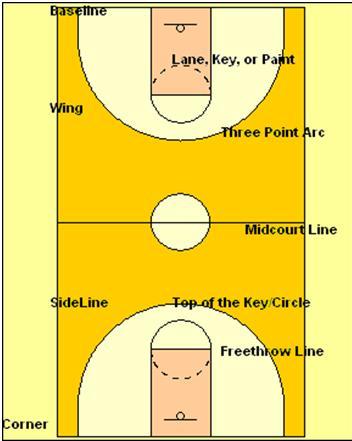 未命名.JPG [ Last edited by 志乐激昂 on 2012-8-30 at 08:45 ] |
 回复此楼
回复此楼» 猜你喜欢
 OpenAI又攻克数学难题了,离AI做有机合成还有多远?
已经有8人回复
OpenAI又攻克数学难题了,离AI做有机合成还有多远?
已经有8人回复
-
极限拉扯,如何抉择
已经有7人回复
-
课题组会帮你通过考核么?
已经有6人回复
-
售一区SCI文章T0P,我:8O.551.O54,科目全,可十急
已经有9人回复
-
售SCI一区文章,我:8O5.5.1.O5.4,科目全,可伽急
已经有10人回复
-
售SCI一区T0P文章,我:8.O55.1.O.54,科目全,可十急
已经有8人回复
-
售SCI一区T0P文章,我:8.O55.1.O.54,科目全,可十急
已经有9人回复
-
售SCI一区文章,我:8.O.55.1.O.54,科目齐全,可伽急
已经有7人回复
-
售SCI文章,我:8O5.5.1.O.54,科目齐全,可+急
已经有10人回复
-
售SCI一区T0P文章,我:8.O.55.1.O54,科目全,可伽急
已经有9人回复

seagrove
禁虫 (文坛精英)
小盼妞

- ESEPI: 20
- 应助: 113 (高中生)
- 贵宾: 11.811
- 金币: 36350
- 散金: 39603
- 红花: 193
- 沙发: 1550
- 帖子: 37667
- 在线: 1963.3小时
- 虫号: 1239918
- 注册: 2011-03-21
- 性别: MM
- 专业: 化工冶金
- 管辖: 环境

4楼2012-08-30 08:51:01
Kangzhenhua
木虫 (著名写手)
- 应助: 3 (幼儿园)
- 金币: 3480.1
- 红花: 1
- 沙发: 3
- 帖子: 1505
- 在线: 311.2小时
- 虫号: 907540
- 注册: 2009-11-19
- 性别: GG
- 专业: 电化学

5楼2012-08-30 12:28:57
fjtony163
版主 (文坛精英)
米米
- ESEPI: 7
- 应助: 361 (硕士)
- 贵宾: 6.876
- 金币: 70612.6
- 散金: 36050
- 红花: 222
- 沙发: 616
- 帖子: 21912
- 在线: 3793.8小时
- 虫号: 1397876
- 注册: 2011-09-11
- 专业: 遗传学研究新技术与方法
- 管辖: 论文翻译
|
I find the original website.... likely... http://www.breakthroughbasketball.com/basics/basics.html |
6楼2012-08-31 05:55:18

