






| 查看: 3388 | 回复: 11 | |||
| 当前只显示满足指定条件的回帖,点击这里查看本话题的所有回帖 | |||
beautydrug木虫 (正式写手)
|
[交流]
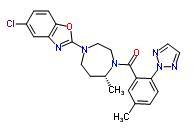
默沙东失眠新药Suvorexant临床试验成功 已有8人参与
|
||

|
据路透社最新资讯,美国默沙东制药公司此前公布了失眠新药的后期临床试验数据,据该临床试验数据显示,该药物促使试验患者入睡的用时较其他药物明显缩短,而且该药物还可以改善患者的睡眠质量。 Suvorexant药物即是默沙东制药公司此次新研发的睡眠药物。该药物在三期临床试验中的数据显示,同安慰剂相比,该药物改善睡眠疗效显著。默沙东制药公司表示,该药物前两期临床试验数据尚佳,预计将于今年年底向美国等药监局提交该药物的上市申请书。 据了解,Suvorexant药物于其他睡眠药物不同的是,一般睡眠药物是按需服用(也就是说只在需要的时候服用,治标不治本),但是默沙东制药公司的Suvorexant药物则是需要长时间服用缓慢治疗的。Suvorexant是一种新型睡眠药物,该药物通过阻断Orexins(神经肽)传递讯息,Orexins(神经肽)通常向人体传递各种保持清醒的讯息,因此是导致人们失眠的罪魁祸首。Orexins(神经肽)最初来源于人脑的下丘脑。 杜克大学医学研究中心Andrew Krystal教授表示,默沙东的这种药物将成为患者青睐的新药。 默沙东神经学科和眼科部门负责人Darryle Schoepp表示,此次公司研发的药物尤其适用于那些整夜无法睡眠,接受现有睡眠药物治疗但是疗效甚微的患者,比如法国赛诺菲制药公司的睡眠药物Ambien。Ambien药物只能保证患者五到六个小时的睡眠。 在该药物的后期临床试验中,有一个试验中,年龄在18岁至64岁区间的患者服用40毫克的suvorexant,而年龄在65岁以上的患者则服用30毫克的药物,另外一个试验则是在年轻群体展开服用20毫克的药物,65岁及以上的老人则服用15毫克的药物,研究人员分别记载了这两种试验的最终数据,并且在波士顿睡眠协会年度会议上公布。 在高剂量组,suvorexant药物促使患者入睡的时间较普通药物快25.7分钟,而且可以将患者的睡眠时间延长60.3分钟,而服用安慰剂的患者则逊色很多。在低剂量组,suvorexant药物对于患者睡眠时间以及质量的改变也是很明显的。 而在后期试验中对药物副作用的观察中显示,该药物的副作用甚微,因此药物的临床试验总体药效尚佳。(责任编辑:赵耀 陆娟) |
 回复此楼
回复此楼» 猜你喜欢
 家人们做LDH为啥会出现负值啊
已经有0人回复
家人们做LDH为啥会出现负值啊
已经有0人回复
-
求购时间长一些的硝酸钍
已经有0人回复
-
药物学论文润色/翻译怎么收费?
已经有100人回复
-
有偿求肠毒素的脆弱拟杆菌(ETBF)
已经有0人回复
-
广西医科大学基础医学院自身免疫病课题组招收基础医学、药学和生物学等专业的研究生
已经有7人回复
-
[学习资料分享] FAERS数据库的不良反应挖掘(频数法/贝叶斯法)
已经有1人回复
-
招收医学、基础医学类调剂研究生
已经有0人回复
-
是否属于脾肾阳虚证
已经有0人回复

wdc110
金虫 (小有名气)
- 应助: 0 (幼儿园)
- 金币: 112.6
- 散金: 5
- 帖子: 285
- 在线: 151.9小时
- 虫号: 592278
- 注册: 2008-09-03
- 性别: GG
- 专业: 药物化学

11楼2012-07-18 18:09:07
mouse103
专家顾问 (著名写手)
- DRDEPI: 16
- 应助: 218 (大学生)
- 贵宾: 0.384
- 金币: 1473.7
- 散金: 2586
- 红花: 171
- 沙发: 1
- 帖子: 1625
- 在线: 411.3小时
- 虫号: 466716
- 注册: 2007-11-24
- 专业: 合成药物化学
- 管辖: 生物医药区
★ ★
小木虫: 金币+0.5, 给个红包,谢谢回帖
痴夷子皮: 金币+1, 谢谢提供,辛苦了。:D 2012-07-04 10:07:44
小木虫: 金币+0.5, 给个红包,谢谢回帖
痴夷子皮: 金币+1, 谢谢提供,辛苦了。:D 2012-07-04 10:07:44
|
BOSTON, June 13, 2012 – Merck (NYSE: MRK), known as MSD outside the United States and Canada, today announced new data from two pivotal Phase III efficacy trials for suvorexant, the investigational medicine Merck is developing for the treatment of insomnia. In the studies, suvorexant significantly reduced the time it took patients to fall asleep and increased the time that patients stayed asleep as early as the first night and at the three-month time point compared to placebo. The investigational medicine met statistical significance for all primary endpoints except for one measurement at Month 3 in one of the trials. These late-breaking data were presented here today at SLEEP 2012, the 26th Annual Meeting of the Associated Professional Sleep Societies. "This investigational drug targets insomnia in a way that is different from other medicines," said Andrew D. Krystal, M.D., professor of Psychiatry and Behavioral Sciences, Duke University Medical Center. "The potential for a new and different option would be welcome by patients with insomnia who cannot sleep through the night." Further efficacy and safety results from the Phase III clinical program for suvorexant were presented at the SLEEP meeting. In these two pivotal Phase III efficacy trials, the most common adverse events (AEs) reported at an incidence of greater than or equal to five percent and more often than placebo were sleepiness and headache. Other data presented included results that demonstrated the effects of suvorexant after daily dosing for at least a year (abstract 0641, oral session O22). This is one of the longest continuously dosed, placebo-controlled trials of a sleep medication ever conducted. Results from a driving study in elderly patients also were presented (abstract 0670, poster 192). Merck plans to present additional results from its two pivotal Phase III efficacy trials later this year. Merck researchers developed suvorexant to target and block orexins, chemical messengers that originate from the hypothalamus (an important sleep center in the brain) that help to keep you awake. By blocking the actions of orexins, suvorexant helps to facilitate sleep. Merck plans to file a New Drug Application (NDA) for suvorexant with the U.S. Food and Drug Administration (FDA) in 2012, making it one of the company’s six major filings planned for 2012 and 2013. If approved, suvorexant would be the first medicine approved in a new class of medicines, called orexin receptor antagonists, for use in patients with difficulty falling or staying asleep. Merck anticipates that suvorexant will be evaluated by the Controlled Substance Staff of the FDA. “We specifically focused our research efforts on insomnia because it is an area of significant unmet medical need,” said Darryle D. Schoepp, Ph.D., senior vice president and head of Neuroscience and Ophthalmology franchise, Merck Research Laboratories. “Suvorexant approaches insomnia differently than other medicines because it helps patients to sleep by targeting and blocking orexins, which play a role in keeping people awake. We’re excited about the Phase III results and the potential of suvorexant to become the first in a new class of medicines to help patients with insomnia.” Studies Measured Effect of Suvorexant on Sleep Onset and Maintenance Merck’s two pivotal Phase III efficacy studies were multicenter, randomized, double-blind, placebo-controlled trials of suvorexant in patients with primary insomnia (1,021 and 1,009 treated patients in Trial 1 and Trial 2, respectively). Primary insomnia is defined as difficulty falling or staying asleep or poor sleep quality that is the main condition experienced (not caused by another medical problem). A high and a low dose of suvorexant were studied in each trial. The high dose evaluated suvorexant 40 mg in patients 18-64 years and suvorexant 30 mg in patients 65 years and older, and the low dose assessed suvorexant 20 mg in patients 18-64 years and suvorexant 15 mg in patients 65 years and older. Patients were randomized to receive one of the suvorexant doses or placebo over a three-month period. The results reported below are for the combined primary endpoint dose of 40 mg and 30 mg (383 patients in Trial 1 and 387 patients in Trial 2 were treated with the high dose compared to 384 and 383 on placebo, respectively). The endpoints for the studies included mean change from baseline for suvorexant compared to placebo in both subjective (patient-reported) and objective (polysomnographic, sleep lab-based, assessed in a subset of patients) measures of sleep onset and sleep maintenance. The subjective measures included time it took to fall asleep and total sleep time. Subjective endpoints were measured after one and three months (primary endpoints) and over the first week (a secondary endpoint) of taking suvorexant or placebo. The objective measures included time it took to fall into continuous sleep and time spent awake during the night. Objective endpoints were measured after one and three months (primary endpoints) and after the first night (a secondary endpoint) of taking suvorexant or placebo. Results for Objective and Subjective Measures In both trials, on all primary subjective measures, patients who took suvorexant fell asleep significantly faster and stayed asleep longer compared to patients taking placebo at one month and three months (p<0.003). On the objective measures, suvorexant also significantly reduced the time it took patients to fall into continuous sleep and decreased the time patients spent awake during the night at one month and three months (primary endpoints), and as early as night one (a secondary endpoint) (p<0.001), except for Month 3 in Trial 2, at which point the difference in time to fall into continuous sleep did not reach statistical significance. Specifically, at three months in Trial 1, patients reported suvorexant reduced the time it took them to fall asleep by 25.7 minutes (vs. 17.3 minutes with placebo) and helped them to sleep 60.3 minutes longer (vs. 40.6 minutes with placebo) compared to before they started taking suvorexant. For the objective measures, patients taking suvorexant entered into continuous sleep 36.0 minutes faster (vs. 26.6 minutes with placebo) and spent less time awake during the night by 47.9 minutes (vs. 25.0 minutes with placebo) compared to before they started taking suvorexant. (All of these differences between suvorexant and placebo were statistically significant.) At three months in Trial 2, patients reported suvorexant reduced the time it took them to fall asleep by 33.7 minutes (vs. 20.5 minutes with placebo) and helped them to sleep 62.8 minutes longer (vs. 37.7 minutes with placebo) compared to before they started taking suvorexant. For the objective measures at three months, suvorexant did not achieve statistical significance on the measure of patients falling into continuous sleep faster than with placebo (-32.2 minutes vs. -28.6 minutes, p=0.265). The objective data showed that patients taking suvorexant spent less time awake during the night by 54.2 minutes (vs. 24.8 minutes with placebo) compared to before they started taking suvorexant. (All of these differences were statistically significant except for the one noted above.) In these studies, secondary objective measurements included the time it took patients to fall into continuous sleep and the time patients spent awake during the night on night one. In Trial 1, patients taking suvorexant entered into continuous sleep 30.6 minutes faster (vs. 20.3 minutes with placebo) and spent less time awake during the night by 58.0 minutes (vs. 19.6 minutes with placebo) compared to before they started taking suvorexant. In Trial 2, patients taking suvorexant entered into continuous sleep 34.7 minutes faster (vs. 13.0 minutes with placebo) and spent less time awake during the night by 63.3 minutes (vs. 21.3 minutes with placebo) compared to before they started taking suvorexant. Safety Results Over three months, the overall incidence of AEs reported as related to the medicine in patients who took the high dose of suvorexant compared to placebo was 25.1 percent versus 13.8 percent in Trial 1, and 22.2 percent versus 16.4 percent in Trial 2. The overall incidence of discontinuations due to an AE in patients who received the high dose of suvorexant compared to placebo was 4.7 percent versus 6.0 percent in Trial 1, and 4.7 percent versus 4.4 percent in Trial 2. No serious drug-related AEs were observed in either trial with the high dose of suvorexant. The most common AEs that occurred at an incidence of greater than or equal to five percent and more often than placebo in patients who received the high dose of suvorexant were sleepiness (10.7 percent vs. 3.4 percent with placebo in Trial 1; 10.3 percent vs. 3.1 percent with placebo in Trial 2) and headache (6.8 percent vs. 6.0 percent with placebo in Trial 1; 7.5 percent vs. 5.7 percent with placebo in Trial 2). In the overall study population, there were no statistically significant next day objective residual effects compared to placebo as measured by the Digit Symbol Substitution Test (an assessment of memory, attention, visual scanning and perceptual and motor speed). Additionally, patients reported incidence of next day sleepiness at three months were 10.7 percent for high dose of suvorexant versus 3.4 percent for placebo in Trial 1, and 10.3 percent versus 3.1 percent in Trial 2. Cataplexy, an abrupt and temporary loss of muscle control, was not reported in either study. Patients with narcolepsy or cataplexy were excluded from these trials. |
2楼2012-07-03 14:41:16
mouse103
专家顾问 (著名写手)
- DRDEPI: 16
- 应助: 218 (大学生)
- 贵宾: 0.384
- 金币: 1473.7
- 散金: 2586
- 红花: 171
- 沙发: 1
- 帖子: 1625
- 在线: 411.3小时
- 虫号: 466716
- 注册: 2007-11-24
- 专业: 合成药物化学
- 管辖: 生物医药区
3楼2012-07-03 14:45:47
liliaceaeren
银虫 (正式写手)
- 应助: 5 (幼儿园)
- 金币: 15.1
- 散金: 2388
- 红花: 35
- 沙发: 2
- 帖子: 934
- 在线: 897小时
- 虫号: 1380405
- 注册: 2011-08-26
- 专业: 法学其他学科
4楼2012-07-03 14:58:01