









| 查看: 8388 | 回复: 166 | ||
| 当前只显示满足指定条件的回帖,点击这里查看本话题的所有回帖 | ||
[资源]
生物信息学 分子生物学 Bioinformatics and Biomarker Discovery
|
||

|
Author and guest contributor biographies xi Acknowledgements xv Preface xvii 1 Biomarkers and bioinformatics 1 1.1 Bioinformatics, translational research and personalized medicine 1 1.2 Biomarkers: fundamental definitions and research principles 2 1.3 Clinical resources for biomarker studies 5 1.4 Molecular biology data sources for biomarker research 6 1.5 Basic computational approaches to biomarker discovery: key applications and challenges 7 1.6 Examples of biomarkers and applications 10 1.7 What is next? 12 2 Review of fundamental statistical concepts 15 2.1 Basic concepts and problems 15 2.2 Hypothesis testing and group comparison 19 2.3 Assessing statistical significance in multiple-hypotheses testing 20 2.4 Correlation 23 2.5 Regression and classification: basic concepts 23 2.6 Survival analysis methods 26 2.7 Assessing predictive quality 28 2.8 Data sample size estimation 32 2.9 Common pitfalls and misinterpretations 34 3 Biomarker-based prediction models: design and interpretation principles 37 3.1 Biomarker discovery and prediction model development 37 3.2 Evaluation of biomarker-based prediction models 38 3.3 Overview of data mining and key biomarker-based classification techniques 40 3.4 Feature selection for biomarker discovery 47 3.5 Critical design and interpretation factors 52 4 An introduction to the discovery and analysis of genotype-phenotype associations 57 4.1 Introduction: sources of genomic variation 57 4.2 Fundamental biological and statistical concepts 60 4.3 Multi-stage case-control analysis 64 4.4 SNPs data analysis: additional concepts, approaches and applications 64 4.5 CNV data analysis: additional concepts, approaches and applications 68 4.6 Key problems and challenges 69 Guest commentary on chapter 4: Integrative approaches to genotype-phenotype association discovery 73 Ana Dopazo References 76 5 Biomarkers and gene expression data analysis 77 5.1 Introduction 77 5.2 Fundamental analytical steps in gene expression profiling 79 5.3 Examples of advances and applications 82 5.4 Examples of the roles of advanced data mining and computational intelligence 84 5.5 Key limitations, common pitfalls and challenges 85 Guest commentary on chapter 5: Advances in biomarker discovery with gene expression data 89 Haiying Wang, Huiru Zheng Unsupervised clustering approaches 90 Module-based approaches 91 Final remarks 92 References 92 6 Proteomics and metabolomics for biomarker discovery: an introduction to spectral data analysis 93 6.1 Introduction 93 6.2 Proteomics and biomarker discovery 94 6.3 Metabolomics and biomarker discovery 97 6.4 Experimental techniques for proteomics and metabolomics: an overview 99 6.5 More on the fundamentals of spectral data analysis 100 viii CONTENTS 6.6 Targeted and global analyses in metabolomics 101 6.7 Feature transformation, selection and classification of spectral data 102 6.8 Key software and information resources for proteomics and metabolomics 106 6.9 Gaps and challenges in bioinformatics 107 Guest commentary on chapter 6: Data integration in proteomics and metabolomics for biomarker discovery 111 Kenneth Bryan Data integration and feature selection 112 References 114 7 Disease biomarkers and biological interaction networks 115 7.1 Network-centric views of disease biomarker discovery 115 7.2 Basic concepts in network analysis 118 7.3 Fundamental approaches to representing and inferring networks 119 7.4 Overview of key network-driven approaches to biomarker discovery 120 7.5 Network-based prognostic systems: recent research highlights 124 7.6 Final remarks: opportunities and obstacles in network-based biomarker research 127 Guest commentary on chapter 7: Commentary on ‘disease biomarkers and biological interaction networks’ 131 Zhongming Zhao Integrative approaches to biomarker discovery 132 Pathway-based analysis of GWA data 133 Integrative analysis of networks and pathways 134 References 134 8 Integrative data analysis for biomarker discovery 137 8.1 Introduction 137 8.2 Data aggregation at the model input level 141 8.3 Model integration based on a single-source or homogeneous data sources 141 8.4 Data integration at the model level 144 8.5 Multiple heterogeneous data and model integration 145 8.6 Serial integration of source and models 148 8.7 Component- and network-centric approaches 151 8.8 Final remarks 152 Guest commentary on chapter 8: Data integration: The next big hope? 155 Yves Moreau References 158 9 Information resources and software tools for biomarker discovery 159 9.1 Biomarker discovery frameworks: key software and information resources 159 CONTENTS ix 9.2 Integrating and sharing resources: databases and tools 161 9.3 Data mining tools and platforms 166 9.4 Specialized information and knowledge resources 168 9.5 Integrative infrastructure initiatives and inter-institutional programmes 168 9.6 Innovation outlook: challenges and progress 169 10 Challenges and research directions in bioinformatics and biomarker discovery 173 10.1 Introduction 173 10.2 Better software 175 10.3 The clinical relevance of new biomarkers 176 10.4 Collaboration 177 10.5 Evaluating and validating biomarker models 178 10.6 Defining and measuring phenotypes 181 10.7 Documenting and reporting biomarker research 181 10.8 Intelligent data analysis and computational models 184 10.9 Integrated systems and infrastructures for biomedical computing 185 10.10 Open access to research information and outcomes 186 10.11 Systems-based approaches 187 10.12 Training a new generation of researchers for translational bioinformatics 188 10.13 Maximizing the use of public resources 189 10.14 Final remarks 189 Guest commentary (1) on chapter 10: Towards building knowledge-based assistants for intelligent data analysis in biomarker discovery 193 Riccardo Bellazzi References 196 Guest commentary (2) on chapter 10: Accompanying commentary on ‘challenges and opportunities of bioinformatics in disease biomarker discovery’ 197 Gary B. Fogel Introduction 197 Biocyberinfrastructure 198 Government Regulations on biomarker discovery 198 Computational intelligence approaches for biomarker discovery 199 Open source data, intellectual property, and patient privacy 199 Conclusions 200 References 200 References 203 Index 223 x CONTENTS 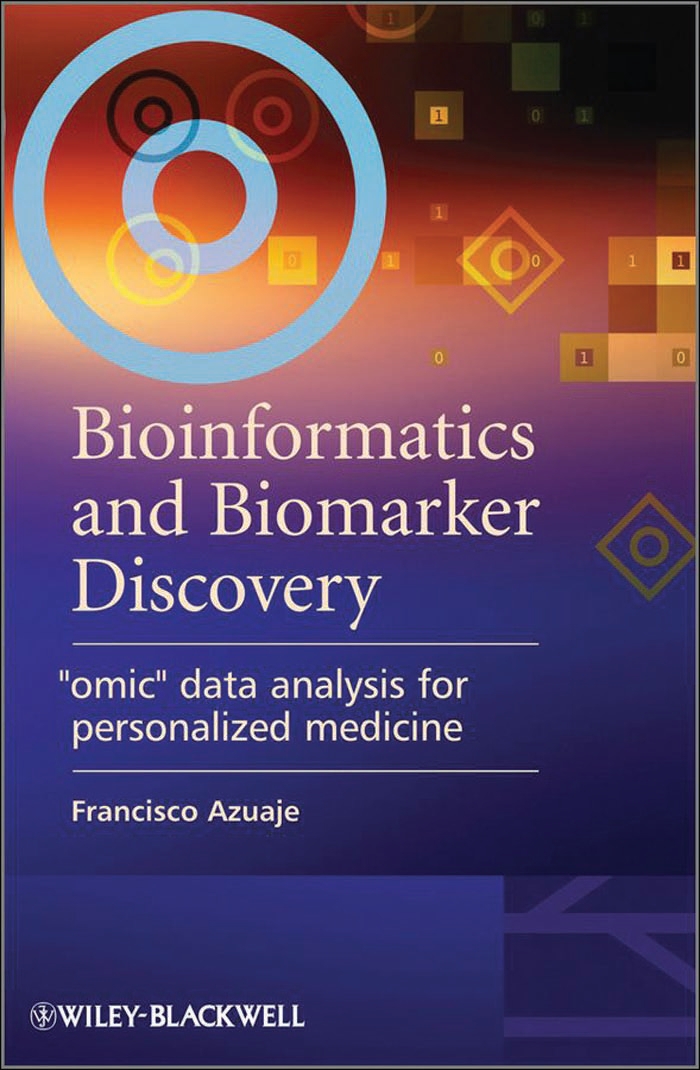 |
 回复此楼
回复此楼» 本帖附件资源列表
-
欢迎监督和反馈:小木虫仅提供交流平台,不对该内容负责。
本内容由用户自主发布,如果其内容涉及到知识产权问题,其责任在于用户本人,如对版权有异议,请联系邮箱:xiaomuchong@tal.com - 附件 1 : Bioinformatics and Biomarker Discovery.pdf
2012-02-12 19:28:48, 1.73 M
» 本帖已获得的红花(最新10朵)
 凌波丽
凌波丽» 猜你喜欢
 TYK2/JAK1 双靶点工具化合物 Brepocitinib:激酶选择性、研究进展与实验应用全解析
已经有0人回复
TYK2/JAK1 双靶点工具化合物 Brepocitinib:激酶选择性、研究进展与实验应用全解析
已经有0人回复
-
矢车菊素-3-O-葡萄糖苷质控实录:从一张HPLC图谱读懂纯度与稳定性
已经有0人回复
-
化学工程及工业化学论文润色/翻译怎么收费?
已经有61人回复
-
恩诺沙星(Enrofloxacin)科研解析:分子特征、LC-MS/MS 检测与实验室使用要点
已经有0人回复
-
Calderasib理化性质与实验操作技术笔记
已经有0人回复
-
RMC-6291怎么用?RAS(ON) 三重复合物工具化合物的实验室实操要点
已经有0人回复
-
苯并呋咱全解析:NBD 荧光衍生化试剂母核的化学特性与实验室应用
已经有0人回复
-
生物质炭与活化剂氢氧化钾混合注意事项
已经有0人回复
-
科研人必读:新一代 KRAS G12C 抑制剂 Olomorasib 的研究进展
已经有0人回复
-
BT-11(Omilancor)研究化合物全解析:从分子结构到实验应用要点
已经有0人回复
-
富马酸贝达喹啉:二芳基喹啉类工具化合物的化学特征
已经有0人回复
» 本主题相关商家推荐: (我也要在这里推广)

132楼2014-12-15 10:08:08
简单回复
2012-02-12 19:54
回复
五星好评 顶一下,感谢分享!
ivxy4楼
2012-02-12 21:00
回复
五星好评 顶一下,感谢分享!
yjl1555楼
2012-02-13 00:07
回复
五星好评 顶一下,感谢分享!
hxs-5206楼
2012-02-13 05:34
回复
五星好评 顶一下,感谢分享!
cnliu518楼
2012-02-13 06:03
回复
五星好评 顶一下,感谢分享!
jinhx879楼
2012-02-13 07:16
回复
五星好评 顶一下,感谢分享!
daweizhou10楼
2012-02-13 07:38
回复
五星好评 顶一下,感谢分享!
tswangan11楼
2012-02-13 07:59
回复
五星好评 顶一下,感谢分享!
ymmno612楼
2012-02-13 08:05
回复
五星好评 顶一下,感谢分享!
ymmno613楼
2012-02-13 08:06
回复
顶一下,感谢分享!
lufuhao14楼
2012-02-13 08:30
回复
五星好评 顶一下,感谢分享!