









| 查看: 1074 | 回复: 1 | ||
| 本帖产生 1 个 翻译EPI ,点击这里进行查看 | ||
[求助]
求翻译一篇文献中的一部分
|
||

|
It is known that the reveromycin A ( 1)-type 6,6-spiroketal core I can undergo acid-catalyzed isomerization to afford the spiroisomer II as the result of an unfavorable steric interaction involving the axial C19 side chain in I that is alleviated in II , albeit at the cost of an anomeric effect (Figure 1). Thus, the energy difference between the 6,6-spiroketals I and II is small. In addition, when the C18 alcohol is free, acid-induced isomerization provides the more stable reveromycin B (2) 5,6-spiroketal coreIII exclusively. This energy profile has been observed in the reported thermodynamic approaches (i.e., cyclization of a “dihydroxy-ketone” precursor) to the 6,6-spiroketal of 1, which providedmixtures of spiroisomers,and degradative and synthetic studies have demonstrated the strong preference for the reveromycin B-type 5,6-spiroketal III. 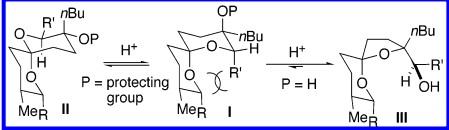 |
 回复此楼
回复此楼» 猜你喜欢
 烦躁
已经有6人回复
烦躁
已经有6人回复

13599388598
金虫 (正式写手)
- 翻译EPI: 17
- 应助: 1 (幼儿园)
- 金币: 911.1
- 散金: 300
- 红花: 2
- 帖子: 364
- 在线: 52.1小时
- 虫号: 1472756
- 注册: 2011-11-02
- 专业: 水产生物营养与饲料学
【答案】应助回帖
★
爱与雨下(金币+1): 2011-12-04 09:59:30
ow在路上(金币+5, 翻译EPI+1): 谢谢 2011-12-07 11:57:34
爱与雨下(金币+1): 2011-12-04 09:59:30
ow在路上(金币+5, 翻译EPI+1): 谢谢 2011-12-07 11:57:34
|
总所周知reveromycin A ( 1)-type 6,6-spiroketal的I型核心能进行酸催化的异构化作用,使II型螺旋异构体得到不好的空间相互作用结果,包括绕轴的C19侧链,尽管这消耗了端基异构效应,在I型比II型结果稍好。因此,I型和II型的 6,6-spiroketals之间的能量差异不大。另外当C18酒精释放时,酸诱导的异构体特异的提供了更稳定的reveromycin B (2) 5,6-spiroketal的III型核心。 在已报道的对6,6-spiroketal of 1的热力方法中观察到了能线图,这为螺旋异构体的混合物reveromycin B-type 5,6-spiroketal降解和合成的研究提供了强有力的证明。 |

2楼2011-12-03 13:58:42