









| 查看: 296 | 回复: 0 | ||
| 当前主题已经存档。 | ||
[资源]
Guide to Reading & Writing Japanese
|
||

|
Guide to Reading & Writing Japanese: Third Edition Guide to Reading & Writing Japanese: Third Edition Author: Kenneth Hanshall Christropher Seeley Florence Sakade Henk de Groot 2$A;+J[W|_ Publisher: Tuttle Publishing Publication Date: 2003-12 Number Of Pages: 352 summary Whatever your reasons are for wanting to study Japanese, you'd do well to learn hiragana, katakana, and kanji. Some people go for the spoken-only approach, but I've found that learning hiragana, katakana, and a lot of the kanji has definitely improved by retention of Japanese vocabulary. Many Japanese words include kanji (for example, the word "nihon" for Japan is the combination of the kanji for "sun" and the kanji for "origin"  , so knowing what the words literally mean will help increase your understanding of Japanese overall.After learning hiragana and katakana (the syllabaries of Japanese; much simpler than kanji, these are sound-based rather than meaning-based), you'll want to integrate kanji into your study of the language. That's where this book comes in. The 1,006 Essential Characters are listed by grade (1st through 6th). Each of these kanji entries includes: the stroke order, Japanese pronunciations, meanings in English, and three examples of the kanji contained in Japanese words. The 1,945 General Use Characters are listed by stroke-order (1 through 23); this includes all of the kanji of the 1,006 set plus those other general use characters not taught in 1st through 6th grade. A hiragana and katakana chart is also included, as well as an index sorted by pronunciation in the back.This book makes a great reference for teaching yourself the kanji. Of course, you shouldn't expect to end up using this book alone for learning the kanji; it's more helpful for review and reference. There are plenty of resources on-line and several other books that would be helpful to use in conjunction with this book. For example, Kanji Pict-o-Graphix encourages mnemonic, visual memorization and Japanese For Everyone focuses on both written and conversational Japanese. However, this book serves the purpose it was created for: to provide clear and succinct entries for the Joyo kanji so you can learn how to write and understand them. It is an essential reference that every Japanese-language learner should own. , so knowing what the words literally mean will help increase your understanding of Japanese overall.After learning hiragana and katakana (the syllabaries of Japanese; much simpler than kanji, these are sound-based rather than meaning-based), you'll want to integrate kanji into your study of the language. That's where this book comes in. The 1,006 Essential Characters are listed by grade (1st through 6th). Each of these kanji entries includes: the stroke order, Japanese pronunciations, meanings in English, and three examples of the kanji contained in Japanese words. The 1,945 General Use Characters are listed by stroke-order (1 through 23); this includes all of the kanji of the 1,006 set plus those other general use characters not taught in 1st through 6th grade. A hiragana and katakana chart is also included, as well as an index sorted by pronunciation in the back.This book makes a great reference for teaching yourself the kanji. Of course, you shouldn't expect to end up using this book alone for learning the kanji; it's more helpful for review and reference. There are plenty of resources on-line and several other books that would be helpful to use in conjunction with this book. For example, Kanji Pict-o-Graphix encourages mnemonic, visual memorization and Japanese For Everyone focuses on both written and conversational Japanese. However, this book serves the purpose it was created for: to provide clear and succinct entries for the Joyo kanji so you can learn how to write and understand them. It is an essential reference that every Japanese-language learner should own. Reviewer: There's no other way to learn kanji than by a head-on, brute force attack, and this book is the field manual for doing just that. This book references all 1,945 daily-use kanji, and the first 1,006 also come with detailed definitions and common compounds the kanji can be found in. If you can keep up the rate of learning 10 or even just 5 kanji per day you'll be well on your way to Japanese literacy inside of a year. Think of it: by 2006, you'll be glad you did. download http://mihd.net/ru76gt Format: Djvu Size: 5.7MB Password: ebookmaster 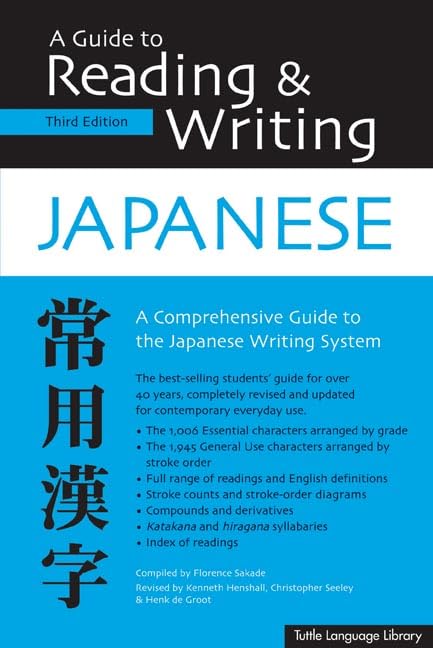 |
 回复此楼
回复此楼