








| 查看: 411 | 回复: 6 | ||
| 【奖励】 本帖被评价6次,作者bio-polymer增加金币 6 个 | ||
| 当前主题已经存档。 | ||
[资源]
【资源】Syndiotactic Polystyrene
|
||

|
Syndiotactic Polystyrene: Synthesis, Characterization, Processing, and Applications by: Jürgen Schellenberg en | Wiley 0470286881 9780470286883 Syndiotactic Polystyrene: Synthesis, Characterization, Processing, and Applications By Jürgen Schellenberg 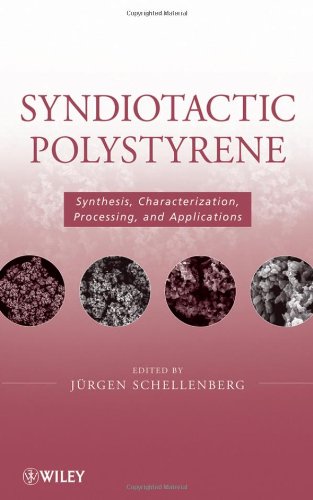 •Publisher: Wiley •Number Of Pages: 484 •Publication Date: 2009-11-16 •ISBN-10 / ASIN: 0470286881 •ISBN-13 / EAN: 9780470286883 Product Description: Syndiotactic Polystyrene (SPS), synthesized in a laboratory for the first time in 1985, has become commercialized in a very short time, with wide acceptance on the global plastics market. Written by leading experts from academia and industry from all over the world, Syndiotactic Polystyrene offers a comprehensive review of all aspects of SPS of interest to both science and industry, from preparation and properties to applications. This essential reference to SPS covers: •The preparation of syndiotactic polystyrene by half-metallocenes and other transition metal catalysts •The structure and fundamental properties, especially morphology and crystallization and solution behavior •The commercial process for SPS manufacturing •Properties, processing, and applications of syndiotactic polystyrenes •Polymers based on syndiotactic polystyrenes, for example, by functionalization and modification, and nanocomposites Ideal for polymer chemists, physicists, plastics engineers, materials scientists, and all those dealing with plastics manufacturing and processing, this important resource provides the information one needs to compare, select, and integrate an appropriate materials solution for industrial use or research. CONTENTS vii PREFACE xvii CONTRIBUTORS xxi ABOUT THE EDITOR xxv PART I INTRODUCTION 1 1. Historical Overview and Commercialization of Syndiotactic Polystyrene 3 Michael Malanga, Osamu Isogai, Takeshi Yamada, Shigeo Iwasaki, and Masahiko Kuramoto 1.1 Discovery of Syndiotactic Polystyrene (SPS) 3 1.2 Early Years of Development (1985.1989) 5 1.3 Intense Development Years (1989.1996) 6 1.4 Initial Commercial Launch Stage (1996.2001) 12 1.5 Years 2001.2007 13 PART II PREPARATION OF SYNDIOTACTIC POLYSTYRENE 15 2. Transition Metal Catalysts for Syndiotactic Polystyrene 17 Norio Tomotsu, Thomas H. Newman, Mizutomo Takeuchi, Richard Campbell Jr., and Jurgen Schellenberg 2.1 Introduction 17 2.2 Transition Metal Compounds 18 2.2.1 Metals 18 2.2.2 Titanium Complexes 19 2.2.3 Molecular Weight Control 26 2.2.4 Supported and Heterogeneous Catalysts 27 2.3 Summary 29 References 29 viii CONTENTS 3. Cocatalysts for the Syndiospecifi c Styrene Polymerization 32 Norio Tomotsu, Hiroshi Maezawa, and Thomas H. Newman 3.1 Introduction 32 3.2 MAO 32 3.3 Boron Compounds 36 3.4 Other Chemicals 39 3.5 Summary 40 References 40 4. Mechanisms for Stereochemical Control in the Syndiotactic Polymerization of Styrene 42 Norio Tomotsu, Thomas H. Newman, and Richard Campbell Jr. 4.1 Introduction 42 4.2 Insertion of the Growing Polymer Chain into the Double Bond of Styrene 42 4.3 Stereochemistry of the Styrene Insertion 45 4.4 Effects of Hydrogenation of the Catalyst 47 4.5 Active Site Species 48 4.5.1 Valence of Active Sites 48 4.5.2 Number of Active Sites 52 4.5.3 Structure of Active Sites 53 4.6 Theoretical Analysis of the Catalyst 54 4.7 Kinetic Analysis of Styrene Polymerization 54 4.8 Conclusions 57 References 58 5. Copolymerization of Ethylene with Styrene: Design of Effi cient Transition Metal Complex Catalysts 60 Kotohiro Nomura 5.1 Introduction 60 5.2 Ethylene/Styrene Copolymers: Microstructures, Thermal Properties, and Composition Analyses 61 5.3 Ethylene/Styrene Copolymerization Using Transition Metal Complex.Cocatalyst Systems 64 5.3.1 Half-Titanocenes, CpŒTiX3 64 5.3.2 Linked (Constrained Geometry Type) Half-Titanocenes 65 5.3.3 Modifi ed Half-Titanocenes, CpŒTi(L)X2 71 CONTENTS ix 5.3.4 Non-Cp Titanium Complexes 79 5.3.5 Metallocenes 83 5.3.6 Others 85 5.4 Summary and Outlook 86 References 87 6. Structure and Properties of Tetrabenzo[a,c,g,i]fl uorenyl-Based Titanium Catalysts 92 Rudiger Beckhaus, Kai Schroder, and Jurgen Schellenberg 6.1 Introduction 92 6.2 The Tbf Ligand 94 6.3 Tbf Lithium 96 6.3.1 Synthesis and Characterization of Tbf Lithium 96 6.4 Tbf Titanium(III) Derivatives 98 6.4.1 Synthesis of Tbf Titanium(III) Chloride Complexes 98 6.4.2 Reaction of TbfTiIIICl2(THF) (VIII) with Radicals 102 6.5 Tbf Titanium(IV) Derivatives 105 6.5.1 Synthesis of Tbf Titanium Monophenoxide Complexes 107 6.6 Dynamic and Polymerization Behavior of Tetrabenzofl uorenyl Titanium Complexes 117 6.6.1 Styrene Polymerization 119 6.7 Conclusions 120 References 120 7. Rare-Earth Metal Complexes as Catalysts for Syndiospecifi c Styrene Polymerization 125 Klaus Beckerle and Jun Okuda 7.1 Introduction 125 7.2 Metallocene Catalysts 126 7.3 Constrained Geometry Catalysts 129 7.4 Half-Sandwich Catalysts 130 7.5 Nonmetallocene Catalysts 134 7.6 Conclusion 136 References 136 x CONTENTS 8. Syndiospecifi c Styrene Polymerization with Heterogenized Transition Metal Catalysts 140 Kyu Yong Choi 8.1 Introduction 140 8.2 Kinetics of Syndiospecifi c Polymerization with Heterogeneous Metallocene Catalysts 141 8.2.1 Kinetic Profi les of Heterogeneous SPS Polymerization 141 8.2.2 Liquid Slurry Polymerization with Heterogenized Cp*Ti(OCH3)3 Catalyst 143 8.2.3 Modeling of Polymerization Kinetics 145 8.2.4 Molecular Weight Distribution of SPS with Heterogeneous Catalysts 147 8.3 Nascent Morphology of Syndiotactic Polystyrene 149 8.3.1 Physical Transitions of Reaction Mixture During Polymerization 149 8.3.2 Effect of Reaction Conditions on Polymer Morphology 151 8.4 Concluding Remarks 153 References 153 PART III STRUCTURE AND FUNDAMENTAL PROPERTIES OF SYNDIOTACTIC POLYSTYRENE 155 9. Structure, Morphology, and Crystallization Behavior of Syndiotactic Polystyrene 157 Andrea Sorrentino and Vittoria Vittoria 9.1 Introduction 157 9.2 Polymorphic Behavior of SPS 157 9.2.1 Crystallization from the Melt State 159 9.2.2 Crystallization from the Glassy State 160 9.2.3 Morphology Development in the Presence of Solvents 163 9.3 Morphology of the Zigzag Forms 164 9.3.1 Crystal Structure of the ƒ¿ Form 164 9.3.2 Crystal Structure of the ƒÀ Form 168 9.3.3 Lamellar and Spherulitic Morphology of the Zigzag Forms 170 CONTENTS xi 9.4 Morphology of the Mesomorphic Phases 173 9.5 Thermodynamic and Kinetics of Crystallization 175 9.5.1 Thermodynamic and Kinetics of Crystallization 177 9.6 Melting Behavior 178 9.6.1 Equilibrium Melting Temperature of ƒ¿ and ƒÀ Crystals 180 9.6.2 Memory Effects 182 9.7 Structure and Properties of the Crystallized Samples 183 9.7.1 Morphology of Injection Molded Samples 183 9.7.2 Relation between Morphology Structure, Processing, and Properties 184 References 186 10. Preparation, Structure, Properties, and Applications of Co-Crystals and Nanoporous Crystalline Phases of Syndiotactic Polystyrene 194 Gaetano Guerra, Alexandra Romina Albunia, and Concetta DfAniello 10.1 Introduction 194 10.2 Co-Crystals 195 10.2.1 Crystalline Structures 196 10.2.2 Processing and Materials 199 10.2.3 Characterization Studies 202 10.2.4 Properties and Applications 209 10.3 Nanoporous Crystalline Phases 212 10.3.1 Crystalline Structures 213 10.3.2 Processing and Materials 215 10.3.3 Characterization Studies 217 10.3.4 Applications 219 10.4 Conclusions and Perspectives 224 10.5 Acknowledgments 225 References 225 11. Crystallization Thermodynamics and Kinetics of Syndiotactic Polystyrene 238 Tomoaki Takebe and Komei Yamasaki 11.1 Introduction 238 11.2 Theoretical Background 239 11.3 Equilibrium Melting Point of SPS 240 11.3.1 Evaluation of Spherulitic Growth Rate G 244 xii CONTENTS 11.4 Analyses of Spherulitic Growth Rate G 248 11.5 Comparison Between SPS and IPS 249 References 250 PART IV COMMERCIAL PROCESSES FOR MANUFACTURING OF SYNDIOTACTIC POLYSTYRENE 253 12. Processes for the Production of Syndiotactic Polystyrene 255 Masao Aida, David Habermann, Hans-Joachim Leder,and Jurgen Schellenberg 12.1 Introduction 255 12.2 Monomer Purifi cation Section 255 12.3 Catalyst Section 256 12.4 Polymerization Section 256 12.4.1 Continuous Stirred Tank Reactor Process 257 12.4.2 Continuous Fluidized Bed Reactor Process 258 12.4.3 Continuous Self-Cleaning Reactor Process 258 12.5 Styrene Stripping Section 260 12.6 Deactivating Section 260 12.7 Pelletizing Section 262 12.8 Blending Section 262 12.9 Shipping Section 263 References 264 PART V PROPERTIES, PROCESSING, AND APPLICATIONS OF SYNDIOTACTIC POLYSTYRENE 267 13. Properties of Syndiotactic Polystyrene 269 Tomoaki Takebe, Komei Yamasaki, Keisuke Funaki, and Michael Malanga 13.1 Introduction 269 13.2 Rheological Properties of SPS 269 13.3 Basic Physical Mechanical Properties of SPS 272 13.3.1 Thermal Properties of SPS 272 13.3.2 Mechanical Properties of SPS 274 13.4 Orientation of SPS and Properties of Oriented SPS 281 13.4.1 Properties of Uniaxially Oriented SPS 281 13.4.2 Properties of Biaxially Oriented SPS (BoSPS) 282 CONTENTS xiii 13.5 Other Important Properties of SPS 286 13.5.1 Electrical Properties of SPS 286 13.5.2 Chemical Resistance of SPS 287 References 289 14. Melt Processing of Syndiotactic Polystyrene 290 David Bank, Kevin Nichols, Harold Fowler, Jason Reese,and Gerry Billovits 14.1 Introduction 290 14.2 Compounding 294 14.2.1 Introduction 294 14.2.2 Compounding Equipment 295 14.2.3 Compounding Process Conditions 296 14.3 Injection Molding 298 14.3.1 Introduction 298 14.3.2 General Product Design 299 14.3.3 Thin Wall Product Designs 301 14.3.4 Injection Mold Design 301 14.3.5 Injection Mold Melt Delivery System (Runners and Gates) 302 14.3.6 Venting 304 14.3.7 Injection Molding Cooling Cycle and Crystallinity 304 14.3.8 Shrinkage during the Cooling Phase 304 14.3.9 Injection Molding Process Set-up 306 14.3.10 Injection Molding Cycle 308 14.3.11 Special Injection Molding Cycles 310 14.4 Sheet and Film Extrusion 311 14.4.1 Introduction 311 14.4.2 Extrusion 311 14.4.3 General Extruder Design 312 14.4.4 Processing Parameters 313 14.4.5 Material Drying 314 14.5 Film Processing and Fabrication 314 14.5.1 Introduction 314 14.5.2 Cast Film Extrusion 314 14.5.3 Thermoforming 315 14.6 Fiber Spinning 316 References 319 xiv CONTENTS 15. Applications of Syndiotactic Polystyrene 321 Tom Fiola, Akihiko Okada, Masami Mihara, and Kevin Nichols 15.1 Introduction 321 15.2 The Performance Capabilities of SPS 322 15.3 Connectors for Automotive and Electronic Applications 329 15.4 Electronic Components: Plated and Non-Plated 330 15.5 Industrial and Appliance Components 331 References 337 16. Blends of Syndiotactic Polystyrene with Polyamide 338 Kevin Nichols, Akihiko Okada, and Hiroki Fukui 16.1 Introduction 338 16.2 Composition of SPS/Nylon Blends 338 16.2.1 Polyamides Used in SPS/Nylon Blends 339 16.2.2 SPS/Nylon Blend Formulations 339 16.2.3 SPS/Nylon Blend Composition Patents 339 16.2.4 SPS/Nylon Blend Compositions Described in Technical Journals 339 16.3 Properties of SPS/Nylon Blends 339 16.3.1 Mechanical Properties of SPS/Nylon Blends 340 16.3.2 Rheology of SPS/Nylon Blends 343 16.3.3 Moisture Absorption and Moisture Growth of SPS/Nylon Blends 343 16.3.4 Dimensional Stability of SPS/Nylon Blends 346 16.3.5 USCAR Performance of SPS/Nylon Blends 347 16.3.6 Environmental Stress Crack Resistance of SPS/Nylon Blends 349 16.4 Applications of SPS/Nylon Blends 349 16.4.1 SPS/Nylon Blend Under-the-hood Automotive Connectors 349 16.4.2 SPS/Nylon Blend Carpet Fibers 350 16.4.3 SPS/Nylon Blend Application Patents 353 References 355 17. Blends of Syndiotactic Polystyrene with Polystyrenes 360 Tomoaki Takebe, Komei Yamasaki, Akihiko Okada, and Takuma Aoyama 17.1 Introduction 360 17.2 SANS Measurements 361 CONTENTS xv 17.3 Theoretical Background 361 17.4 Tacticity Effect on Miscibility 363 17.5 Properties of Blends of SPS and APS 366 References 370 18. Compatibilizers for Impact-Modifi ed Syndiotactic Polystyrene 371 Tomoaki Takebe, Akihiko Okada, and Nobuyuki Sato 18.1 Introduction 371 18.2 Morphological Analyses of HISPS 372 18.2.1 SAXS Profi les of HISPS in the Crystalline State 374 18.2.2 Effect of Nucleators on Lamellar Orientation in HISPS 375 18.3 Morphology of SPS/PPO Binary Blends 376 18.3.1 Structural Analyses Using SAXS Technique 377 18.3.2 Crystallization Kinetics of SPS/PPO Blends 378 18.3.3 Infl uence of Blending PPO with Different Molecular Weights on the Morphology of HISPS 380 18.4 Compatibilizer Effects 382 18.4.1 Evaluation of Interaction Parameters 383 18.4.2 Evaluation of Domain Size and Interfacial Thickness 388 References 393 PART VI POLYMERS BASED ON SYNDIOTACTIC POLYSTYRENES 395 19. Functionalization and Block/Graft Reactions of Syndiotactic Polystyrene Using Borane Comonomers and Chain Transfer Agents 397 T. C. Mike Chung 19.1 Introduction 397 19.2 Functionalization of SPS via Borane Comonomers 398 19.2.1 Copolymerization of Styrene and B-styrene 398 19.2.2 Side-Chain Functionalized SPS Polymers 402 19.2.3 SPS Graft Copolymers 406 19.3 Functionalization of SPS via Borane Chain Transfer Agents 409 19.3.1 SPS Containing a Terminal Functional Group 410 19.3.2 SPS Block Copolymers 412 xvi CONTENTS 19.4 Summary 415 19.5 Acknowledgment 415 References 415 20. Nanocomposites Based on Syndiotactic Polystyrene 417 O Ok Park and Mun Ho Kim 20.1 Introduction 417 20.2 Polymer Nanocomposites and Microstructure 418 20.3 Fabrication of Polymer Nanocomposites 419 20.4 Characterization of Polymer Nanocomposites 420 20.5 Preparation of SPS Nanocomposites 421 20.5.1 Effect of Alkyl Chain Aggregation in Organoclay.Bilayer versus Monolayer Arrangement 423 20.5.2 Improvement in the Thermal Stability of Organoclay 424 20.6 Properties of SPS Nanocomposites 425 20.6.1 Mechanical Properties 425 20.6.2 Crystallization Behavior 426 20.6.3 Dynamic Rheological Properties 426 20.7 Final Remarks 427 References 429 INDEX 431 Preface xvii http://ifile.it/mts0eoq/9780470286883.pdf |
 回复此楼
回复此楼» 猜你喜欢
 浙江师范大学是怎么坑我的
已经有5人回复
浙江师范大学是怎么坑我的
已经有5人回复
-
面上有专家说实验设备不是我们单位的
已经有8人回复
-
科研求助
已经有4人回复
-
博士去二本高校当辅导员,如何调整心态?
已经有11人回复
-
江苏省自然基金 什么时候出结果
已经有6人回复
-
闲聊
已经有3人回复
简单回复
mkfc2楼
2010-02-12 21:58
回复
 :dnd:
:dnd:
Pureland3楼
2010-02-13 08:03
回复

2010-02-13 15:27
回复

renerve5楼
2010-02-14 08:12
回复
dfq07306楼
2010-02-14 08:27
回复
感谢分享
2010-02-14 12:32
回复