









| 查看: 1203 | 回复: 0 | |||
18317190548新虫 (小有名气)
|
[交流]
SPR 检测服务强势上线 - MedChemExpress
|

|
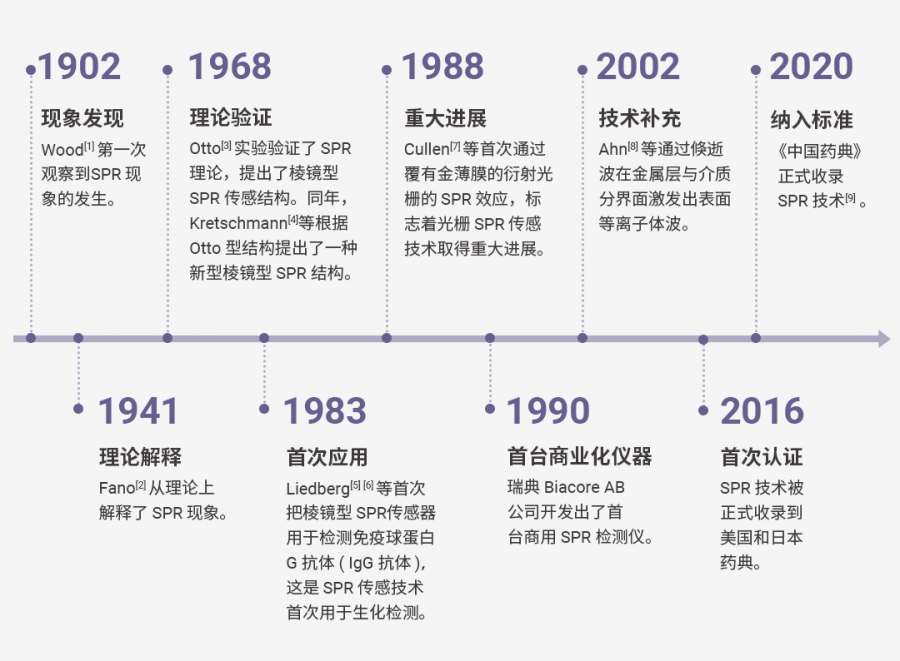
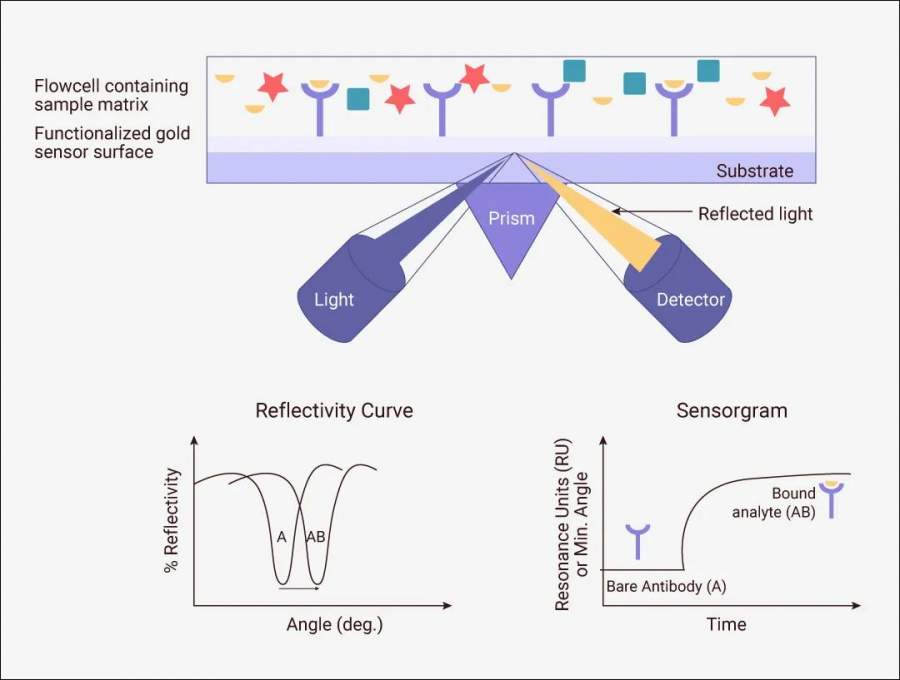
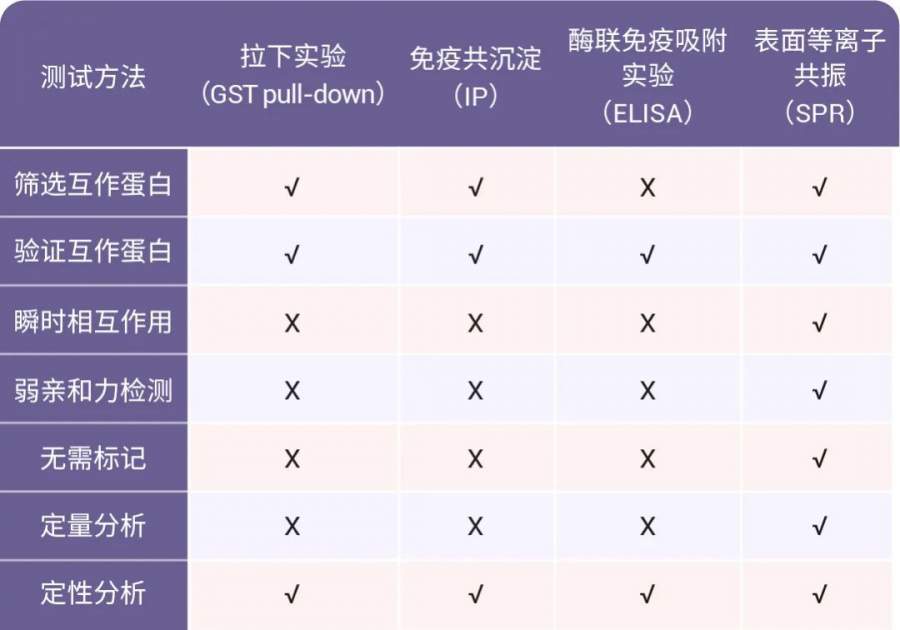
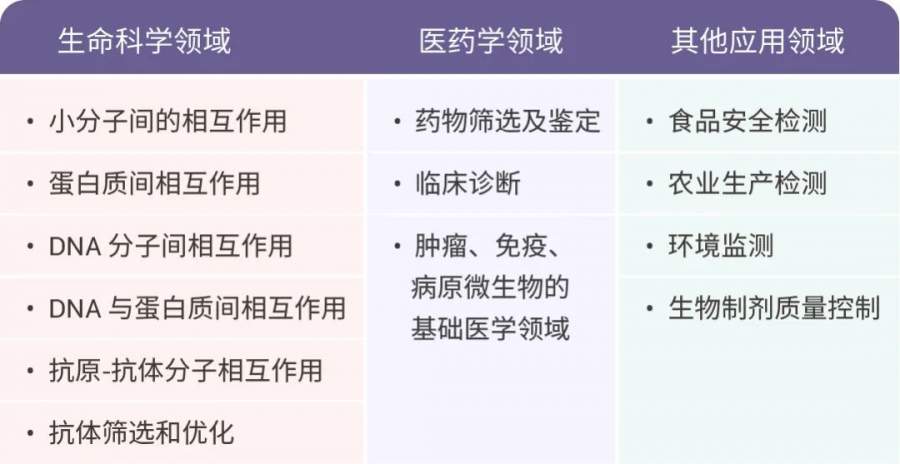
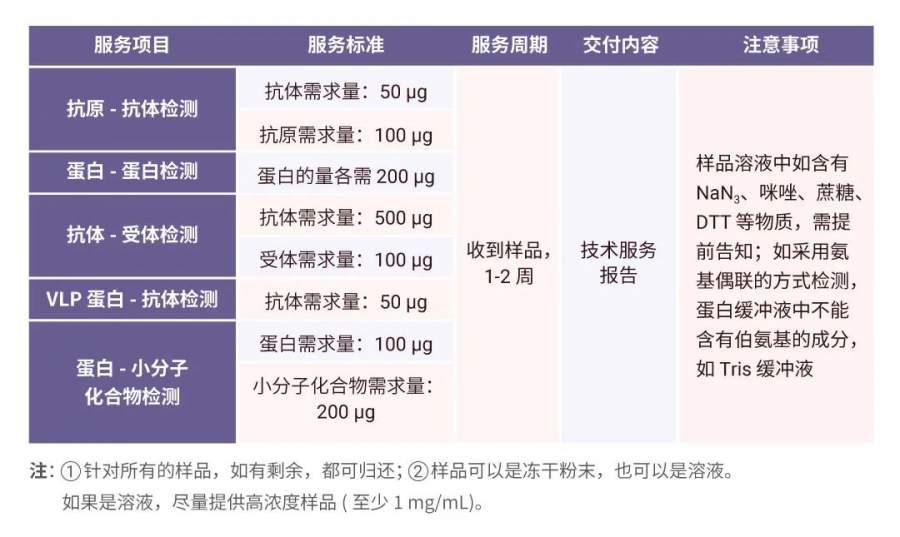
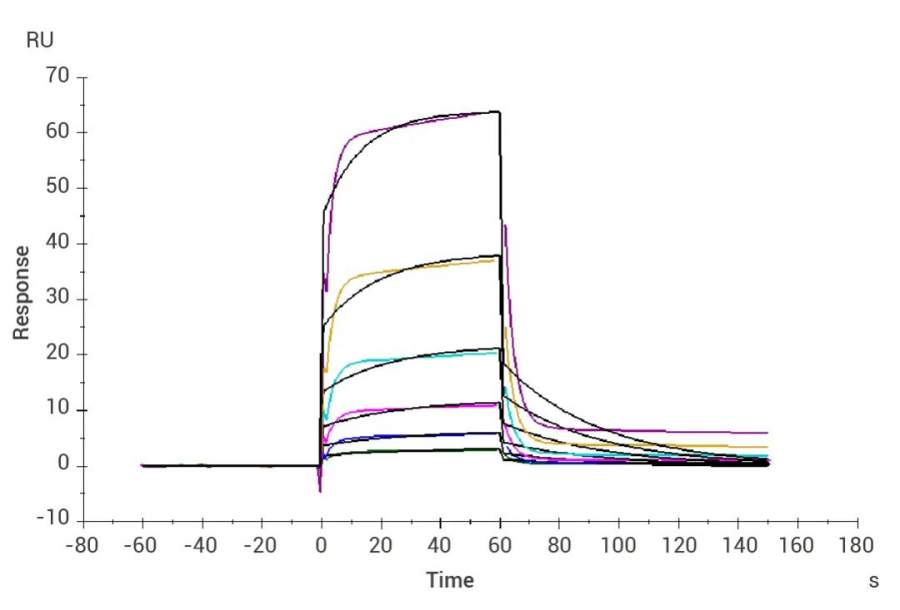
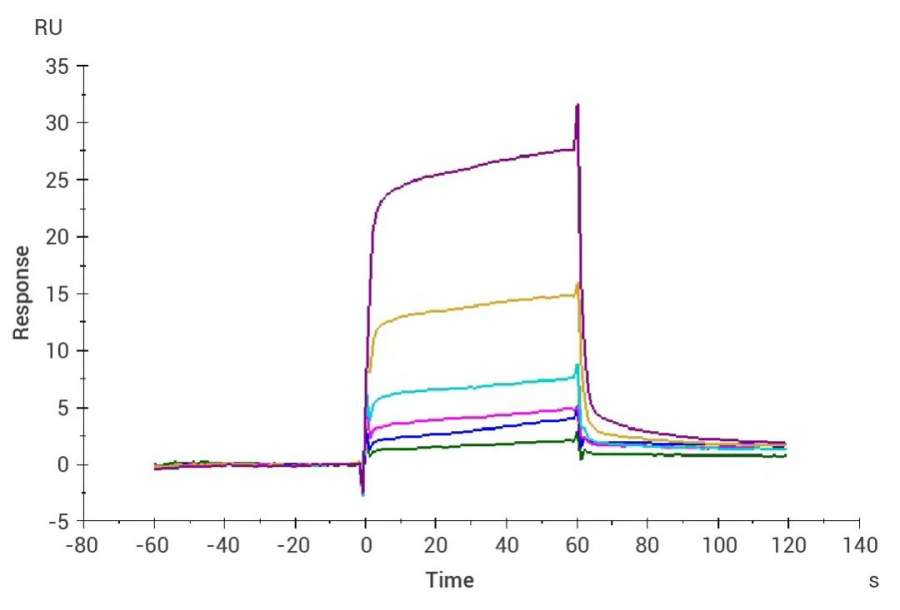
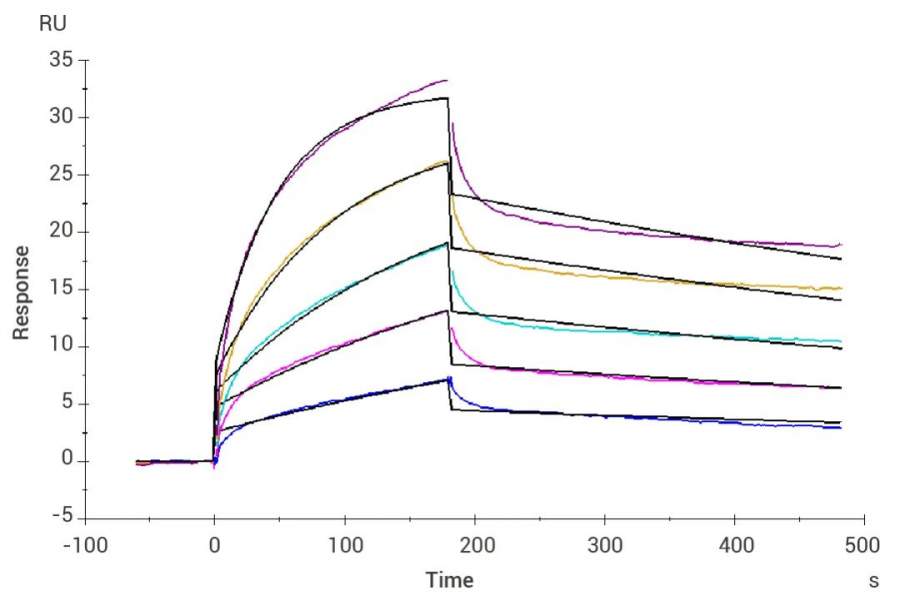
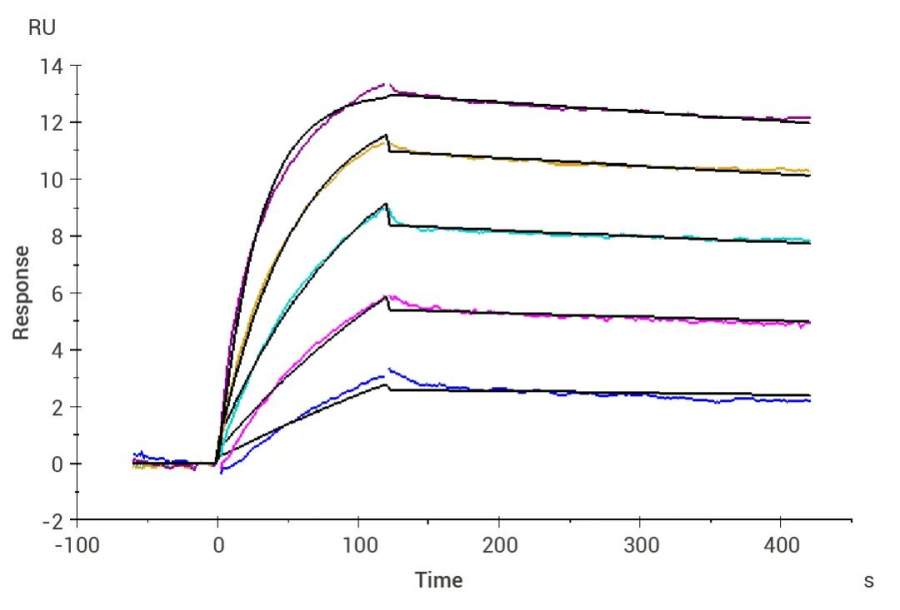
传统分子互作检测技术耗时费力、信息量少、灵敏度低怎么办??相信您一定听过检测生物分子相互作用的 "金标准"—— spr 检测技术 !无需标记、实时监测、灵敏度高等等,这究竟是怎么实现的?快来和小 m 一起往下看吧! spr,即表面等离子共振 (surface plasmon resonance, spr),简单来说,它通过检测生物传感芯片上配位体与分析物之间的相互作用情况,进而探测物质的性质和结构。通过这一技术,我们能够实时、精准地分析样品中的分子、蛋白质、dna 等各类有机、无机物质,为科研、工业生产和医学诊断等领域带来了巨大的帮助,但是 spr 可不是一项新技术哦!  1902 年,科学家 wood 在光学实验中首次发现了 spr 现象。经过百年的理论补充、技术迭代,目前 spr 技术已成为分子互作领域的"金标准"。 图 1. spr 技术发展历程。 发展至今,spr 已成为生命科学研究领域不可或缺的研究工具。  spr 是一种物理光学现象。简单来说,spr 就是根据金属表面偶联的配体是否与分析物结合而产生不同的共振角,通过监测共振角度的变化,可以推断出生物分子相互作用的亲和性、亲合常数、结合动力学等信息。因此,spr 技术在药物筛选、蛋白质-蛋白质相互作用研究、抗体-抗原结合等领域具有广泛应用和重要价值。 图 2. spr 原理图。 原理:当光源发出的偏振光以一定的角度入射到棱镜中,在棱镜与金属的界面处发生全反射,而光会在金属表面介质中传输振幅呈指数衰减的倏逝波,同时引发金属表面的自由电子产生表面等离子波,等离子波与倏逝波发生共振时,其反射光强度会大幅度地减弱。反射光强度最低时的暗带所对应反射角即为共振角。当有生物分子与金属表面的薄膜结合或与已吸附的分子相互作用时,这种等离子体波的特性会发生变化,导致共振角度发生偏移 (从 a 到 ab 的偏移)[10]。 这种偏移可通过检测入射光的反射角度变化来实现。借助 spr 仪器的检测系统,可以实时、定量地测量共振角度的变化,从而得到亲和力相关信息。 目前常用的检测分子间相互作用力的主流方法分为 4 种:表面等离子共振 (spr)、拉下实验 (gst pull-down)、免疫共沉淀 (ip)、酶联免疫吸附实验 (elisa)。其中,spr 技术是生命科学基础研究、药物研发与医学诊断分析领域动力学及亲和力分析的首选检测方法,也是检测生物分子相互作用的 “金标准”。 表 1. 检测分子互作主流技术对比。 ▐ spr 检测有什么特点? 实时检测,能动态监测生物分子相互作用的全过程; 无需标记样品,保持了分子活性[11]; 样品需要极少,一般一个表面仅需要 100 μg 蛋白; 检测过程方便快捷,灵敏度高; 应用范围广泛; 高质量的分析数据; 能跟踪监控固定的配体的稳定性[12]。 ▐ spr 检测提供给您的信息: 有无结合 (yes or no) 结合的特异性和选择性 (specificity) 两种分子的结合强度 -- 亲和力 (affinity) 结合和解离的快慢和复合体的稳定性 -- 动力学 (kinetics) 分子结合的温度与热力学特征 (thermodynamics); 目标分子活性含量的检测 (concentration)。  自 liedberg[5][6] 等人于 1983 年首次运用 spr 技术进行抗原抗体相互作用分析以来,spr 技术已广泛应用于基础生命科学、制药、食品及环境科学等领域。近几年,新的技术理论和方法学的发展又推动了 spr 技术向小分子的相互作用研究、药物筛选、临床诊断、蛋白质组学等新兴的应用领域不断扩展。目前,spr 技术在科学研究中发挥出越来越重要的作用。 表 2. spr 应用领域。 ▐ 我们将为您提供哪些服务? mce 使用 biacore t200 仪器,可以进行抗原-抗体、蛋白-蛋白、抗体-受体、vlp 蛋白-抗体、蛋白-小分子化合物等的亲和力分析,为客户提供定制的多样性服务。 验证一:蛋白与蛋白亲和力测定 通过 spr 技术,使用 biacore 仪器测定不同浓度下 human nkp30 蛋白与 human b7-h6 蛋白的亲和力。利用 t200 的分析软件,采用 1:1 binding 的分析模式对其结合和解离进行分析,其亲和力常数为 0.275 μm。 图 3. nkp30, human (hfc) captured on cm5 chip via protein a can bind biotinylated b7-h6, human (his-avi) (hy-p78076)with an affinity constant of 0.275 μm as determined in spr assay. 【案例 2】 通过 spr 技术,使用 biacore 仪器测定不同浓度下 human tgfbr1 蛋白与 mature tgf beta 1 蛋白的亲和力。利用 t200 的分析软件,采用 1:1 binding 的分析模式对其结合和解离进行分析,其亲和力常数为 0.12 um。 图 4. tgfbr1, human (mfc-avi) (hy-p78525) captured on cm5 chip via protein a can bind mature tgf beta 1, human(no tag) with an affinity constant of 0.12 μm as determined in spr assay. 验证二:蛋白与抗体亲和力测定 通过 spr 技术,使用 biacore 仪器测定不同浓度下 human claudin18.2 vlp 蛋白与 anti-claudin18.2 antibody 抗体的亲和力。利用 t200 的分析软件,采用 1:1 binding 的分析模式对其结合和解离进行分析,其亲和力常数为 1.01 nm。 图 5. biotinylated human claudin18.2 vlp (hy-p78105) captured on cm5 chip via streptavidin can bind anti-claudin18.2 antibody with an affinity constant of 1.01 nm as determined in spr assay. 【案例 2】 通过 spr 技术,使用 biacore 仪器测定不同浓度下 human claudin 6 vlp 蛋白与 anti-claudin 6 antibody 抗体的亲和力。利用 t200 的分析软件,采用 1:1 binding 的分析模式对其结合和解离进行分析,其亲和力常数为 0.19 nm。 图 6. claudin 6 vlp,human (hy-p77899) immobilized on cm5 chip can bind anti-claudin 6 antibody with an affinity constant of 0.19 nm as determined in spr assay. mce的所有产品仅用作科学研究或药证申报,我们不为任何个人用途提供产品和服务。 参考文献: [1] wood r w. xlii. on a remarkable case of uneven distribution of light in a diffraction grating spectrum[j]. the london, edinburgh, and dublin philosophical magazine and journal of science, 1902, 4(21): 396-402. [2] fano u. the theory of anomalous diffraction gratings and of quasi-stationary waves on metallic surfaces (sommerfeld’s waves)[j]. journal of the optical society of america a, 1941, 31(3): 213-222. [3] duan y y, et al. surface plasmon resonance biosensor-based immunoassays[j]. letters in biotechnology, 2002, 13(4): 264-268. [4] kretschmann e, et al. notizen: radiative decay of non radiative surface plasmons excited by light[j]. zeitschrift für naturforschung a, 1968, 23(12): 2135-2136. [5] liedberg b, et al. surface plasmon resonance for gas detection and biosensing[j]. sensors and actuators, 1983, 4: 299-304. [6] nylander c, et al. gas detection by means of surface plasmon resonance[j]. sensors and actuators, 1982, 3: 79-88. [7] cullen d c, et al. detection of immuno-complex formation via surface plasmon resonance on gold-coated diffraction gratings[j]. biosensors, 1987, 3(4): 211-225. [8] ahn s w, et al. integration of electro-optic polymer modulators with low-loss fluorinated polymer waveguides[j]. optics letters, 2002, 27(23): 2109-2111. [9] 国家药典委员会.中华人民共和国药典:三部[m]. 北京:中国医药科技出版社,2020:3429. [10] nguyen hh, et al. surface plasmon resonance: a versatile technique for biosensor applications. sensors (basel). 2015 may 5;15(5):10481-510. [11] schasfoort rbm, et al. trends in spr cytometry: advances in label-free detection of cell parameters. biosensors (basel). 2018 oct 30;8(4):102. [12] vachali pp, et al. surface plasmon resonance (spr)-based biosensor technology for the quantitative characterization of protein-carotenoid interactions. arch biochem biophys. 2015 apr 15;572:66-72. |
 回复此楼
回复此楼» 猜你喜欢
 售SCI一区文章,我:8.O.551.O.5.4,科目全,可伽急
已经有4人回复
售SCI一区文章,我:8.O.551.O.5.4,科目全,可伽急
已经有4人回复
-
售一区SCI文章T0P,我:8O.551.O54,科目全,可十急
已经有4人回复
-
售SCI一区T0P文章,我:8.O.55.1.O54,科目全,可伽急
已经有8人回复
-
售SCI一区T0P文章,我:8.O.55.1.O.54,科目齐全,可+急
已经有4人回复
-
售SCI文章,我:8O.5.5.1O.54,科目全,可十急
已经有4人回复
-
售SCI一区T0P文章,我:8O.55.1.O.54,科目全,可伽急
已经有4人回复
-
售SCI一区T0P文章,我:8.O.55.1.O54,科目全,可伽急
已经有4人回复
-
售SCI一区文章,我:8O5.5.1.O5.4,科目全,可伽急
已经有6人回复
-
售SCI一区文章,我:8O5.5.1.O5.4,科目全,可伽急
已经有6人回复
-
售一区SCI文章T0P,我:8O.551.O54,科目全,可十急
已经有4人回复
» 本主题相关商家推荐: (我也要在这里推广)



