









| 查看: 889 | 回复: 6 | |||
| 当前主题已经存档。 | |||
qqsvery木虫 (著名写手)
|
[交流]
【转帖】诺贝尔生理学或医学奖揭晓
|
||

|
中国网10月5日电 据诺贝尔基金会官方网站报道,诺贝尔瑞典卡罗林斯卡医学院宣布,将2009年诺贝尔生理学或医学奖授予美国加利福尼亚旧金山大学的伊丽莎白·布莱克本(Elizabeth Blackburn)、美国巴尔的摩约翰·霍普金斯医学院的卡罗尔-格雷德(Carol Greider)、美国哈佛医学院的杰克·绍斯塔克(Jack Szostak)以及霍华德休斯医学研究所,以表彰他们发现了端粒和端粒酶保护染色体的机理。 卡罗林斯卡医学院方面称,这三人“解决了生物学上的一个重大问题”,即在细胞分裂时染色体如何进行完整复制,如何免于退化。其中奥秘全部蕴藏在端粒和端粒酶上。由染色体根冠制造的端粒酶(telomerase)是染色体的自然脱落物,能引发衰老和癌症。端粒也被科学家称作“生命时钟”,在新细胞中,细胞每分裂一次,端粒就缩短一次,当端粒不能再缩短时,细胞就无法继续分裂而死亡。伊丽莎白?布莱克本他们发现的端粒酶,在一些失控的恶性细胞的生长中扮演重要角色。大约90%的癌细胞都有着不断增长的端粒及相对来说数量较多的端粒酶。 伊丽莎白·布莱克本1948年出生于澳大利亚,杰克·绍斯塔克1952年出生于英国伦敦,他们将同1961年在美国出生卡罗尔·格雷德平分1000万瑞典克朗的奖金。 今年诺贝尔生理学或医学奖的揭晓仪式按惯例仍然在卡罗林斯卡医学院的“诺贝尔论坛”报告厅举行。 诺贝尔生理学或医学奖获奖名单的公布揭开了今年“诺贝尔周”的序幕。未来一周内,物理学奖、化学奖、文学奖、和平奖和经济学奖的获奖名单将陆续揭晓。 按照传统,在诺贝尔奖各奖项得主全部确定后,颁奖仪式将在每年的12月10号进行,之所以选择这天,是为了纪念1896年12月10号去世的诺贝尔。除和平奖外,其他奖项都在瑞典首都斯德哥尔摩颁发。颁奖仪式隆重而简朴,每年出席的人数限于1500人到1800人之间,其中男士要穿燕尾服或民族服装,女士要穿严肃的夜礼服。(文/周翔) 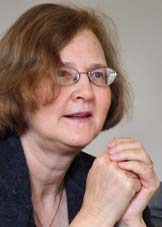 伊丽莎白-布莱克本 伊丽莎白-布莱克本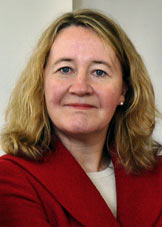 卡萝尔-格雷德 卡萝尔-格雷德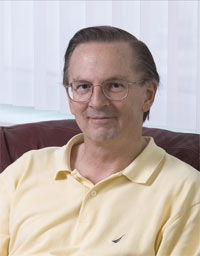 杰克-绍斯塔克 杰克-绍斯塔克 |
 回复此楼
回复此楼» 猜你喜欢
 有经济金融类英文论文一篇,求帮助,发国际核心期刊
已经有5人回复
有经济金融类英文论文一篇,求帮助,发国际核心期刊
已经有5人回复
-
求购通用试剂盒
已经有0人回复
-
泌尿系统论文润色/翻译怎么收费?
已经有284人回复
-
求购通用试剂盒
已经有0人回复
-
推荐核心期刊或者sci期刊
已经有2人回复

零零创天
铁杆木虫 (职业作家)
- 应助: 52 (初中生)
- 贵宾: 0.133
- 金币: 7763.4
- 散金: 1386
- 红花: 25
- 帖子: 3983
- 在线: 545.5小时
- 虫号: 589602
- 注册: 2008-08-29
- 性别: GG
- 专业: 社会学其他学科
呵呵,比我先进
★ ★ ★
小木虫(金币+0.5):给个红包,谢谢回帖交流
jiangy0122(金币+2,VIP+0):谢谢补充 10-7 16:30
小木虫(金币+0.5):给个红包,谢谢回帖交流
jiangy0122(金币+2,VIP+0):谢谢补充 10-7 16:30
|
附诺贝尔官方网站公告 2009诺贝尔生理学或医学奖 下载地址:http://nobelprize.org/nobel_prizes/medicine/laureates/2009/ 下载时间:2009-10-05 22:00 The Nobel Prize in Physiology or Medicine 2009 "for the discovery of how chromosomes are protected by telomeres and the enzyme telomerase" Photo: Gerbil, Licensed by Attribution Share Alike 3.0 Photo: Gerbil, Licensed by Attribution Share Alike 3.0 Photo © Harvard Medical School Elizabeth H. Blackburn Carol W. Greider Jack W. Szostak 1/3 of the prize 1/3 of the prize 1/3 of the prize USA USA USA University of California San Francisco, CA, USA Johns Hopkins University School of Medicine Baltimore, MD, USA Harvard Medical School; Massachusetts General Hospital Boston, MA, USA; Howard Hughes Medical Institute b. 1948 (in Hobart, Tasmania, Australia) b. 1961 b. 1952 (in London, United Kingdom) Titles, data and places given above refer to the time of the award. |

2楼2009-10-05 22:12:13
零零创天
铁杆木虫 (职业作家)
- 应助: 52 (初中生)
- 贵宾: 0.133
- 金币: 7763.4
- 散金: 1386
- 红花: 25
- 帖子: 3983
- 在线: 545.5小时
- 虫号: 589602
- 注册: 2008-08-29
- 性别: GG
- 专业: 社会学其他学科
3楼2009-10-05 22:14:41
零零创天
铁杆木虫 (职业作家)
- 应助: 52 (初中生)
- 贵宾: 0.133
- 金币: 7763.4
- 散金: 1386
- 红花: 25
- 帖子: 3983
- 在线: 545.5小时
- 虫号: 589602
- 注册: 2008-08-29
- 性别: GG
- 专业: 社会学其他学科
补充资料(来自诺贝尔官方网站)
★
小木虫(金币+0.5):给个红包,谢谢回帖交流
小木虫(金币+0.5):给个红包,谢谢回帖交流
|
诺贝尔奖官方网站资料 下载地址: http://nobelprize.org/nobel_priz ... tes/2009/press.html 下载时间:2009-10-5 22:05 The Nobel Prize in Physiology or Medicine 2009 English English (pdf) Swedish Swedish (pdf) Press Release 5 October 2009 The Nobel Assembly at Karolinska Institutet has today decided to award The Nobel Prize in Physiology or Medicine 2009 jointly to Elizabeth H. Blackburn, Carol W. Greider and Jack W. Szostak for the discovery of "how chromosomes are protected by telomeres and the enzyme telomerase" Summary This year's Nobel Prize in Physiology or Medicine is awarded to three scientists who have solved a major problem in biology: how the chromosomes can be copied in a complete way during cell divisions and how they are protected against degradation. The Nobel Laureates have shown that the solution is to be found in the ends of the chromosomes – the telomeres – and in an enzyme that forms them – telomerase. The long, thread-like DNA molecules that carry our genes are packed into chromosomes, the telomeres being the caps on their ends. Elizabeth Blackburn and Jack Szostak discovered that a unique DNA sequence in the telomeres protects the chromosomes from degradation. Carol Greider and Elizabeth Blackburn identified telomerase, the enzyme that makes telomere DNA. These discoveries explained how the ends of the chromosomes are protected by the telomeres and that they are built by telomerase. If the telomeres are shortened, cells age. Conversely, if telomerase activity is high, telomere length is maintained, and cellular senescence is delayed. This is the case in cancer cells, which can be considered to have eternal life. Certain inherited diseases, in contrast, are characterized by a defective telomerase, resulting in damaged cells. The award of the Nobel Prize recognizes the discovery of a fundamental mechanism in the cell, a discovery that has stimulated the development of new therapeutic strategies. The mysterious telomere The chromosomes contain our genome in their DNA molecules. As early as the 1930s, Hermann Muller (Nobel Prize 1946) and Barbara McClintock (Nobel Prize 1983) had observed that the structures at the ends of the chromosomes, the so-called telomeres, seemed to prevent the chromosomes from attaching to each other. They suspected that the telomeres could have a protective role, but how they operate remained an enigma. When scientists began to understand how genes are copied, in the 1950s, another problem presented itself. When a cell is about to divide, the DNA molecules, which contain the four bases that form the genetic code, are copied, base by base, by DNA polymerase enzymes. However, for one of the two DNA strands, a problem exists in that the very end of the strand cannot be copied. Therefore, the chromosomes should be shortened every time a cell divides – but in fact that is not usually the case (Fig 1). Both these problems were solved when this year's Nobel Laureates discovered how the telomere functions and found the enzyme that copies it. Telomere DNA protects the chromosomes In the early phase of her research career, Elizabeth Blackburn mapped DNA sequences. When studying the chromosomes of Tetrahymena, a unicellular ciliate organism, she identified a DNA sequence that was repeated several times at the ends of the chromosomes. The function of this sequence, CCCCAA, was unclear. At the same time, Jack Szostak had made the observation that a linear DNA molecule, a type of minichromosome, is rapidly degraded when introduced into yeast cells. Blackburn presented her results at a conference in 1980. They caught Jack Szostak's interest and he and Blackburn decided to perform an experiment that would cross the boundaries between very distant species (Fig 2). From the DNA of Tetrahymena, Blackburn isolated the CCCCAA sequence. Szostak coupled it to the minichromosomes and put them back into yeast cells. The results, which were published in 1982, were striking – the telomere DNA sequence protected the minichromosomes from degradation. As telomere DNA from one organism, Tetrahymena, protected chromosomes in an entirely different one, yeast, this demonstrated the existence of a previously unrecognized fundamental mechanism. Later on, it became evident that telomere DNA with its characteristic sequence is present in most plants and animals, from amoeba to man. An enzyme that builds telomeres Carol Greider, then a graduate student, and her supervisor Blackburn started to investigate if the formation of telomere DNA could be due to an unknown enzyme. On Christmas Day, 1984, Greider discovered signs of enzymatic activity in a cell extract. Greider and Blackburn named the enzyme telomerase, purified it, and showed that it consists of RNA as well as protein (Fig 3). The RNA component turned out to contain the CCCCAA sequence. It serves as the template when the telomere is built, while the protein component is required for the construction work, i.e. the enzymatic activity. Telomerase extends telomere DNA, providing a platform that enables DNA polymerases to copy the entire length of the chromosome without missing the very end portion. Telomeres delay ageing of the cell Scientists now began to investigate what roles the telomere might play in the cell. Szostak's group identified yeast cells with mutations that led to a gradual shortening of the telomeres. Such cells grew poorly and eventually stopped dividing. Blackburn and her co-workers made mutations in the RNA of the telomerase and observed similar effects in Tetrahymena. In both cases, this led to premature cellular ageing – senescence. In contrast, functional telomeres instead prevent chromosomal damage and delay cellular senescence. Later on, Greider's group showed that the senescence of human cells is also delayed by telomerase. Research in this area has been intense and it is now known that the DNA sequence in the telomere attracts proteins that form a protective cap around the fragile ends of the DNA strands. An important piece in the puzzle – human ageing, cancer, and stem cells These discoveries had a major impact within the scientific community. Many scientists speculated that telomere shortening could be the reason for ageing, not only in the individual cells but also in the organism as a whole. But the ageing process has turned out to be complex and it is now thought to depend on several different factors, the telomere being one of them. Research in this area remains intense. Most normal cells do not divide frequently, therefore their chromosomes are not at risk of shortening and they do not require high telomerase activity. In contrast, cancer cells have the ability to divide infinitely and yet preserve their telomeres. How do they escape cellular senescence? One explanation became apparent with the finding that cancer cells often have increased telomerase activity. It was therefore proposed that cancer might be treated by eradicating telomerase. Several studies are underway in this area, including clinical trials evaluating vaccines directed against cells with elevated telomerase activity. Some inherited diseases are now known to be caused by telomerase defects, including certain forms of congenital aplastic anemia, in which insufficient cell divisions in the stem cells of the bone marrow lead to severe anemia. Certain inherited diseases of the skin and the lungs are also caused by telomerase defects. In conclusion, the discoveries by Blackburn, Greider and Szostak have added a new dimension to our understanding of the cell, shed light on disease mechanisms, and stimulated the development of potential new therapies. Elizabeth H. Blackburn has US and Australian citizenship. She was born in 1948 in Hobart, Tasmania, Australia. After undergraduate studies at the University of Melbourne, she received her PhD in 1975 from the University of Cambridge, England, and was a postdoctoral researcher at Yale University, New Haven, USA. She was on the faculty at the University of California, Berkeley, and since 1990 has been professor of biology and physiology at the University of California, San Francisco. Carol W. Greider is a US citizen and was born in 1961 in San Diego, California, USA. She studied at the University of California in Santa Barbara and in Berkeley, where she obtained her PhD in 1987 with Blackburn as her supervisor. After postdoctoral research at Cold Spring Harbor Laboratory, she was appointed professor in the department of molecular biology and genetics at Johns Hopkins University School of Medicine in Baltimore in 1997. Jack W. Szostak is a US citizen. He was born in 1952 in London, UK and grew up in Canada. He studied at McGill University in Montreal and at Cornell University in Ithaca, New York, where he received his PhD in 1977. He has been at Harvard Medical School since 1979 and is currently professor of genetics at Massachusetts General Hospital in Boston. He is also affiliated with the Howard Hughes Medical Institute. References: Szostak JW, Blackburn EH. Cloning yeast telomeres on linear plasmid vectors. Cell 1982; 29:245-255. Greider CW, Blackburn EH. Identification of a specific telomere terminal transferase activity in Tetrahymena extracts. Cell 1985; 43:405-13. Greider CW, Blackburn EH. A telomeric sequence in the RNA of Tetrahymena telomerase required for telomere repeat synthesis. Nature 1989; 337:331-7. High resolution image (pdf 1 Mb) » The Nobel Assembly, consisting of 50 professors at Karolinska Institutet, awards the Nobel Prize in Physiology or Medicine. Its Nobel Committee evaluates the nominations. Since 1901 the Nobel Prize has been awarded to scientists who have made the most important discoveries for the benefit of mankind. Nobel Prize® is the registered trademark of the Nobel Foundation |
4楼2009-10-05 22:17:14
qqsvery
木虫 (著名写手)
- 应助: 0 (幼儿园)
- 金币: 2895.9
- 红花: 3
- 帖子: 1688
- 在线: 18.6小时
- 虫号: 592166
- 注册: 2008-09-03
- 专业: 造血、造血调控与造血微环
5楼2009-10-05 22:20:25
6楼2009-10-06 01:54:23
qqsvery
木虫 (著名写手)
- 应助: 0 (幼儿园)
- 金币: 2895.9
- 红花: 3
- 帖子: 1688
- 在线: 18.6小时
- 虫号: 592166
- 注册: 2008-09-03
- 专业: 造血、造血调控与造血微环
7楼2009-10-06 09:07:25