









| 查看: 3631 | 回复: 5 | ||||||||
| 【奖励】 本帖被评价2次,作者memser增加金币 1.5 个 | ||||||||
| 当前主题已经存档。 | ||||||||
[资源]
MEMS领域泰斗
|
||||||||

|
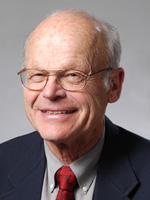
Richard S. Muller
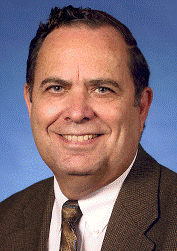
Professor in the Graduate School Professor Emeritus Electrical Engineering and Computer Sciences Department Founding Director Berkeley Sensor & Actuator Center (BSAC) Editor-in-Chief: IEEE/ASME Journal of Microelectromechanical Systems Internet: muller at eecs dot berkeley dot edu Phone: (510) 642-0614 FAX: (510) 643-6637 Address: University of California, Berkeley EECS Department 401 Cory Hall #1770 Berkeley, CA 94720-1770 Grant Administrator: Tom Parsons (510) 643-6690 tparsons at eecs dot berkeley dot edu Sometimes confused with Richard A. Muller of UCB Physics Department and LBNL. BIOGRAPHY Richard S. Muller received the degree of Mechanical Engineer (with highest honor) from Stevens Institute of Technology, Hoboken, New Jersey in 1955. Supported by Howard Hughes and NSF Fellowships, he earned an MS degree in Electrical Engineering in 1957, and a doctorate in Electrical Engineering and Physics in 1962 at the California Institute of Technology, Pasadena, California. From 1955 to 1962 he was a member of the technical staff at the Hughes Aircraft Company, Culver City, California, and from 1957 to 1960, a lecturer at the University of Southern California in Los Angeles. He was also a lecturer at Caltech during 1961-62. In July, 1962 Dr. Muller joined the Electrical Engineering faculty at the University of California, Berkeley. His initial research and teaching on the physics of integrated-circuit devices led to collaboration with Dr. Theodore I. Kamins of Hewlett-Packard Laboratories in writing Device Electronics for Integrated Circuits, first published by John Wiley & Sons in 1977, with a 2nd edition in 1986, and a 3rd edition appearing in 2002. This textbook has been translated into Spanish, Italian, Russian, and both orthodox and simplified Chinese. Dr. Muller changed his research focus in the late 1970s to the general area now known as microelectromechanical systems (MEMS), and he joined in 1986 with colleague Professor Richard M. White to found the Berkeley Sensor & Actuator Center (BSAC), an NSF/Industry/University Cooperative Research Center. Professor Muller has been awarded: NATO and Fulbright Research Fellowships; an Alexander von Humboldt Senior-Scientist Award; the UC Berkeley Citation (1994); Stevens Institute of Technology Renaissance Award (1995); the Transducers Research Conference Career Achievement Award (1997), the IEEE Cledo Brunetti Award (with Roger T. Howe, 1998) and an IEEE Millennium Medal (2000). He is a member of the National Academy of Engineering, a Life Fellow of the IEEE, and has served as an IEEE Distinguished Lecturer. In 1990, he proposed to IEEE and ASME the creation of a MEMS technical journal, which began publication in 1991 as the IEEE/ASME Journal of Microelectromechanical Systems (IEEE/ASME JMEMS). Professor Muller has served as the JMEMS Editor-in-Chief since 1998. He is also a Trustee of the Stevens Institute of Technology, a past member of the NRC National Materials Advisory Board, a Trustee (and Secretary) of the Transducer Research Foundation, and a member of the Technical Advisory Board for several companies doing business in MEMS. Dr. Muller is presently the review Chairman for Microsystem Technologies for the Helmholtz Association(an agency reporting to the government of Germany); in 2003, he served on a similar review committee for the Government of Finland. Professor Muller is the author or co-author of more than 300 research papers and technical presentations and of 19 issued patents. 这位泰斗基本上搞MEMS的人都知道,MEMS领域顶级杂志 J Micromech. Syst. 主编,基本上不用怎么介绍了。 ----------------------------------- Stephen Senturia c/o Sharlene Blake MIT, Room 39-567 Cambridge, MA 02139 Phone: 617 253-4657 E-mail: sblake@mtl.mit.edu Stephen D. Senturia joined the Department of Electrical Engineering and Computer Science immediately after completing his education (Harvard, B.A. in Physics, summa cum laude, 1961, and MIT, Ph.D. in Physics, 1966), initially as Research Scientist, then as Assistant Professor in 1967, with subsequent promotions up the ranks. From 1992 to 2002, he held the Barton L. Weller Chair in Electrical Engineering. He has been involved in microsensor and MEMS research since the early 1970’s. For a number of years, his research focused on developing material-property measurement methods () and CAD tools for MEMS. The work on MEMCAD led to the spin-out from his group of the two companies that lead this commercial field: IntelliSense, and Coventor. He serves as Senior Editor of the ASME/IEEE Journal of Microelectromechanical Systems, and he has been active in the leadership of the IEEE International Conference on Solid-State Sensors and Actuators, serving as Technical Program Chair in 1997 and as Local Arrangements Chair for the 2003 meeting in Boston. In 2000, he published Microsystem Design, a graduate textbook in MEMS modeling and design. Most recently, he has been part of the team developing the Polychromator. After officially retiring from MIT in June, 2002, Dr. Senturia now has part-time duties at MIT and serves as Chairman and Chief Technology Officer of Polychromix, Inc., Woburn, MA, a company he founded to adapt the Polychromator technology for commercial use. Honor and professional societies include the IEEE (Fellow), Phi Beta Kappa, and Sigma Xi. In addition to serving on several academic and industrial Advisory Boards, Dr. Senturia is Treasurer and Board Member of Collage New Music, a professional contemporary chamber。 MEMS领域的红宝书看过吧,Microsystem design的作者,微系统设计。 ----------------------------------- Masayoshi Esashi Birthday: 30 Jan. 1949 Hometown: Sendai City, Miyagi Prefecture Field of interest: Sensors and micromachines by micromachining (Inertia measurement systems) Hobby: Exhibition and musium Dislikes: Taking advantage of someone's weakness E-mail: esashi@cc.mech.tohoku.ac.jp Born in Sendai, Japan, in 1949, Masayoshi Esashi received his B.E. degree in electronic engineering in 1971 and a Doctor of Engineering degree in 1976 at Tohoku University. From 1976 to 1981, he served as a research associate from 1976 and an associateprofessor from 1981 at the Department of Electronic Engineering, Tohoku University.Since 1990 he has been a professor. Currently, he is the director of Micro/nanomachining research and education center in Tohoku University. He was a director of the Venture Business Laboratory in Tohoku University (1995-1998). He is an associate director of the Semiconductor Research Institute. He was a President of Sensor-Micromachine Society in Institute of Electrical Engineers in Japan (2002-2003). He has been a collaboration coordinator for Sendai city since 2004. He served as a general co-chairman of the 4th IEEE Micro Electro Mechanical Workshop in 1991 held in Nara, Japan, as a general chairman of the 10th International Conference on Solid-State Sensors and Actuators (Transducers 99) in 1999 held in Sendai, Japan and Technical Program Chairman of IEEE Sensors 2006 being held in Daegu, Korea. He has also been studying microsensors and micromachined integrated systems (MEMS). 此君甚牛啊,上次听报告的时候,边上一个日本官员说,日本MEMS工业界对其极为推崇和信任,就因为伊萨西,呵呵,谐音:) ----------------------------------- dr. ir. Simon Middelhoek prof. dr. ir. Simon Middelhoek Electronic Instrumentation Laboratory Delft University of Technology Faculty of Electrical Engineering, Mathematics and Computer Science Department of Micro-electronics and Computer Engineering Mekelweg 4 2628 CD Delft the Netherlands Phone: +31 (0)15 278745 Fax: +31 (0)15 2785755 Simon Middelhoek is Professor em. of Electronic Instrumentation at the Electrical Engineering sub-faculty of Delft University of Technology. He was born in Rotterdam in 1931. In 1956 he received the M.Sc. degree in Physical Engineering from D.U.T. and in 1961 his Ph.D. (cum laude) in Mathematics and Physics from Amsterdam University. He worked at the IBM Zurich Research Laboratory, Switzerland, from 1956 to 1962, at the IBM Thomas J. Watson Research Center in Yorktown Heights N.Y. from 1962 to 1963, and again in Switzerland from 1963 to 1969. He was first engaged in thin magnetic film research and later developed the technology of a 12 GHz 1 micron-gate MESFET. In 1969 he moved back to The Netherlands to become Professor at the Electrical Engineering Department. In 1974 he initiated a scientific research programme on silicon sensors and microsystems. From 1977 to 1980 he was elected Dean of the Electrical Engineering Department. Prof. Middelhoek is an IEEE fellow since 1982. In 1984 he received the IEEE Centennial Medal and in 1985 the Calendar Medal of the British Institute of Measurement and Control. Since 1991 he is a member of the Dutch Royal Academy of Science and since 1996 a Foreign Associate of the USA National Academy of Engineering. In 1997 at the Transducer'97 he received a Career Achievement Award. In the same year he also received an honorary degree from the ETH at Zurich. He is founding editor (now retired) of Sensors and Actuators, an international journal devoted to research and development of solid-state transducers. He was editor of the Elsevier Handbook series of Sensors and Actuators. He co-authored several books of which "Silicon sensors" (Academic Press), which he wrote together with Dr. Sarah A. Audet, now at Medtronic, Inc. is the most popular. Prof. Middelhoek retired from his official and teaching duties per Oct. 1, 1996 but remains connected to the Faculty as guest. Moreover, he acts as a consultant for several international academic and industrial sensor activities. 说实话,对此君了解的并不多。 ----------------------------------- Albert P. Pisano
Chair, Department of Mechanical Engineering FANUC Professor of Mechanical Systems Director, Berkeley Sensor & Actuator Center 6143 Etcheverry Hall, Mailstop 1740 University of California at Berkeley Berkeley, CA 94720-1740 510-643-7013 The easiest way to reach me is by email: appisano@me.berkeley.edu Research Interests: Albert ("Al"  P. Pisano currently serves as Professor and Chair of the Department of Mechanical Engineering at the University of California at Berkeley, having been appointed to that position in July 2004. He joined the University of California in 1983. He was elected to the National Academy of Engineering in 2001. At UCB, Professor Pisano holds the FANUC Chair of Mechanical Systems in the Department of Mechanical Engineering, with a joint appointment to the Department of Electrical Engineering and Computer Science. Professor Pisano's research is all carried out in the BMAD (Berkeley MEMS Analysis and Design) Laboratory, which specializes in cutting edge research in micro electromechanical systems (MEMS). For specific information on projects, please visit the website www-bsac.eecs.berkeley.edu/groups/bmad. He has previously served as Director of the Electronics Research Laboratory, the largest organized research unit on the UC Berkeley campus (with over $73 million in research funds each year). He currently serves as a Director of the Berkeley Sensor & Actuator Center (BSAC). Professor Pisano received his B.S., M.S. and Ph.D. (1981) degrees from Columbia University in the City of New York in Mechanical Engineering. Prior to joining the faculty at UC Berkeley, he held research positions with Xerox Palo Alto Research Center, Singer Sewing Machines Corporate R&D Center, and General Motors Research Labs. From 1997-1999, he served as Program Manager for the MEMS program at the Defense Advanced Research Projects Agency (DARPA) in Arlington, VA, where he expanded the MEMS research portfolio to 83 contracts awarded nationwide with a total MEMS research expenditure in excess of $163 million distributed over 3 fiscal years. His research interests and activities at UC Berkeley include MEMS for a wide variety of applications, including RF components, power generation, drug delivery, strain sensors, biosensors and disk-drive actuators. Professor Pisano is the co-inventor listed on 20 patents in MEMS and has authored or co-authored more than 190 archival publications. Since 1983 he has graduated 33 Ph.D. and 64 MS students. He is a founder in five start-up companies in the area of transdermal drug delivery, transvascular drug delivery, sensorized catheters, MEMS manufacturing equipment and MEMS RF devices. P. Pisano currently serves as Professor and Chair of the Department of Mechanical Engineering at the University of California at Berkeley, having been appointed to that position in July 2004. He joined the University of California in 1983. He was elected to the National Academy of Engineering in 2001. At UCB, Professor Pisano holds the FANUC Chair of Mechanical Systems in the Department of Mechanical Engineering, with a joint appointment to the Department of Electrical Engineering and Computer Science. Professor Pisano's research is all carried out in the BMAD (Berkeley MEMS Analysis and Design) Laboratory, which specializes in cutting edge research in micro electromechanical systems (MEMS). For specific information on projects, please visit the website www-bsac.eecs.berkeley.edu/groups/bmad. He has previously served as Director of the Electronics Research Laboratory, the largest organized research unit on the UC Berkeley campus (with over $73 million in research funds each year). He currently serves as a Director of the Berkeley Sensor & Actuator Center (BSAC). Professor Pisano received his B.S., M.S. and Ph.D. (1981) degrees from Columbia University in the City of New York in Mechanical Engineering. Prior to joining the faculty at UC Berkeley, he held research positions with Xerox Palo Alto Research Center, Singer Sewing Machines Corporate R&D Center, and General Motors Research Labs. From 1997-1999, he served as Program Manager for the MEMS program at the Defense Advanced Research Projects Agency (DARPA) in Arlington, VA, where he expanded the MEMS research portfolio to 83 contracts awarded nationwide with a total MEMS research expenditure in excess of $163 million distributed over 3 fiscal years. His research interests and activities at UC Berkeley include MEMS for a wide variety of applications, including RF components, power generation, drug delivery, strain sensors, biosensors and disk-drive actuators. Professor Pisano is the co-inventor listed on 20 patents in MEMS and has authored or co-authored more than 190 archival publications. Since 1983 he has graduated 33 Ph.D. and 64 MS students. He is a founder in five start-up companies in the area of transdermal drug delivery, transvascular drug delivery, sensorized catheters, MEMS manufacturing equipment and MEMS RF devices. 还用说啥呢,Berkeley Sensor & Actuator Center的大boss! ----------------------------------- Kensall D. Wise
William Gould Dow Distinguished University Professor of Electrical Engineering and Computer Science J. Reid and Polly Anderson Professor of Manufacturing Technology Professor of Biomedical Engineering Professor of Atmospheric, Oceanic, and Space Sciences Education: Purdue University, BSEE (with highest distinction), 1963 Stanford University, MSEE, 1964 Stanford University, Ph.D. in Electrical Engineering, 1969 Academic Employment: Stanford University: Research Assistant, 1965-1969 Research Associate and Lecturer, 1969-1972 The University of Michigan: Assistant Professor, 1974-1978 Associate Professor, 1978-1982 Professor, 1982-2002 William Gould Dow Distinguished University Professor, 2002-present J. Reid and Polly Anderson Professor of Manufacturing Technology, 1993-present Director, Solid-State Electronics Laboratory, 1979-1987 Director, Lurie Nanofabrication Facility, 2007-present Director, Center for Integrated Sensors and Circuits, 1987-1998 Director, SRC Program in Automated Semiconductor Manufacturing, 1984-1998 Director, Center for Integrated MicroSystems, 1998-2000 Associate Dean for Research, College of Engineering, 1999-2000 Director, NSF ERC in Wireless Integrated MicroSystems, 2000-present Other Professional: Bell Telephone Laboratories: Member of Technical Staff, 1963-1965 (on leave 1965-1969) (Murray Hill, NJ) and 1972-1974 (Naperville, IL). Professional Activities: Organized and moderated a panel discussion on Biomedical Sensors and Associated Electronics, 1971 International Solid-State Circuits Conference; Vice-Chairman (1975-76) and Director (1976-77) of Division VI (Instrumentation, Engr. in Medicine and Biology), Southeastern Michigan Section of the IEEE; Member, Program Committee, International Electron Devices Meeting, 1977, 81-83; Member, Program Committee, International Solid-State Circuits Conference, 1978-1982, 1985-86, 2005-2007; Guest Editor, IEEE Journal of Solid-State Circuits, Special Issue on Semiconductor Memory and Logic, October 1979; Guest Editor, IEEE Transactions on Electron Devices, Special Issues on Solid-State Sensors, Actuators, and Interface Electronics, December 1979 and January 1982; Associate Editor for Solid-State Sensors, IEEE Transactions on Electron Devices, 1981-85; General Chairman, 1984 IEEE Solid-State Sensor Conference; Program Chairman, 1985 IEEE International Conference on Solid-State Sensors and Actuators; IEEE-EDS National Lecturer for 1986; Member, International Steering Committee for Solid-State Sensors, 1981-1999; Member, Program Committee, International Conference on Solid-State Sensors and Actuators, 1987, 1989, 1991, 1993, 1995; Member, Program Committee, Symposium on VLSI Technology, 1988, 1989; Chairman, SRC University Advisory Committee, 1989-1991; Program Secretary, International Solid-State Circuits Conference, 1990-1993; Member, University Subcommittee, National Advisory Committee on Semiconductors, 1990; Chairman, JTEC Study on Microelectromechanical Systems Developments in Japan, 1993; General Chairman, 1997 IEEE International Conference on Solid-State Sensors and Actuators (Transducers '97); Member, Technology Working Group on Metrology, SIA National Technology Roadmap for Semiconductors, 1996-1999; Senior Editor, IEEE Journal of Microelectromechanical Systems, 1998-2002, Senior Editor Emeritas, 2003-present; Guest Editor, Special Issue on Integrated Sensors, Microactuators, and Microsystems (MEMS), Proceedings of the IEEE, August 1998; Member, Editorial Board, Proceedings of the IEEE, 1999-2004; Member, NRC Study Group on Biotechnology for Army Applications, 2000; Member, NRC Study Group on Engineering the Health Care System, 2003-2005. Chair, Evening Special Topics Session on Implantable and Prosthetic Devices: Life-Changing Circuits" at the 2007 IEEE International Solid-State Circuits Conference; Co-Chair and organizer, NSF Workshop on Micro/Nanoelectronics: Devices and Technologies for Biomedical Applications, Leuven, Belgium, 2008. 密西根在MEMS领域搞的还是霍霍的,大Boss! ----------------------------------- 鲍敏杭
鲍敏杭教授长期从事大规模集成电路和微机械传感器技术研究。1985年负责研制了我国第一只双极型大规模集成电路2901。1979-1981在美国凯司西方储备大学任访问助理教授时,研制成国际上第一个集成电容压力传感器并申请了专利。回国后积极开展和推动我国微机械技术研究,是我国微机械传感器的开创人之一。1988年获国家人事部"有突出贡献中青年专家"称号。科研成果获国家科技进步三等奖1项,部委级科技进步二等奖6项,如"集成压阻式压力传感器"获1985年电子部电子科技进步二等奖、"LSTTL 电路工艺技术"获国家教委科技进步二等奖等;获国家专利10余项。发表EI和SCI检索的论文40篇,著有《集成传感器》等。鲍敏杭教授是英国物理学会会士,美国IEEE学会高级会员。1985-1993年任国际固态传感器和执行器会议(Transducers'XX)会议程序委员会委员。现任国际固态传感器和执行器会议 Steering Committee会委员(1995-2003),国际学术期刊《Sensors and Actuators》(1989起)和 J. Micromechanics and Microengineering(1997起)编委。 MEMS界鲜有不知道鲍敏杭教授的,在国外鲍老师也同样享有崇高的声望,鲍老师著的Handbook of sensors and acuators的第8卷,Micro Mechanical Transducers--Pressure, sensors, and accelerometers and gyroscopes.已经成为MEMS领域的经典著作。这本书在国外销量非常好,已经脱销,正准备再版。Prof. Stephen在Transducers 03上写的综述性文章"Perspecitves on MEMS,past and future: the tortuous pathway from bright ideas to real products",鲍老师的名字赫然在列,可见鲍老师在MEMS界的地位。MEMS里面JMM享有盛誉,鲍老师的Energy transfer model for squeeze-film air damping in low vacuum,J.Micromech. Microeng. 12 No 3 (May 2002) 341-346.是JMM下载次数最多的paper,被引用次数非常高。 鲍老师人真的没得说了!仙人一样,为人低调,与世无争,品格高尚,我找不到他的照片,只好用他的一本书来代替了,不像一些做学术的人,弄到一定程度就开始混了。崇拜他! [ Last edited by memser on 2009-3-18 at 12:29 ] |



 回复此楼
回复此楼» 收录本帖的淘帖专辑推荐
 微纳机械(机电系统&器件)加工-MEMS/NEMS 微纳机械(机电系统&器件)加工-MEMS/NEMS | MEMS与传统机械 | 资料 | 材料方向 电子资源集合 |
| 论文相关 |
» 猜你喜欢
 修改论文,如何借助其他力量?
已经有4人回复
修改论文,如何借助其他力量?
已经有4人回复
-
中山大学潘越教授课题组2027级推免硕士研究生招生 新增一个专业医学技术名额
已经有21人回复
-
金属材料论文润色/翻译怎么收费?
已经有178人回复
-
哈尔滨工程大学国家级青年人才-27年申请考核制博士招生(材料、化学、生物医学专业)
已经有12人回复
-
HRTEM/原位TEM/HRSTEM检测|价格优·周期短·可加急
已经有0人回复
-
大家平时也可以交流下
已经有1人回复
2楼2009-03-18 15:43:09

3楼2009-03-18 17:35:18
4楼2009-03-18 19:05:18
6楼2009-04-01 10:04:26
简单回复
2009-03-31 11:47
回复
