









| 查看: 2583 | 回复: 2 | ||
zhangyu164新虫 (正式写手)
|
[求助]
关于飞灰的XRD分析 已有1人参与
|

|
各位大神,求助!!!!!!审稿意见不会回答。。。。。。。。关于XRD的半定量分析垃圾焚烧飞灰中的非晶体含量及组成。 我文中有一段话是对城市生活垃圾焚烧飞灰XRD检测结果(如下图)的描述:“According to X-ray diffraction (XRD) analysis, the investigated fly ash sample had a highly complex mineralogy. As shown in Fig. 3, the main crystalline compounds were calcite (CaCO3), halite (NaCl) and sylvite (KCl). In addition, the presence of crystal structures, such as calcium chlorite hydroxide (CaClOH), silicon chloride (SiCl4), calcium chloride hydrate (Ca(ClO)2•4H2O), iron sulfide (FeS) and portlandite (Ca(OH)2) were also verified. According to the diffraction pattern obtained by XRD, the main components of this sample include calcium chloride hydroxide, halite, silver aluminum sulfide, silicon chloride, stannite and sylvite, which confirms the results of XRF.” 这是审稿人的意见:“Authors used XRD analysis for identification of the crystalline compounds of fly ash. Unfortunately, the analysis is only qualitative. The semi quantitative analysis could give better information about material composition. Moreover, it is well known that materials treated in high temperatures usually contain high amounts of amorphous phase. I would recommend to perform XRD analysis with some standard and to determine semi quantitative composition and content of amorphous phase, if possible.” 他说:我这个XRD分析只是 定性分析,半定量分析可以更好的体现材料的组成。 并且材料在高温下会有非晶体产生,所以审稿人认为,应该用某种标准来进行XRD的半定量分析飞灰中非晶体的组成和含量。 至今我看到的关于对飞灰的XRD结果的描述都是定性分析飞灰中的结晶相物质,还没有看到XRD半定量分析的,而且还是关于非晶体的。。。。。我看到有文章中提到说,XRD衍射图谱上呈现出较多小的、波纹状的峰,说明飞灰中含有大量的非晶态的玻璃类物质,大多数情况下,飞灰中的重金属富集在非结晶相中,在晶体相中分布很少。 这个XRD的半定量分析飞灰中的非晶体,该怎么弄?或者 我可以用一个很好的理由去反驳这个审稿人的意见????????  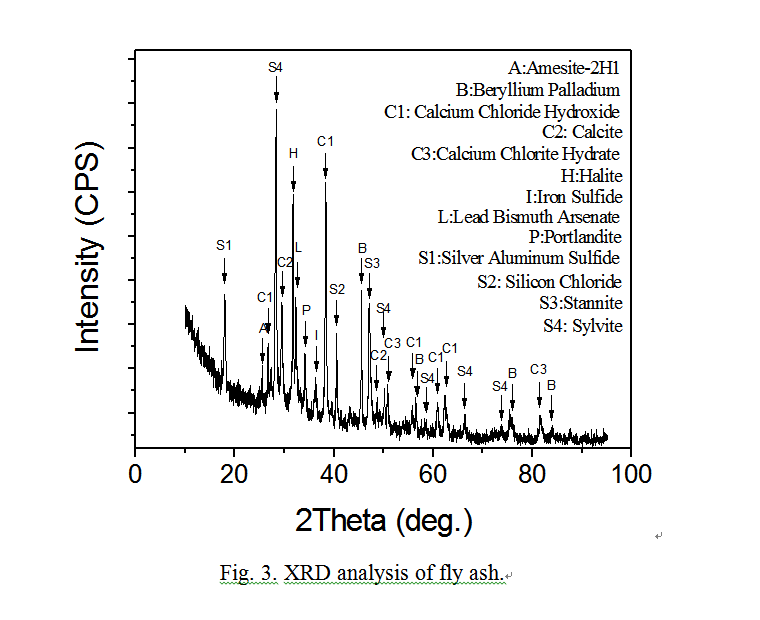 1491786327(1).jpg |
 回复此楼
回复此楼» 猜你喜欢
 售SCI一区T0P文章,我:8.O.55.1.O.5.4,科目全,可+急
已经有9人回复
售SCI一区T0P文章,我:8.O.55.1.O.5.4,科目全,可+急
已经有9人回复
-
售SCI一区T0P文章,我:8O.55.1.O.5.4,科目齐全,可+急
已经有7人回复
-
售SCI一区文章,我:8O5.5.1.O5.4,科目全,可伽急
已经有8人回复
-
售一区SCI文章T0P,我:8O.551.O54,科目全,可十急
已经有8人回复
-
售SCI一区T0P文章,我:8.O55.1.O.54,科目全,可十急
已经有7人回复
-
售SCI一区T0P文章,我:8.O55.1.O.54,科目全,可十急
已经有7人回复
-
售SCI一区T0P文章,我:8O.55.1.O.5.4,科目齐全,可+急
已经有7人回复
-
售SCI文章,我:8O5.5.1.O.54,科目齐全,可+急
已经有8人回复
-
售SCI文章,我:8O.5.5.1O.54,科目全,可十急
已经有7人回复
-
售SCI-T0P文章,我:8O.5.5.1.O.54,科目齐全,可+急
已经有7人回复
» 本主题相关商家推荐: (我也要在这里推广)


2楼2017-06-29 14:21:04
starrywang
新虫 (正式写手)
- 应助: 2 (幼儿园)
- 金币: 1854.7
- 散金: 3235
- 红花: 6
- 帖子: 895
- 在线: 223.5小时
- 虫号: 1504446
- 注册: 2011-11-22
- 性别: GG
- 专业: 工程热物理相关交叉领域
3楼2020-04-03 23:12:06