








| 查看: 1671 | 回复: 2 | |||
| 当前只显示满足指定条件的回帖,点击这里查看本话题的所有回帖 | |||
[交流]
细胞STR鉴定 ——及时发现您的细胞是否被交叉污染或错误辨识
|
|||

看到Science杂志2014年12月发表了一篇题为“Cell Biology. Fixing problems with cell lines”的专题文章阐述细胞交叉污染和错误辨识,2个月后Science一篇题为“Line of attack”文章浓墨重彩描述在学术界中培养的细胞发生交叉污染或被错误辨识的严重性,其实关于细胞污染问题不少机构、学者一直呼吁各个实验室及相关机构重视。同时也看到不少人在网上咨询细胞STR鉴定,因此今天特将本人整理的资料和大家分享。 言归正传,据统计约30%细胞系被交叉污染或错误辨识[1-6],因使用了交叉污染或错误辨识的细胞而导致研究结论错误、结果不可重复、临床细胞治疗灾难性后果……,这浪费大量时间、精力和金钱。因此NIH、ATCC、Nature和Science等近年对此多次发出呼吁,要求研究者对细胞进行鉴定[4, 5, 7, 8]。STR(ShortTandem Repeat,短串联重复序列)基因分型已被ICLAC、ATCC等权威机构作为金标准应用于细胞鉴定[9-11],目前越来越多的杂志要求在投稿时提供细胞STR分型图谱。 STR基因位点由长度为3~7个碱基对的短串连重复序列组成[12],这些重复序列广泛存在于人类基因组中,可作为高度多态性标记,并可通过pcr(聚合酶链式反应)来检测。STR 基因座位上的等位基因可通过扩增区域内重复序列的拷贝数的不同来区分,在毛细管电泳分离之后可通过荧光检测来识别。随后通过一定的计算方法[9, 13],即可根据所得的STR分型结果与专业的细胞STR数据库比对从而推算出样品所属的细胞系或可能的交叉污染的细胞系名称。 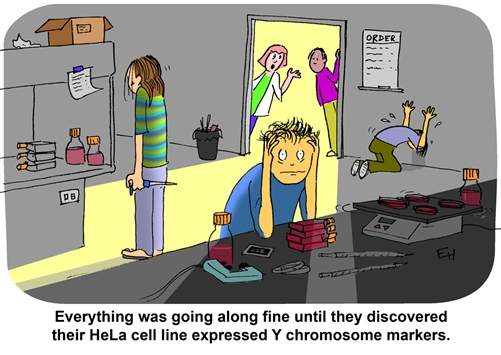 已开始要求细胞STR鉴定的期刊: Nature; BioTechniques; CancerResearch; CancerDiscovery; Clinical Cancer Research; MolecularCancer Research; CancerPrevention Research; InternationalJournal of Cancer; MolecularCancer Therapeutics; CellBiochemistry and Biophysics; CancerEpidemiology, Biomarkers & Prevention; In VitroCellular & Developmental Biology – Animal; ......  细胞STR鉴定优势: 1. 多基因检测、高灵敏度:现在可同时检测21个STR基因座+1个性别识别位点,仅需3ng DNA即可判断细胞类型及可能的细胞交叉污染; 2. 专业的数据库对比: ATCC的数据库包含600多条人细胞系的STR数据, RIKEN有不到600条STR数据,国内广东有家公司号称自建了一个STR数据库,包含约8000种细胞的数据; 3. 速度快:一般一天可以做上百个样品。 在此集中答复一下大家常见的问题: 1、我可以自己在实验室做细胞STR鉴定吗? 答:可以,如果自己有测序仪,然后去Promega或者Life买一个试剂盒就可以摸索着自己去做了。不过一般不建议自己做,因为仪器和试剂价格不菲,如果自己要鉴定的细胞不多的话,犯不着自己去折腾。 2、哪里可做细胞STR鉴定? 答:国外像ATCC、Promega都可以做,国内目前也有公司开始在专门做。 3、做STR的费用高吗? 答:国内的服务费大概是1000元/样品。 参考文献 1. Reid, Y.A., Characterization and authentication of cancer cell lines: an overview.Methods Mol Biol, 2011. 731: p. 35-43. 2. Capes-Davis, A., etal., Check your cultures! A list ofcross-contaminated or misidentified cell lines. Int J Cancer, 2010. 127(1):p. 1-8. 3. Chatterjee, R., Cell biology. Cases of mistaken identity.Science, 2007. 315(5814): p. 928-31. 4. Lorsch, J.R., F.S.Collins, and J. Lippincott-Schwartz, CellBiology. Fixing problems with cell lines. Science, 2014. 346(6216):p. 1452-3. 5. Neimark, J., Line of attack. Science, 2015. 347(6225):p. 938-40. 6. Zhao, M., et al., Assembly and initial characterization of apanel of 85 genomically validated cell lines from diverse head and neck tumorsites. Clin Cancer Res, 2011. 17(23): p. 7248-64. 7. Masters, J.R., Cell-line authentication: End the scandal offalse cell lines. Nature, 2012. 492(7428): p. 186. 8. McLaren, R.S., Y.Reid, and D.R. Storts, Human cell lineauthentication: the critical first step in any project using human cell lines.Methods Mol Biol, 2013. 963: p. 341-53. 9. Masters, J.R., etal., Short tandem repeat profilingprovides an international reference standard for human cell lines. Proc Natl Acad Sci U S A, 2001. 98(14): p. 8012-7. 10. American Type CultureCollection Standards Development Organization Workgroup, A.S.N., Cell line misidentification: the beginningof the end. Nat Rev Cancer,2010. 10(6): p. 441-8. 11. American Type CultureCollection Standards Development Organization Workgroup, A.S.N., Authentication of Human Cell Lines:Standardization of STR Profiling. 2011, ANSI/ATCC ASN-0002-2011. 12. Edwards, A., et al., DNA typing and genetic mapping with trimericand tetrameric tandem repeats. Am JHum Genet, 1991. 49(4): p.746-56. 13. Sorensen, T., A Method of Establishing Groups of EqualAmplitude in Plant Sociology Based on Similarity of Species Content and ItsApplication to Analyses of the Vegetation on Danish commons. Biol Skr, 1948. 5: p. 1-34. |
 回复此楼
回复此楼» 猜你喜欢
 售SCI一区T0P文章,我:8.O55.1.O.54,科目全,可十急
已经有5人回复
售SCI一区T0P文章,我:8.O55.1.O.54,科目全,可十急
已经有5人回复
-
售SCI文章,我:8O5.5.1.O.54,科目齐全,可+急
已经有6人回复
-
售SCI一区文章,我:8O5.5.1.O5.4,科目全,可伽急
已经有7人回复
-
浙江师范大学是怎么坑我的
已经有7人回复
-
售SCI一区T0P文章,我:8.O.55.1.O.5.4,科目全,可+急
已经有5人回复
-
售SCI文章,我:8O5.5.1.O.54,科目齐全,可+急
已经有7人回复
-
售SCI一区T0P文章,我:8.O.55.1.O.5.4,科目全,可+急
已经有6人回复
-
售SCI一区T0P文章,我:8O.55.1.O.54,科目全,可伽急
已经有8人回复
-
上海工程技术大学激光智能制造课题组|2027级博士研究生招生公告
已经有8人回复
-
上海工程技术大学激光智能制造课题组招收博士研究生
已经有8人回复
» 本主题相关商家推荐: (我也要在这里推广)

» 本主题相关价值贴推荐,对您同样有帮助:
- 细胞污染了,请大家帮忙鉴定下是什么污染,如何处理
已经有6人回复
- DNA LADDER 检测细胞凋亡
已经有5人回复
- 【求助】【急】请问有谁做过细胞核STR分型检测和线粒体DNA测序?急求详细方法!
已经有15人回复
- Ebook__《微载体细胞培养原理和方法》__GE手册
已经有6人回复

3楼2015-08-03 10:06:33
2楼2015-04-25 11:55:29


 10
10