












| 查看: 1822 | 回复: 28 | |||||
| 【奖励】 本帖被评价25次,作者nowitzki_ci增加金币 19.8 个 | |||||
| 当前只显示满足指定条件的回帖,点击这里查看本话题的所有回帖 | |||||
nowitzki_ci专家顾问 (著名写手)
|
[资源]
Acc. Chem. Res. 最新综述:水溶液中的刺激响应性超分子聚合物——田禾院士出品
|
||||


|
Stimuli-Responsive Supramolecular Polymers in Aqueous Solution Xiang Ma and He Tian* Key Laboratory for Advanced Materials and Institute of Fine Chemicals, East China University of Science & Technology, Shanghai 200237, P. R. China CONSPECTUS Aiming to construct various novel supramolecular polymeric structures in aqueous solution beyond small supramolecular self-assembly molecules and develop functional supramolecular polymeric materials, research interest on functional supramolecular polymers has been prevailing in recent years. Supramolecular polymers are formed by bridging monomers or components together via highly directional noncovalent interactions such as hydrogen bonding, hydrophobic interaction, π−π interaction, metal − ligand coordination, electrostatic interaction, and so forth. They can be easily functionalized by employing diverse building components with speci fi c functions besides the traditional polymeric properties, a number of which are responsive to such external stimuli as pH variance, photoirradiation, chemically or electrochemically redox with the controllable conformation or construction switching, polymerization building and rebuilding, and function adjustment reversibly owing to the reversibility of noncovalent interactions. Supramolecular polymers are “ soft matters ” and can be functionalized with speci fic properties such as morphology adjustment, controllable luminescence, shape memory, self-healing, and so forth. Supramolecular polymers constructed based on macrocycle recognition and interlocked structures represent one typical branch of the supramolecular polymer family. Cyclodextrin (CD), cucurbituril (CB), and hydrophilic calixarene derivatives are usually employed to construct hydrophilic supramolecular polymers in aqueous solution. Stimuli-responsive hydrophilic supramolecular polymers, constructed in aqueous solution particularly, can be promising candidates for mimicking biocompatible or vital functional materials. This Account mainly focuses on the recent stimuli-responsive supramolecular polymers based on the host − guest interaction in aqueous solution. We describe the hydrophilic supramolecular polymers constructed via hydrophobic e ff ects, electrostatic interaction, metal − ligand coordination, and multiple combinations of the above noncovalent interactions. The disparate ways to engender stimuli-responsive supramolecular polymers via the hydrophobic e ff ects of α -CD, β -CD, and γ -CD macrocycles are illustrated and discussed. Some recent works on CD-based photoresponsive functional supramolecular polymers are summarized. CB (especially CB[8]) based supramolecular polymers and their pH-responsive and photoresponsive properties are introduced. Hydrophilic calixarene derivative (bis(p-sulfonatocalix[4]arene) typically) based supramolecular polymers via electrostatic interactions are reviewed, and their redox-responsive association/disassociation elaborated in detail. More complicate supramolecular polymers based on multiple noncovalent interactions are illustrated including hydrophobic e ff ect, metal − ligand coordination, and electrostatic interactions and their functional stimuli-responsiveness elaborated as well. Finally, we give perspectives on the strength of these diverse noncovalent interactions to form supramolecular polymers in aqueous solution, on the advantage, disadvantage, e ffi ciency, and reversibility of using certain stimuli in constructing supramolecular polymers and prospect the future function improvement of these polymers as functional materials. Biography Xiang Ma was born in China in 1980. He obtained his B.S. degree from Tianjin University in 2003 and Ph.D. in applied chemistry in 2008 from East China University of Science and Technology (ECUST) under the supervision of Prof. He Tian. From January 2011 to July 2012, he worked as a research associate in Liquid Crystal Institute, Kent State University. He is now an associate professor at ECUST, and his current research interests focus on controllable functional supramolecular machines and polymers. Biography He Tian was born in China in 1962. In 1999, he was appointed Cheung Kong Distinguished Professor by the Education Ministry of China. In 2011, he was selected as a member of the Chinese Academy of Science. In 2013, he became a Fellow of the TWAS—the World Academy of Science—for the advancement of science in developing countries. His current research interests include the supramolecular machines and switches, the synthesis of novel functional organic dyes, and the development of interdisciplinary materials science that determines the electronic and optical properties of materials. 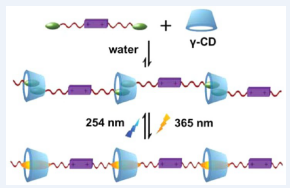 |
 回复此楼
回复此楼» 本帖附件资源列表
-
欢迎监督和反馈:小木虫仅提供交流平台,不对该内容负责。
本内容由用户自主发布,如果其内容涉及到知识产权问题,其责任在于用户本人,如对版权有异议,请联系邮箱:xiaomuchong@tal.com - 附件 1 : ar500033n.pdf
2014-03-27 17:39:59, 1.56 M
» 收录本帖的淘帖专辑推荐
 超分子化学 超分子化学 |
» 猜你喜欢
 金属材料论文润色/翻译怎么收费?
已经有125人回复
金属材料论文润色/翻译怎么收费?
已经有125人回复

» 本主题相关商家推荐: (我也要在这里推广)

» 本主题相关价值贴推荐,对您同样有帮助:
 Acc. Chem. Res. 热点综述:基于石墨烯的有机合成
已经有35人回复
Acc. Chem. Res. 热点综述:基于石墨烯的有机合成
已经有35人回复- 江雷院士Acc. Chem. Res.最新综述:具有优越力学性能的Bioinspired Layered Materials
已经有46人回复
- Acc. Chem. Res.最新综述:Switchable Host−Guest Systems on Surfaces
已经有17人回复
- Acc. Chem. Res.最新综述Functional Polymeric Microparticles Engineered
已经有10人回复
- Acc. Chem. Res综述-“Homeopathic”纳米Pd用于碳碳偶联反应+纳米金综述2篇
已经有29人回复
- 厦门大学Acc. Chem. Res.最新综述:具有高能晶面的金属氧化物微纳晶体及其应用
已经有322人回复
- Acc. Chem. Res.2013 唐本忠院士最新发表有关AIE(聚集诱导荧光)的综述
已经有216人回复
- Acc Chem Res 最新综述 : 石墨烯发展的安全顾虑 - 碳纳米管的教训
已经有249人回复
- Acc. Chem. Res.最新综述:具有介孔-大孔多级纳米结构的碳材料---设计、表征及应用
已经有465人回复
- John B. Goodenough在Acc. Chem. Res.上的最新综述-现代可充电电池的策略演化
已经有440人回复
- 超级电容器大牛Y. Gogotsi在Acc. Chem. Res.的最新综述-纳米碳材料的电容能量存储
已经有1039人回复
- 张希院士在Acc. Chem. Res.上刚出的好综述:超两亲自组装
已经有604人回复
- ACS权威综述杂志Acc. Chem. Res.:对锂离子在锂插层化合物中扩散的理解
已经有536人回复
简单回复
2014-03-29 10:31
回复
顶一下 [ 发自手机版 http://muchong.com/3g ]
2014-04-02 21:21
回复
顶一下 [ 发自手机版 http://muchong.com/3g ]