











| 查看: 9836 | 回复: 222 | ||||
| 当前只显示满足指定条件的回帖,点击这里查看本话题的所有回帖 | ||||
xiejf专家顾问 (文学泰斗)
|
[资源]
Chem. Rev.最新综述:金属硼化物/磷化物纳米结构的最新研究进展和展望
|
|||


|
最新一期的顶级综述杂志Chemical Reviews刊发了题为Nanoscaled Metal Borides and Phosphides: Recent Developments and Perspectives的的大综述,非常详细的介绍了纳米金属硼化物以及磷化物这个领域的最新研究进展以及对未来研究方向的展望。全文85页,引文1184篇。 1. Introduction 2. Introductory Background 2.1. Nomenclature 2.2. Instructive Genesis of Metal Phosphides and Metal Borides 2.2.1. Metal Borides: A Challenging Topic in Materials Synthesis 2.2.2. Metal Phosphides: Materials from the New Era of Chemistry 2.3. Metal Boride and Metal Phosphide Crystallographic Structures 2.3.1. Metal Boride Crystallographic Structures 2.3.2. Metal Phosphide Crystallographic Structures 2.4. Quest for Original Structures: Latest Developments 2.4.1. New Developments for Bulk Metal Borides 2.4.2. New Developments for Bulk Metal Phosphides 2.4.3. Contribution of Calculations: Thermodynamics, New Phases, and Properties 2.5. Bonding and Electronic Structure in Metal Borides and Phosphides 2.5.1. Case in Point: Cobalt Monoboride and Monophosphide 2.5.2. Metal–Metal and Metalloid–Metalloid Bonds 2.5.3. Metal–Metalloid Bonds: From Covalency to Ionicity 2.5.4. Electrical Behavior of Bulk MBs and MPs 2.6. From Bulk to Nanoscale MPs and MBs: Characterization Tools 2.6.1. Chemical Analysis 2.6.2. X-ray and Neutron Diffraction 2.6.3. Electron Microscopy 2.6.4. X-ray Photoelectron Spectroscopy (XPS), Auger Electron Spectroscopy (AES), and X-ray Absorption Spectroscopy (XANES, EXAFS) 2.6.5. Electron Energy Loss Spectroscopy (EELS) 2.6.6. Nuclear Magnetic Resonance (NMR) Spectroscopy and ab Initio Calculations 3. Nanoscaled Metal Borides 3.1. Variety of Boron Precursors 3.1.1. Metal–Boron Alloys and Metal Borides 3.1.2. Elemental Boron 3.1.3. Boranes 3.1.4. Borohydrides 3.1.5. Boron Halogenides 3.1.6. Boron–Oxygen Species (Boron Oxide and Boric Acid) 3.1.7. Molecular Single Source 3.2. Deposition from a Reactive Vapor Phase 3.2.1. General Considerations on the Thermal Decomposition of Boranes 3.2.2. Boriding Metal Films 3.2.3. Non-Nanostructured Thin Films 3.2.4. CVD for Growth of 1D Nanostructures 3.2.5. CVD, PLD, and HPCVD for MgB2 Nanostructures 3.2.6. Alternative Processes toward Other Nanostructured Films 3.3. Solid State Syntheses 3.3.1. Reduction of Nanostructured Metal Oxides 3.3.2. Solid State Reactions under Autogenic Pressure 3.3.3. Mechanosynthesis 3.4. Preceramic Routes 3.4.1. Carboreduction in Physical Mixtures of Metal Oxide, Boron Oxide or Boric Acid, and Carbon 3.4.2. Carboreduction in Mixtures of Metal Oxides and B-Containing Polymers 3.4.3. Carboreduction in Metal and Boron Hybrid Oxo-Gels 3.5. Liquid Phase Syntheses in High Temperature (>1000 °C) Flux 3.6. Liquid Phase Syntheses under Autogenous Pressure 3.6.1. Salt Melts under Autogenous Pressure 3.6.2. Organic Solvents under Autogenous Pressure 3.6.3. Liquid Reactants under Autogenous Pressure 3.7. Low Temperature and Atmospheric Pressure Colloidal Syntheses of Crystalline Metal Boride Nanostructures 3.7.1. Salt Melts under Atmospheric Pressure 3.7.2. Organic Solvents under Atmospheric Pressure 3.8. Low Temperature Colloidal Syntheses of Amorphous Metal Borides 3.8.1. Synthesis of Amorphous Metal Boride Nanoparticles in Water 3.8.2. Synthesis of Amorphous Metal Boride Nanoparticles in Organic Solvents 3.8.3. Nature of the Amorphous Boride Nanoparticles 3.8.4. Tuned Nanostructures of Amorphous Metal Boride Alloys 3.8.5. Borane Adducts: Beyond Borohydrides for the Production of Nanostructures of Amorphous Metal Borides 3.8.6. Supported Systems 3.9. Summary for Nanoscaled Metal Borides 4. Nanoscaled Metal Phosphides 4.1. From Bulk to Nanoscaled Metal Phosphides 4.2. Short Historic Introduction: Why MP Nanoparticles? 4.2.1. Beyond III–V Semiconductors 4.2.2. Quantum Effects in III–V Semiconductors: Toward Nanoscaled Metal Phosphides 4.3. Colloidal Syntheses from Single-Source Precursors 4.4. Substitutes for PH3 as Safer “P” Donors 4.4.1. In Situ and ex Situ PH3 Generation 4.4.2. P(SiMe3)3 as a Highly Reactive Alternative to PH3 4.5. Tri-n-octylphoshine (TOP): A Versatile “P” Source 4.5.1. Reaction of TOP with M(0) Precursors 4.5.2. Widening the Scope of the Reactivity of TOP 4.5.3. Knowledge or Know-How? 4.5.4. Recent Mechanistic Studies 4.6. Alternative to TOP: Other Alkyl- and Arylphosphines 4.7. Elemental Phosphorus 4.7.1. White Phosphorus P4 4.7.2. Red Phosphorus 4.8. Alternative Phosphorus Sources 4.9. Alternative Processes 4.10. Summary for Nanoscaled Metal Phosphides 5. Properties of Nanoscaled Metal Borides and Metal Phosphides 5.1. Li-Ion Batteries 5.1.1. Overview 5.1.2. Major Advances in the Field: The Case of Metal Phosphides 5.1.3. Nanostructuration of the Electrodes 5.2. Alkaline Aqueous Batteries 5.2.1. Primary Alkaline Batteries 5.2.2. Secondary Alkaline Batteries 5.3. Catalysis 5.3.1. Hydrogenation: A Driving Force toward Metal Boride and Metal Phosphide Nanoparticles 5.3.2. Hydrotreating Reactions 5.3.3. Hydrogen Generation 5.3.4. Other Dissociative Reactions 5.3.5. Associative Reactions 5.4. Electrochemical and Photoelectrochemical Devices 5.5. Initiation of Nanotubes and Nanowires Growth 5.6. Electronics 5.7. Optics 5.8. Magnetism 5.9. Mechanical Properties 5.10. Biology, Medicine, Toxicology, and Environmental Applications 5.11. Metal Phosphides and Metal Borides as Fortuitous Compounds and Other Less Defined Compounds 6. Conclusive Perspectives 6.1. Toward New Compositions and Crystal Structures 6.1.1. Amorphous State versus Crystalline State 6.1.2. Control of the Stoichiometry 6.1.3. Control of Polymorphism 6.2. P and B Sources: An Essential Struggle 6.2.1. Oxidation Degree of the Phosphorus Source 6.2.2. Oxidation Degree and Reactivity of the Boron Source 6.3. Toward Advanced Morphologies and Complex Nanostructures 6.3.1. Reactivity of the P Source for the Preparation of Advanced Morphologies 6.3.2. Toward Complex Structures: Janus Nanoparticles as an Example of the Power of Colloidal Synthesis 6.3.3. Homogeneous versus Heterogeneous Nucleation: A “Trick” To Overcome Boron Lack of Reactivity 6.4. Surface State, Surface Oxidation, and Other Surface Passivation 6.5. Mechanistic Studies and Trails for the Design of New Synthetic Routes 6.5. Novel Properties and Fields of Applied Research: The Potential Fate of Nanostructured MBs and MPs as Nanomaterials / 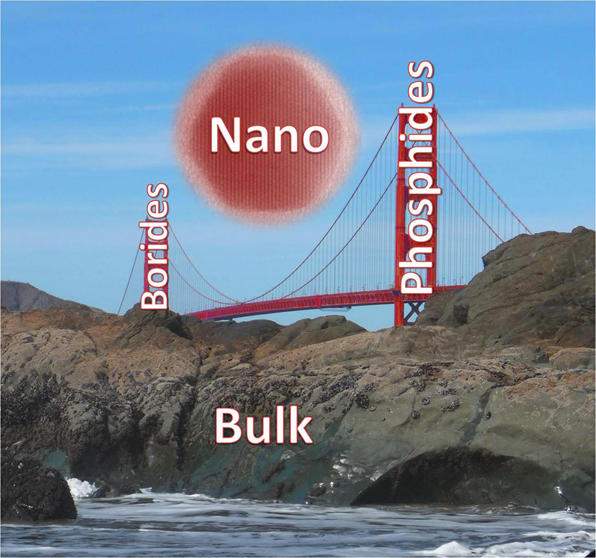 master.img-000.jpg [ 来自小组 材料家族 ] |
 回复此楼
回复此楼» 本帖附件资源列表
-
欢迎监督和反馈:小木虫仅提供交流平台,不对该内容负责。
本内容由用户自主发布,如果其内容涉及到知识产权问题,其责任在于用户本人,如对版权有异议,请联系邮箱:xiaomuchong@tal.com - 附件 1 : cr400020d.pdf
2013-06-18 13:59:29, 4.44 M
» 本帖已获得的红花(最新10朵)
 clzkzy
» 猜你喜欢
 北方工业大学储能技术-02电化学储能与氢能方向招收2026级二次调剂学生
已经有0人回复
北方工业大学储能技术-02电化学储能与氢能方向招收2026级二次调剂学生
已经有0人回复
-
求助WO3.cif文件 对应PDF卡片 43-1035,单斜晶系 , P21/n 。
已经有2人回复
-
无机化学论文润色/翻译怎么收费?
已经有247人回复
-
稀土发光分析|核壳结构|寿命拟合
已经有13人回复
-
稀土发光分析|核壳结构|寿命拟合
已经有6人回复
-
稀土发光分析|核壳结构|寿命拟合
已经有0人回复
-
稀土发光分析|核壳结构|寿命拟合
已经有0人回复
-
26 届青岛大学纺织化学与染整工程硕士(液体纳米分散染料方向)求申博建议
已经有4人回复
-
26 届青岛大学纺织化学与染整工程(液体纳米分散染料)求浙理工纺织 / 材料博导名额
已经有1人回复
-
敢问Acta Pharmaceutica Sinica B with Editor 三周了,能是什么情况?
已经有0人回复
» 本主题相关商家推荐: (我也要在这里推广)


178楼2014-09-02 20:10:56
简单回复
abraca2楼
2013-06-18 14:05
回复
五星好评 顶一下,感谢分享!
2013-06-18 14:12
回复
五星好评 顶一下,感谢分享!
牛虻吹泡泡4楼
2013-06-18 14:34
回复
五星好评 顶一下,感谢分享!
liuyueyu7楼
2013-06-18 15:17
回复
五星好评 顶一下,感谢分享!
lwg38楼
2013-06-18 15:25
回复
五星好评 顶一下,感谢分享!
rafale11楼
2013-06-18 15:56
回复
五星好评 顶一下,感谢分享!
rafale12楼
2013-06-18 15:57
回复
顶一下,感谢分享!
正杰大帝13楼
2013-06-18 16:57
回复
五星好评 顶一下,感谢分享!
qason1114楼
2013-06-18 17:12
回复
五星好评 顶一下,感谢分享!