









| 查看: 2129 | 回复: 5 | |||
[求助]
Vensim求助
|

|
请问各位老师,这个公式可以表示城市需水量 =人口乘以一个表函数吗? 城市需水量 = WITH LOOKUP (城市人口, ([(2000,0)-(2020,80)],(2000,65.7),(2010,71.54),(2020,78.84) )) Units: billion cubic meters 如果把图和公式改成如下:, (1) 人口= 100 Units: million person (2) 人均生活用水定额表( [[(2000,0)-(2020,80)],(2000,65.7),(2010,71.54),(2020,78.84) )) Units: billion cubic meters (3) 人均需水定额= 人均生活用水定额表(Time) Units: cubic meters per person (4) 生活需水量= 人口*人均需水定额 Units: billion cubic meters 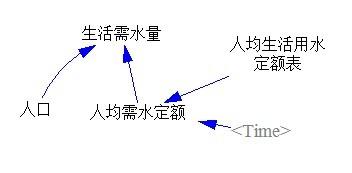 未命名.jpg |
 回复此楼
回复此楼» 猜你喜欢
 93BebMhtakh前后11位开头都是大写
已经有5人回复
93BebMhtakh前后11位开头都是大写
已经有5人回复
-
欢迎发来filecode的Mz6后的代码验证其规律
已经有86人回复
-
感觉是下周放榜了
已经有11人回复
-
filecode=后面第一个是大写字母
已经有10人回复
-
时间戳变了,能看出什么问题?
已经有4人回复
-
哪位老哥知道今年的国自然具体哪一天放榜?
已经有15人回复
-
今天系统多次维护,明天很可能放榜!
已经有9人回复
-
时间戳又变了8-15
已经有25人回复
-
2027广东省杰青
已经有6人回复
-
快农历七夕节了,轻松一下,男人悄悄话,女施主请不要进来。
已经有3人回复

2楼2013-05-08 23:43:32
3楼2013-05-09 09:45:52
bearman88
铁虫 (初入文坛)
- 应助: 0 (幼儿园)
- 金币: 18.5
- 帖子: 17
- 在线: 3.3小时
- 虫号: 1707232
- 注册: 2012-03-21
- 性别: GG
- 专业: 预测理论与方法
【答案】应助回帖
★ ★ ★
xiegangmai: 金币+3, 鼓励讨论交流! 2013-08-01 23:41:57
xiegangmai: 金币+3, 鼓励讨论交流! 2013-08-01 23:41:57
太感动了,我不停的寻找,竟然有人和我用同样的工具。 说什么也帮你看看啊! 说什么也帮你看看啊!看你的流图,你的意思是不是:1.生活需水量=F(人口,人均需水定额) 2.人均需水定额=F(Time,人均生活用水定额表)ps:(这个感觉有点不科学,表函数一般是趋势外推的吧,采用历史时间来外推人均需水,那么你就设定了随着时间的增加,需求不是增就是涨,不符合现实啊。你这里等于是用表函数简单处理了人均需水定额了。如果你数据够的话,不如把正常人的水需求根据需求继续划分一下,一直划分到底层,然后再用时间等其他影响因素来作用底层。底层汇总以后就是总的人均需水定额了) “ 城市需水量 = WITH LOOKUP (城市人口, ([(2000,0)-(2020,80)],(2000,65.7),(2010,71.54),(2020,78.84) )) Units: billion cubic meters ” 好像不对吧 和后面的解释不一样。我的vensim版本似乎和你的不一样,但是with lookup 里面应该是Time,根据你上下文的解释,因为,time=2000~2020。即 城市需水量 = WITH LOOKUP (Time, ([(2000,0)-(2020,80)],(2000,65.7),(2010,71.54),(2020,78.84) )) Units: billion cubic meters ” 根据说明书:X=WITH LOOKUP(1.5,((0,1),(1,1),(2,2)) is equal to 1.5 把它看成X=WITH LOOKUP(variable1,((X1,Y1),(X1,Y2)……) .那就是根据variable1 到后面集合中匹配 X=variable1的条件,然后输出对应的Y吧。 |

4楼2013-08-01 23:03:10
bearman88
铁虫 (初入文坛)
- 应助: 0 (幼儿园)
- 金币: 18.5
- 帖子: 17
- 在线: 3.3小时
- 虫号: 1707232
- 注册: 2012-03-21
- 性别: GG
- 专业: 预测理论与方法
5楼2013-08-01 23:04:17
bearman88
铁虫 (初入文坛)
- 应助: 0 (幼儿园)
- 金币: 18.5
- 帖子: 17
- 在线: 3.3小时
- 虫号: 1707232
- 注册: 2012-03-21
- 性别: GG
- 专业: 预测理论与方法
【答案】应助回帖
★ ★
xiegangmai: 金币+2, 鼓励讨论交流! 2013-08-01 23:42:06
xiegangmai: 金币+2, 鼓励讨论交流! 2013-08-01 23:42:06
|
WITH LOOKUP(x,(l#)) auxiliary WITH LOOKUP of the y value corresponding to x in the xy pairs l# Top Previous Next Specifies a nonlinear relationship between the input x and the output by passing the input through a series of x,y pairs specified as numbers. It is the same as L(x) where L is defined by the equation L(L#). Restrictions:Must appear first on the right hand side of the equation and can not be followed by anything else. The WITH LOOKUP function is a convenient way to specify a nonlinear relationship without explicitly naming the Lookup function to be used. This can reduce clutter and be somewhat quicker than naming a separate Lookup variable but is not as flexible. Units: WITH LOOKUP(dmnl,#) --> units Just as for normal Lookup usage the x argument is expected to be dimensionless. If not, a warning is issued, but not an error. The output units are those for the left hand side variable. Example X=WITH LOOKUP(1.5,((0,1),(1,1),(2,2)) is equal to 1.5. |
6楼2013-08-01 23:08:30

