








| 查看: 1624 | 回复: 5 | ||||
明-明-金虫 (小有名气)
|
[求助]
RMSD迟豫时间段判断 已有1人参与
|

如图,分析扩散系数时,利用RMSD判断流体的弛豫时间,得到了以下的趋势,我只计算了2ns,曲线最后是上升阶段了(不确定是不是不相关阶段,因为弛豫时间段之后是不相关的混沌阶段),在衡量这个水平段时,发现后面整体的下降趋势很平缓,中间也存在上下的波动,感觉有几个亚平衡段,希望前辈们能帮我看看。同时附上源数据(text)。我是否需要增加计算时长?顺带问一下,在帖子里看到很多虫友关于这个系综的说明,有的说需要先跑NPT,在跑NVE,但是温度会变很大,有的说直接跑NVE,我的计算体系里温度是不变的,取了多个压力点,所以也只跑了NVT系综。不知这样处理可否?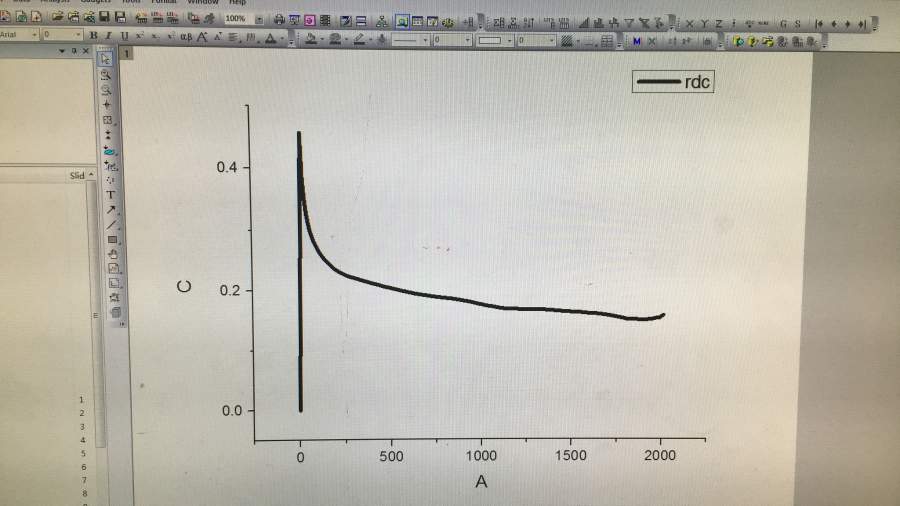 RDC.png |
 回复此楼
回复此楼» 猜你喜欢
 有多少人是今天查系统知道结果的?
已经有18人回复
有多少人是今天查系统知道结果的?
已经有18人回复
-
售SCI一区文章,我:8.O.55.1.O.54,科目齐全,可伽急
已经有3人回复
-
中青基了要发朋友圈吗?
已经有4人回复
-
售SCI一区文章,我:8.O.55.1.O.54,科目齐全,可伽急
已经有4人回复
-
国社科申报系统有变化
已经有3人回复
-
售SCI一区T0P文章,我:8O.55.1.O.5.4,科目齐全,可+急
已经有5人回复
-
售SCI文章,我:8O.5.5.1O.54,科目全,可十急
已经有3人回复
-
售SCI文章,我:8O5.5.1.O.54,科目齐全,可+急
已经有5人回复
-
售SCI文章,我:8O5.5.1.O.54,科目齐全,可+急
已经有5人回复
-
售SCI一区文章,我:8.O.55.1.O.54,科目齐全,可伽急
已经有3人回复

brucefan
专家顾问 (著名写手)
-

专家经验: +218 - 模拟EPI: 4
- 应助: 422 (硕士)
- 金币: 2294.8
- 散金: 1720
- 红花: 88
- 帖子: 1423
- 在线: 670.2小时
- 虫号: 3048965
- 注册: 2014-03-14
- 性别: GG
- 专业: 凝聚态物性 II :电子结构
- 管辖: 分子模拟
【答案】应助回帖
★ ★ ★ ★ ★
感谢参与,应助指数 +1
明-明-: 金币+5, ★★★很有帮助 2016-06-07 20:52:05
感谢参与,应助指数 +1
明-明-: 金币+5, ★★★很有帮助 2016-06-07 20:52:05
|
Hello, First, you should make a better figure by stating what is the x-axis and what is the y-axis. Also include their units. If you don't do it carefully, others cannot understand your results. I understand that your x-axis is correlation time and I think you have used a too long correlations time. I think 10 ps is enough to observe the saturation of the running diffusion constant. I think your learn to use so large correlation time from the reference you sent me. That's a very bad paper and you should not trust the results in it. Try to plot less data up to about 10 ps (or 20 ps; you can test it) and post your results again. Please make a more understandable figure. Good luck. |

2楼2016-06-07 19:44:02
brucefan
专家顾问 (著名写手)
-
专家经验: +218 - 模拟EPI: 4
- 应助: 422 (硕士)
- 金币: 2294.8
- 散金: 1720
- 红花: 88
- 帖子: 1423
- 在线: 670.2小时
- 虫号: 3048965
- 注册: 2014-03-14
- 性别: GG
- 专业: 凝聚态物性 II :电子结构
- 管辖: 分子模拟
【答案】应助回帖
★ ★ ★ ★ ★
明-明-: 金币+5, ★★★很有帮助 2016-06-07 20:52:31
明-明-: 金币+5, ★★★很有帮助 2016-06-07 20:52:31
| It is important to know that the simulation time (in the production stage) is not the maximum correlation time. These two times are independent. Usually, the simulation time should be at least 10 times larger than the maximum correlation time in order to obtain accurate results. For example, if the running diffusion constant can saturate up to about 10 ps, then you can set your maximum correlation time as 20 ps, and set the simulation time as 200 ps. Then, you can do the same simulation (with the same parameters but different the initial velocities; use different random numbers to generate initial velocities), say, 20 times. From these independent simulation results, you can finally obtain an average value and an error estimate (an error bar in you figure). In so doing, your total production time is still only 2 ns, but you would get a much more accurate result and a reasonable error bar. |
3楼2016-06-07 19:58:18
明-明-
金虫 (小有名气)
- 应助: 0 (幼儿园)
- 金币: 1066.5
- 红花: 1
- 帖子: 111
- 在线: 80.7小时
- 虫号: 3796591
- 注册: 2015-04-08
- 性别: GG
- 专业: 能源化工
 送红花一朵
送红花一朵 |
首先感谢樊老师的回复,我是在其他帖子上看到,用分子动力学跑扩散最好要跑到ns级才能确保体系达到了弛豫段,另外由于我的体系中有分子量很大的长链烷烃,在询问了师兄后,才设定的这个2ns的模拟时长,实际计算起来也的确很费劲。因为没有服务器和工作站,我接下来就尝试用10ps或更长的ps级时间间隔来作下试算! 发自小木虫IOS客户端 |
4楼2016-06-07 20:04:56
明-明-
金虫 (小有名气)
- 应助: 0 (幼儿园)
- 金币: 1066.5
- 红花: 1
- 帖子: 111
- 在线: 80.7小时
- 虫号: 3796591
- 注册: 2015-04-08
- 性别: GG
- 专业: 能源化工
|
我已经明白你的意思了,之前关于体系模拟的时长选择就很困惑,总是怕计算时长短了,体系达不到平衡,因此很多时候都是参考文献来的,现在懂了,同时也很期待樊老师的计算扩散系数的博文,能够给我们用软件模拟来计算扩散系数的参数设置和方法上提供指导,特别是像我这样不是专门做模拟的 发自小木虫IOS客户端 |
5楼2016-06-07 20:22:25
brucefan
专家顾问 (著名写手)
-
专家经验: +218 - 模拟EPI: 4
- 应助: 422 (硕士)
- 金币: 2294.8
- 散金: 1720
- 红花: 88
- 帖子: 1423
- 在线: 670.2小时
- 虫号: 3048965
- 注册: 2014-03-14
- 性别: GG
- 专业: 凝聚态物性 II :电子结构
- 管辖: 分子模拟
【答案】应助回帖
|
我是在其他帖子上看到,用分子动力学跑扩散最好要跑到ns级才能确保体系达到了弛豫段 This statement is not quite clear. What is 弛豫段? In molecular dynamics (MD) simulation, one usually needs to first equilibrate the system before sampling the equilibrium properties. Even if you are doing nonequilibrium MD simulation, you have to make sure that your system has reached a "steady state" before sampling (measuring). In the calculation of transport coefficients such as diffusion constant, we need to first equilibrate the system in the NVT or NPT ensemble sufficiently. This equilibration stage usually takes 100 ps to 1 ns (depends on your system). Then comes the production stage, which usually uses the NVE ensemble [but NVT or NPT ensemble can also be used if you use the Noose-Hoover (chain) thermostat rather than then Andersen thermostat]. The simulation time in the production stage depends on your system, and it is a good choice to set it as 10 times as large as the "relaxation time" in your problem. The "relaxation time" is of the order of the maximum correlation time needed to observe the saturation of the running transport coefficient in your problem and you may need to estimate it by doing a test run. 我接下来就尝试用10ps或更长的ps级时间间隔来作下试算! Hope you understand that "10 ps" here refers to the "maximum correlation time" rather than the simulation time in the production stage. The simulation time should be at least 10 times larger than the "maximum correlation time". But I think you can analyze your current data first. You already got the data and you just need to re-plot them. |
6楼2016-06-07 21:31:43

 投票:
投票:


 10
10